Jesus Blood

Jesus Blood

1972 · 30 min · ★ 7.0

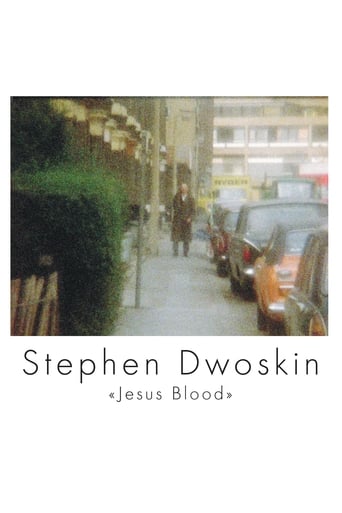
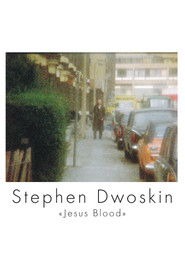
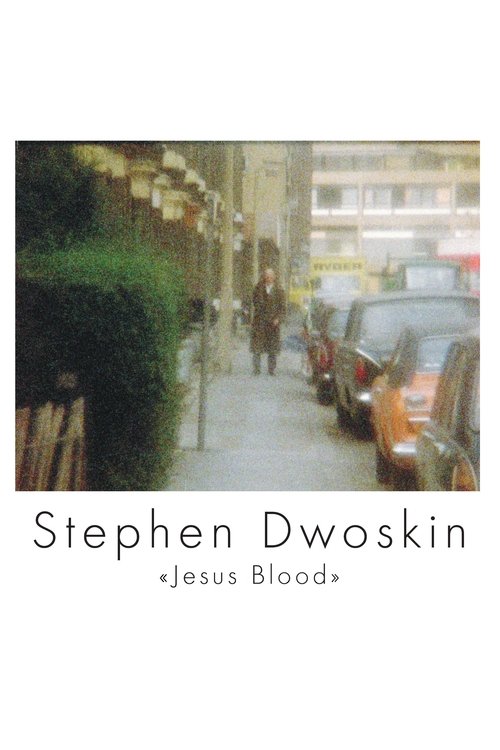
A man walks towards the camera down the end of a street to the sound of 'Jesus’ Blood Never Failed Me Yet', a composition by Gavin Bryars based on a loop of an anonymous homeless man singing the song. The man’s voice is progressively intensified by an instrumental accompaniment, which increases in density and richness, before the whole thing gradually fades out. Dwoskin’s film was produced to be shown during the premiere of Jesus' Blood Never Failed Me Yet at the Queen Elizabeth Hall, London in December 1972. For Dwoskin, it represents “… the singing voice of the last days of a London drunk (anonymous) as the orchestra raises him to heaven. The faint ghost image of a figure swims gradually to you through the grains of film low light…”

Directed by Stephen Dwoskin

Your Rating

Cast

Make it a double feature

43m together

Jesus Blood
Alone

Both from Stephen Dwoskin.
More from Stephen DwoskinSee all →

Kleiner VogelKleiner Vogel · 1976
Kleiner Vogel
10.01976
Movie
The film questions the possible viewing positions with the girl; in other words, who and what is looking at whom? and is the girl alone or with another – or is the camera position that of voyeur or protagonist? The only way to figure it out is to spend some time with her! – S.D.
AloneAlone · 1964
Alone
9.51964
MovieDrama
Images of a woman lying on a bed appearing to have a sexual fantasy for lack of anything else to do.
TrixiTrixi · 1969
Trixi
9.01969
Movie
Trixi is Dwoskin’s most convulsive version of his recurrent theme: the confrontation of a solitary girl with the camera. Shot in one continuous 8-hour session. Trixi records Beatrice Cordua’s responses to the situation, from initial shyness, fear and withdrawal through teasing and posturing to naked surrender and final exhaustion …. The camera is highly mobile; often confronting the girl in extreme close-ups, sometimes swooping down from overhead, sometimes searching to “recapture” her …. The camera itself is the object of erotic desire, [in] the sense of giving a performance shifting imperceptibly in a helpless self-exposure in response to its constant stare. Clearly, the form of the film was dictated by the response of the performer. Beatrice Cordua proves Dwoskin’s most expressive subject to date, and the film is correspondingly “open,” the camera having been willing to choose its tactics as direct responses.
Outside InOutside In · 1981
Outside In
9.01981
Movie
A personal film by experimental director Stephen Dwoskin.
Times ForTimes For · 1970
Times For
8.51970
MovieDramaRomance
An unfulfilled man renders himself to the unrealized sensuality of four women. In his drifting search, he fails and fades in the same loneliness as the women.
PhoelixPhoelix · 1979
Phoelix
8.01979
Movie
An aged art connoisseur (Beaumont) and his young female neighbour (Coles), who has a job posing naked in a club, meet and exist in fantasy and reality. Although this raises certain much-discussed questions about the nature of representation, and about the construction of narrative and daydreams in films, 'Phoelix' tends to treat these as just pretty and pertinent issues, opting instead for a mannered concentration on detail.
Central BazaarCentral Bazaar · 1976
Central Bazaar
7.71976
MovieDrama
A group of strangers explore their fantasies over a period of five days.
Age Is...Age Is... · 2012
Age Is...
7.62012
MovieDocumentary
Stephen Dwoskin’s final film is a meditation on the subjective experience and cultural concepts of ageing. The film is an ode to the texture, the beauty, the singularity of aging faces and silhouettes, a hypnotic poem in the Dwoskin meaning of the term which is long observations of very tiny details. A gesture, a pause, a look, a moment. Throughout his films intimacy has always played a leading role and this is also true for Age is..., all the faces being close friends, or close friends relatives and sometimes even Stephen himself.
Ballet BlackBallet Black · 1986
Ballet Black
7.51986
MovieDocumentary
Stephen Dwoskin brings together members of the Ballet Negres dance company, founded in London in 1946.
BehindertBehindert · 1974
Behindert
7.21974
MovieDramaTV Movie
A portrait of a relationship between a physically disabled man and an able-bodied woman.
To TeaTo Tea · 1970
To Tea
7.01970
Movie
To Tea, made in Holland (at the house of the Dutch avant-garde filmmaker Franz Zwartjes), is a slowed ‘Alice in Roomland’.A guide to sensual contact between two women. Their contact is arrived at through an arrangement of slow tactics. As the light of day goes the bodies come closer, and the piano melody floats in a distant hall. Once my Hungarian art teacher said: “If you exaggerate the objective lines you reach a stronger subjective expression.” So here the strange tea party gives over to touch. – S.D.
The Sun and the MoonThe Sun and the Moon · 2008
The Sun and the Moon
6.82008
MovieHorrorDrama
'The Sun and the Moon, a film fairy tale, is about two women’s terrifying encounter with ‘Otherness’ in the form of a man, abject and monstrous, and for them to either to witness, accept or partake in his annihilation. All are caught in their own isolation and are fearful of the menace that has to be met. The film, as a personal interpretation of Beauty and the Beast, enciphers concerns, beliefs and desires in seductive images that are themselves a form of camouflage, making it possible to utter harsh truths.'
MomentMoment · 1968
Moment
6.31968
MovieDocumentary
A static camera records, in one single continuous shot, a woman's face before, during and after orgasm. The act of looking and the limits of the film frame are highlighted in this intimate sexual episode with Tina Fraser. Artist Stephen Dwoskin presents a powerful, personal moment while maintaining a distance and resisting the viewer being subsumed into the action on screen.
Dyn AmoDyn Amo · 1972
Dyn Amo
6.01972
MovieDrama
'Dyn Amo' is a 'drama' exploring the distinction between a person's self and his projection of that self to others; and it's a 'horror movie' tragically suggesting how a projection can become more substantial than the self behind it. Its subjects are role-playing (especially sexual role-playing), and the masochism of playing a role that conforms to others' exploitative interests.
Take MeTake Me · 1969
Take Me
5.41969
Movie
Short experimental film focusing on body paint and the female form.
CinématonCinématon · 1978
Cinématon
4.91978
MovieDocumentary
Cinématon is a 156-hour long experimental film by French director Gérard Courant. It was the longest film ever released until 2011. Composed over 36 years from 1978 until 2006, it consists of a series of over 2,821 silent vignettes (cinématons), each 3 minutes and 25 seconds long, of various celebrities, artists, journalists and friends of the director, each doing whatever they want for the allotted time. Subjects of the film include directors Barbet Schroeder, Nagisa Oshima, Volker Schlöndorff, Ken Loach, Benjamin Cuq, Youssef Chahine, Wim Wenders, Joseph Losey, Jean-Luc Godard, Samuel Fuller and Terry Gilliam, chess grandmaster Joël Lautier, and actors Roberto Benigni, Stéphane Audran, Julie Delpy and Lesley Chatterley. Gilliam is featured eating a 100-franc note, while Fuller smokes a cigar. Courant's favourite subject was a 7-month-old baby. The film was screened in its then-entirety in Avignon in November 2009 and was screened in Redondo Beach, CA on April 9, 2010.

More Like This

Rate this film

Your ratings make Midnight smarter