Directing

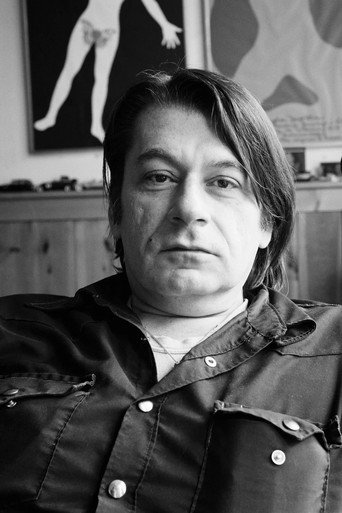
Stephen Dwoskin

Born January 15, 1939 · New York, New York

Died June 28, 2012 · aged 73

Stephen Dwoskin was born in New York in 1939 and began making independent shorts there in 1961. In 1964 he followed his research work to London where he settled and participated in the founding of the London Filmmaker’s Co-op. His experimental films, for which he himself does the camera work, play with ideas of desire, sexual and mental solitude and the passage of time. In his films he also explor…

Known For
Vidéolettres / VideolettersVidéolettres / Videoletters · 1991
Vidéolettres / Videoletters
1991
Movie
"Hi Steve" and "Dear Robert" exchanged between two filmmakers: Robert Kramer and Stephen Dwoskin. "The Videoletters strip away the formalities that had littered our work and thinking. Through the making of the 'video letters' we started to relearn and re-look.". The Videoletters provide the benefits of reflection -- a lubricant for thought made out of very basic stuff -- the reduction of complexity -- and they cemented a brotherhood. Sadly, Robert's untimely death prevented the continuation of the "video letters" and they remain unfinished and unedited. (S.D.)
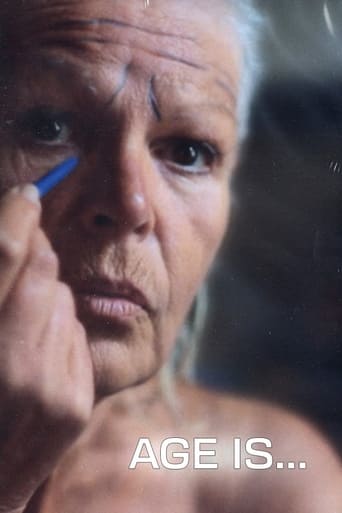
Age Is...Age Is... · 2012
Age Is...
7.62012
MovieDocumentary
Stephen Dwoskin’s final film is a meditation on the subjective experience and cultural concepts of ageing. The film is an ode to the texture, the beauty, the singularity of aging faces and silhouettes, a hypnotic poem in the Dwoskin meaning of the term which is long observations of very tiny details. A gesture, a pause, a look, a moment. Throughout his films intimacy has always played a leading role and this is also true for Age is..., all the faces being close friends, or close friends relatives and sometimes even Stephen himself.
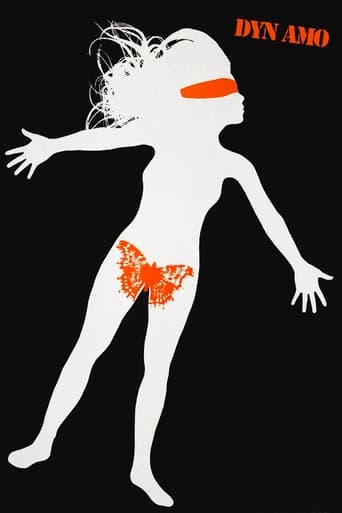
Dyn AmoDyn Amo · 1972
Dyn Amo
6.01972
MovieDrama
'Dyn Amo' is a 'drama' exploring the distinction between a person's self and his projection of that self to others; and it's a 'horror movie' tragically suggesting how a projection can become more substantial than the self behind it. Its subjects are role-playing (especially sexual role-playing), and the masochism of playing a role that conforms to others' exploitative interests.
To TeaTo Tea · 1970
To Tea
7.01970
Movie
To Tea, made in Holland (at the house of the Dutch avant-garde filmmaker Franz Zwartjes), is a slowed ‘Alice in Roomland’.A guide to sensual contact between two women. Their contact is arrived at through an arrangement of slow tactics. As the light of day goes the bodies come closer, and the piano melody floats in a distant hall. Once my Hungarian art teacher said: “If you exaggerate the objective lines you reach a stronger subjective expression.” So here the strange tea party gives over to touch. – S.D.
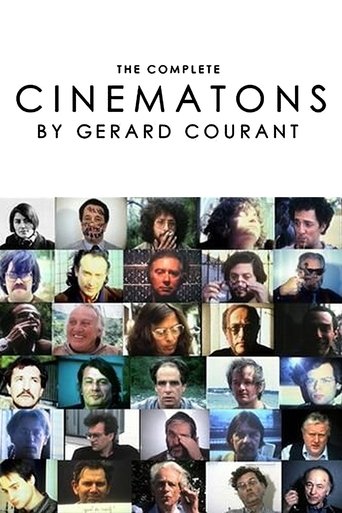
CinématonCinématon · 1978
Cinématon
4.91978
MovieDocumentary
Cinématon is a 156-hour long experimental film by French director Gérard Courant. It was the longest film ever released until 2011. Composed over 36 years from 1978 until 2006, it consists of a series of over 2,821 silent vignettes (cinématons), each 3 minutes and 25 seconds long, of various celebrities, artists, journalists and friends of the director, each doing whatever they want for the allotted time. Subjects of the film include directors Barbet Schroeder, Nagisa Oshima, Volker Schlöndorff, Ken Loach, Benjamin Cuq, Youssef Chahine, Wim Wenders, Joseph Losey, Jean-Luc Godard, Samuel Fuller and Terry Gilliam, chess grandmaster Joël Lautier, and actors Roberto Benigni, Stéphane Audran, Julie Delpy and Lesley Chatterley. Gilliam is featured eating a 100-franc note, while Fuller smokes a cigar. Courant's favourite subject was a 7-month-old baby. The film was screened in its then-entirety in Avignon in November 2009 and was screened in Redondo Beach, CA on April 9, 2010.
The Silent CryThe Silent Cry · 1977
The Silent Cry
4.61977
MovieDrama
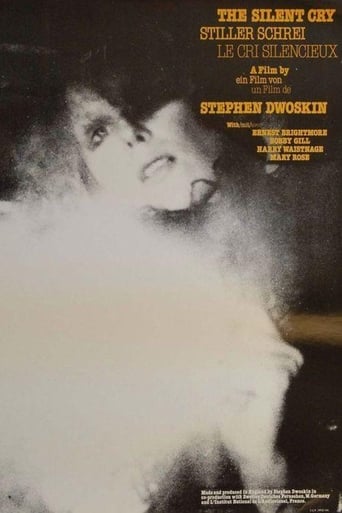
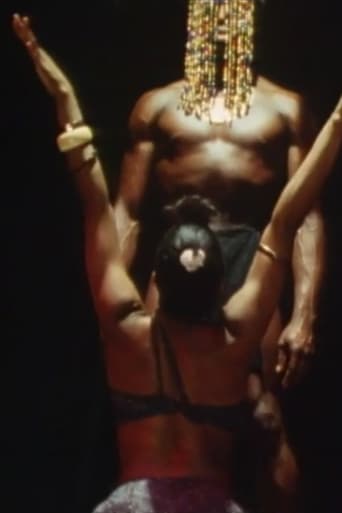
'The Silent Cry is a fictionalised narrative film, based on documentary facts and extracts of one English girl's memories and thoughts, all surrounded, and directed towards her particular dilemma. This dilemma can be summarized as her basic inability to have relationships, especially sustained relationships, and particularly with men. This is the total of her statement and the film. The construction and flow of the film follows the way she thinks - it is her point of view that is followed in the film. So all things are the way she remembers and dwells on them, and which are important to her.' - S.D.
Face AntheaFace Anthea · 1990
Face Anthea
1990
MovieDocumentary
"Either in its natural state or with its embellishments of makeup, jewels, and hairdos, nothing can restrain the imagination from the most forms of speculation. All the senses are concentrated in this one head: eyes, ears, nose, lips, tongue and the skin which covers all with its network of vibrating nerves. One imagines the senses, the counterpart of our own, ready to respond with all the various moods, suggestions and agreements. Through the eyes alone, when placed in contact with our own, a visual dialogue and interplay is embarked upon. And when the lips, two bodies fitting together in perfect harmony, break into a smile, they invite further exploration. Then, with the engagement of time, this dialogue shifts from speculation to realization. The face transforms from its abstract suggestiveness to the singular projection of seduction. It is no longer anyones face; it is the face of one particular person" (Stephen Dwoskin)
Ballet BlackBallet Black · 1986
Ballet Black
7.51986
MovieDocumentary
Stephen Dwoskin brings together members of the Ballet Negres dance company, founded in London in 1946.
Filmography

Sort
CinématonCinématon · 1978
Cinématon
4.91978
MovieDocumentary
Cinématon is a 156-hour long experimental film by French director Gérard Courant. It was the longest film ever released until 2011. Composed over 36 years from 1978 until 2006, it consists of a series of over 2,821 silent vignettes (cinématons), each 3 minutes and 25 seconds long, of various celebrities, artists, journalists and friends of the director, each doing whatever they want for the allotted time. Subjects of the film include directors Barbet Schroeder, Nagisa Oshima, Volker Schlöndorff, Ken Loach, Benjamin Cuq, Youssef Chahine, Wim Wenders, Joseph Losey, Jean-Luc Godard, Samuel Fuller and Terry Gilliam, chess grandmaster Joël Lautier, and actors Roberto Benigni, Stéphane Audran, Julie Delpy and Lesley Chatterley. Gilliam is featured eating a 100-franc note, while Fuller smokes a cigar. Courant's favourite subject was a 7-month-old baby. The film was screened in its then-entirety in Avignon in November 2009 and was screened in Redondo Beach, CA on April 9, 2010.

N°121

Face AntheaFace Anthea · 1990
Face Anthea
1990
MovieDocumentary
"Either in its natural state or with its embellishments of makeup, jewels, and hairdos, nothing can restrain the imagination from the most forms of speculation. All the senses are concentrated in this one head: eyes, ears, nose, lips, tongue and the skin which covers all with its network of vibrating nerves. One imagines the senses, the counterpart of our own, ready to respond with all the various moods, suggestions and agreements. Through the eyes alone, when placed in contact with our own, a visual dialogue and interplay is embarked upon. And when the lips, two bodies fitting together in perfect harmony, break into a smile, they invite further exploration. Then, with the engagement of time, this dialogue shifts from speculation to realization. The face transforms from its abstract suggestiveness to the singular projection of seduction. It is no longer anyones face; it is the face of one particular person" (Stephen Dwoskin)

Director

TrixiTrixi · 1969
Trixi
9.01969
Movie
Trixi is Dwoskin’s most convulsive version of his recurrent theme: the confrontation of a solitary girl with the camera. Shot in one continuous 8-hour session. Trixi records Beatrice Cordua’s responses to the situation, from initial shyness, fear and withdrawal through teasing and posturing to naked surrender and final exhaustion …. The camera is highly mobile; often confronting the girl in extreme close-ups, sometimes swooping down from overhead, sometimes searching to “recapture” her …. The camera itself is the object of erotic desire, [in] the sense of giving a performance shifting imperceptibly in a helpless self-exposure in response to its constant stare. Clearly, the form of the film was dictated by the response of the performer. Beatrice Cordua proves Dwoskin’s most expressive subject to date, and the film is correspondingly “open,” the camera having been willing to choose its tactics as direct responses.

Director

Jesus BloodJesus Blood · 1972
Jesus Blood
7.01972
Movie
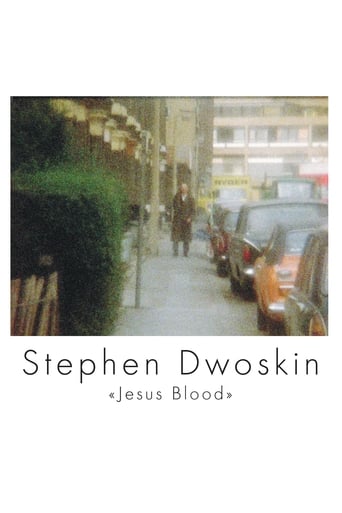
A man walks towards the camera down the end of a street to the sound of 'Jesus’ Blood Never Failed Me Yet', a composition by Gavin Bryars based on a loop of an anonymous homeless man singing the song. The man’s voice is progressively intensified by an instrumental accompaniment, which increases in density and richness, before the whole thing gradually fades out. Dwoskin’s film was produced to be shown during the premiere of Jesus' Blood Never Failed Me Yet at the Queen Elizabeth Hall, London in December 1972. For Dwoskin, it represents “… the singing voice of the last days of a London drunk (anonymous) as the orchestra raises him to heaven. The faint ghost image of a figure swims gradually to you through the grains of film low light…”

Cinematography