Two American Audiences: La Chinoise - A Film in the Making
1968 · 40 min · ★ 6.0 · Documentary
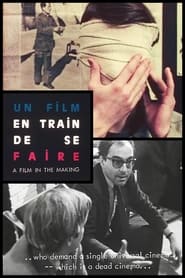
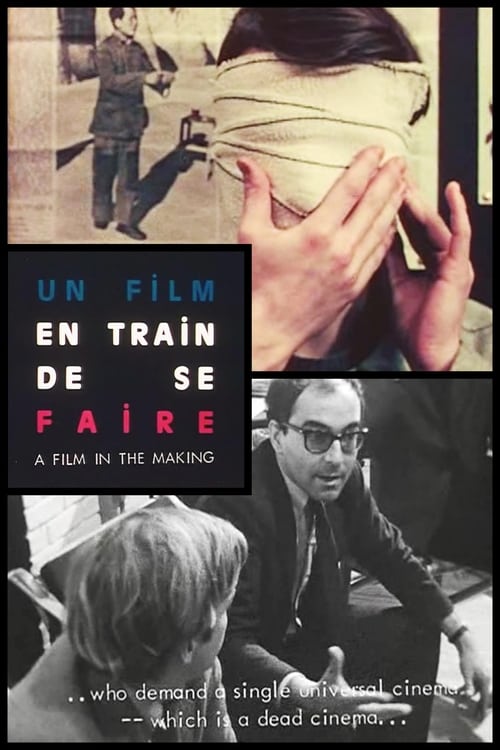
Jean-Luc Godard visits NYU in order to discuss his latest feature "La chinoise" with graduate students on filmmaking and politics.
Directed by Richard Leacock
Your Rating
Cast
-
 Jean-Luc Godard Self
Make it a double feature
2h together
Both from Richard Leacock.
More from Richard LeacockSee all →
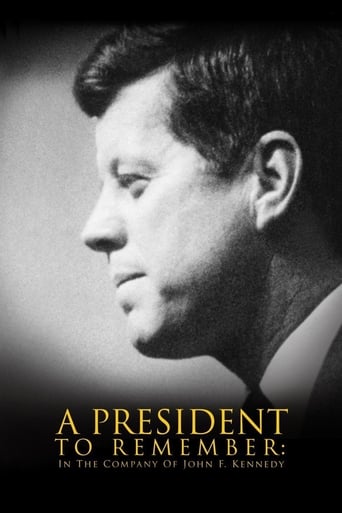 A President to Remember: In the Company of John F. Kennedy · 2008
A President to Remember: In the Company of John F. Kennedy
★ 10.02008
MovieDocumentary
Bringing to life an American President who was widely respected by his countrymen and celebrated around the world. Composed from four break through films by Robert Drew, each an unprecedented record in candid photography of a phase of John F. Kennedy’s political life. Kennedy is seen in close up from young Senator campaigning for the Presidency, to an ebullient new President moving into the White House, to a burdened President trying to solve grave problems in the Oval Office. The shock of his death is seen through the faces of his compatriots. Now these four films are edited together with other footage of the time. This film is an intimate history of how one American President struggled to bring wisdom and honor to the office of the Presidency.
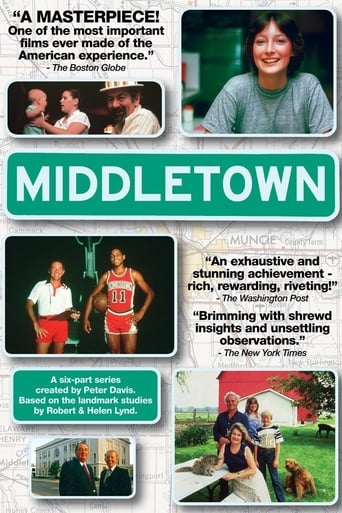 Middletown · 1982
Middletown
★ 10.01982
SeriesDocumentary
Six-part documentary on the city of Muncie, Indiana - nicknamed "Middletown" after a study in the 1920s deemed it representative of middle America. The series finds that amid the great ...
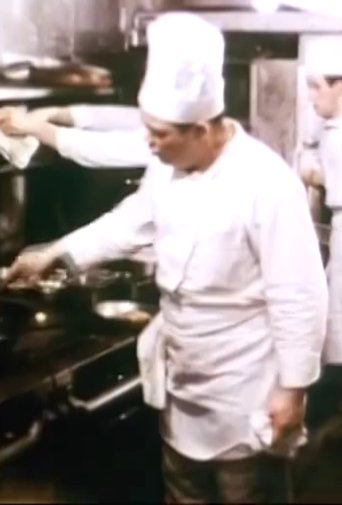 French Lunch · 1968
French Lunch
★ 9.01968
MovieDocumentary
Documentary look behind the scenes of La Caravelle, an acclaimed French restaurant in New York City.
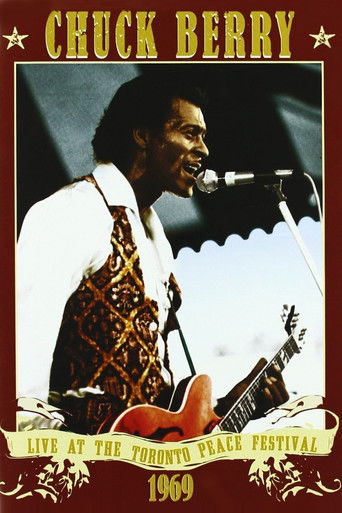 Chuck Berry: Rock and Roll Music · 1992
Chuck Berry: Rock and Roll Music
★ 8.41992
MovieMusic
A pioneer in the world of rock-'n'-roll guitar, Chuck Berry has created a legacy that spans decades. Berry performs some of his greatest hits and all-time favorites in this concert video that was filmed on September 13, 1969 at 'Toronto Rock'n'Roll Revival.' The Concert includes the songs "Rock and Roll Music," "Long Live Rock and Roll," "Johnny B. Goode," "Promised Land," "Carol," "Hoochie Koochie Man," "Maybellene," "Too Much Monkey Business," "Reelin' and Rockin'," "Sweet Little Sixteen" and "In the Wee, Wee Hours."
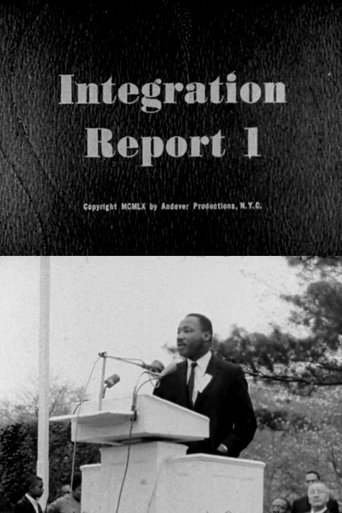 Integration Report 1 · 1960
Integration Report 1
★ 7.61960
MovieDocumentary
Integration Report 1, Madeline Anderson's trailblazing debut, was the first known documentary by an African American female director. With tenacity, empathy and skill, Anderson assembles a vital record of desegregation efforts around the country in 1959 and 1960, featuring footage by documentary legends Albert Maysles and Richard Leacock and early Black cameraman Robert Puello, singing by Maya Angelou, and narration by playwright Loften Mitchell. Anderson fleetly moves from sit-ins in Montgomery, Alabama to a speech by Martin Luther King Jr. in Washington, D.C. to a protest of the unprosecuted death in police custody of an unarmed Black man in Brooklyn, capturing the incredible reach and scope of the civil rights movement, and working with this diverse of footage, as she would later say, “like an artist with a palette using different colors.”
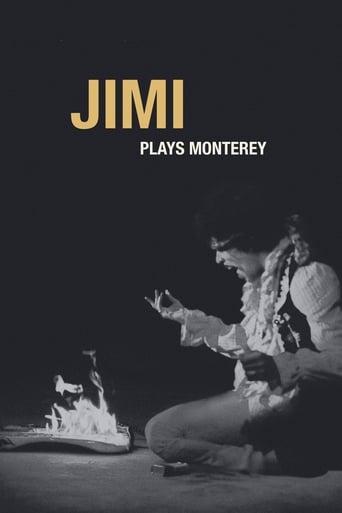 Jimi Plays Monterey · 1987
Jimi Plays Monterey
★ 7.51987
MovieDocumentaryMusic
Jimi Hendrix's debut American set at 1967's Monterey Pop Festival is generally considered one of the most radical and legendary live shows ever. Virtually unknown to American audiences at the time, even though he was already an established entity in the UK, Hendrix and his two-piece Experience explode on stage, ripping through blues classics "Rock Me Baby" and Howlin' Wolf's "Killing Floor," interpreting and electrifying Bob Dylan's "Like a Rolling Stone," debuting songs from his yet-to-be-released first album and closing with the now historic sacrificing/burning of his guitar during an unhinged version of "Wild Thing" that even its writer Chip Taylor would never have imagined. Hendrix uses feedback and distortion to enhance the songs in whisper-to-scream intensity, blazing territory that had not been previously explored with as much soul-frazzled power.
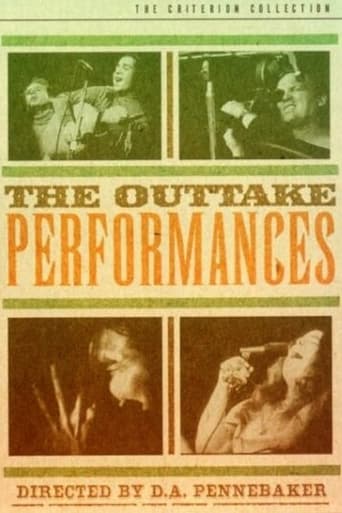 Monterey Pop - The Outtake Performances · 2002
Monterey Pop - The Outtake Performances
★ 7.52002
MovieMusicDocumentary
Additional musical performances from the 1967 Monterey Pop Festival in California, shot for the film Monterey Pop (1968) and released on the Criterion Blu-ray The Complete Monterey Pop Festival.
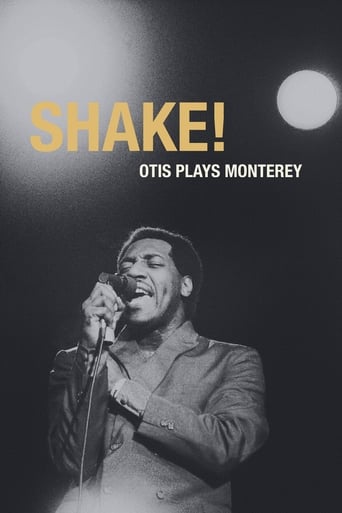 Shake! Otis at Monterey · 1987
Shake! Otis at Monterey
★ 7.41987
MovieDocumentaryMusic
Renowned documentary filmmaker D.A. Pennebaker captures Otis Redding in his ascendancy, singing at the historic Monterey International Pop Festival in June 1967. Comedian Tom Smothers introduces Redding to a crowd that is leaving -- until Redding grabs them with his charged rendition of "Shake." Redding's performance also includes "Respect" (which he wrote), "I've Been Loving You Too Long," "Satisfaction," and "Try a Little Tenderness." Tragically, Redding died in a plane crash six months later. An innovative filmmaker who started in the 1950s making experimental films, Pennebaker garnered an Oscar nomination for Best Documentary Feature in 1993 for The War Room, his behind-the-scenes look at Bill Clinton's 1992 campaign. His other subjects have included Norman Mailer, Bob Dylan, and David Bowie.
 Monterey Pop · 1968
Monterey Pop
★ 7.31968
MovieMusicDocumentary
Featuring performances by popular artists of the 1960s, this concert film highlights the music of the 1967 California festival. Although not all musicians who performed at the Monterey Pop Festival are on film, some of the notable acts include the Mamas and the Papas, Simon & Garfunkel, Jefferson Airplane, the Who, Otis Redding, and the Jimi Hendrix Experience. Hendrix's post-performance antics -- lighting a guitar on fire, breaking it and tossing a part into the audience -- are captured.
 Original Cast Album: Company · 1970
Original Cast Album: Company
★ 7.21970
MovieDocumentaryMusic
In 1970, right after the triumphant premiere of Stephen Sondheim’s groundbreaking concept musical Company, the renowned composer and lyricist, his director Harold Prince, the show’s stars, and a large pit orchestra all went into a Manhattan recording studio as part of a time-honored Broadway tradition: the making of the original cast album. What ensued was a marathon session in which all involved pushed themselves to the limit.
 Omnibus · 1952
Omnibus
★ 7.01952
SeriesTalk
Omnibus is an American, commercially sponsored, educational television series.
 Crisis: Behind a Presidential Commitment · 1963
Crisis: Behind a Presidential Commitment
★ 6.91963
MovieDocumentary
During a two-day period before and after the University of Alabama integration crisis, the film uses five camera crews to follow President John F. Kennedy, attorney general Robert F. Kennedy, Alabama governor George Wallace, deputy attorney general Nicholas Katzenbach and the students Vivian Malone and James Hood. As Wallace has promised to personally block the two black students from enrolling in the university, the JFK administration discusses the best way to react to it, without rousing the crowd or making Wallace a martyr for the segregationist cause. Preserved by the Academy Film Archive in partnership with The Film Foundation in 1999.
 ABC Close-Up: Yanki, No! · 1960
ABC Close-Up: Yanki, No!
★ 6.81960
MovieDocumentary
A 1960 cinéma vérité documentary on anti-American sentiment in Latin America, combining observational footage from Caracas and political events, directed by Robert Drew and shot by Maysles, Leacock, and Pennebaker. (Note: Originally broadcast as a standalone documentary on ABC, "Yanki, No!" is widely cited and archived as a discrete direct-cinema film with its own title, production identity, and critical reception, rather than as an anonymous TV news magazine episode.)
 Primary · 1960
Primary
★ 6.51960
MovieDocumentary
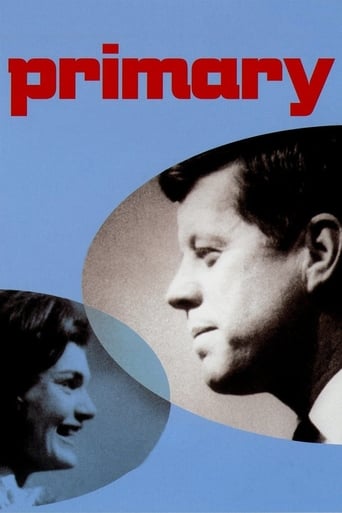
Primary is a documentary film about the primary elections between John F. Kennedy and Hubert Humphrey in 1960. Primary is the first documentary to use light equipment in order to follow their subjects in a more intimate filmmaking style. This unconventional way of filming created a new look for documentary films where the camera’s lens was right in the middle of what ever drama was occurring. Preserved by the Academy Film Archive in partnership with The Film Foundation in 1998.
 Louisiana Story · 1948
Louisiana Story
★ 6.31948
MovieAdventureDrama
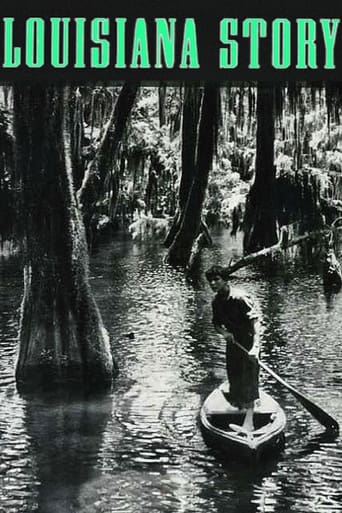
The idyllic life of a young Cajun boy and his pet raccoon is disrupted when the tranquility of the bayou is broken by an oil well drilling near his home.
 1 P.M. · 1971
1 P.M.
★ 6.21971
MovieDocumentary
Lighter and livelier than the films Jean-Luc Godard had made in France, his U.S. collaboration with Direct Cinema documentarian D. A. Pennebaker was meant to be One A.M., as in “one American movie”; but Godard quit the project and the U.S., where to his dismay he discovered that revolution wasn’t imminent, and Pennebaker edited Godard’s material, to which he and Richard Leacock even added a bit more, releasing the result as One P.M., as in “one parallel movie.” It’s a stunning mixture of cinéma-vérité, political theater, and interviews of key sixties figures.
More Like This
Couldn't load this row right now.