An Attempt (Test II)
1971 · 2 min · ★ 6.1
A classical organ composition by Johann Sebastian Bach “stretches” a red strip of film; An exploration of musical memory.
Directed by Józef Robakowski
Your Rating
Make it a double feature
1h 5m together
Both from Józef Robakowski.
More from Józef RobakowskiSee all →
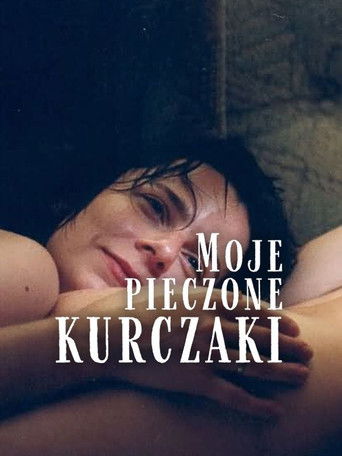 My Roasted Chicken · 2002
My Roasted Chicken
★ 6.62002
MovieDramaTV Movie
A young married couple and their everyday hardships. Unemployed Wojtek decides to sell grilled chicken from a street stall. His wife Agata is a film student making a documentary on her husband.
 Test I · 1971
Test I
★ 3.31971
MovieAnimation
White circles appear and disappear on a black surface.
 Brezhnev's Funeral · 1982
Brezhnev's Funeral
1982
Movie
Video: Józef Robakowski, music: Laibach Werkstatt, production: Exchange Gallery.
 Dancing with Trees · 1985
Dancing with Trees
1985
Movie
The camera records the trajectory and dynamics of Robakowski's movement: he walks, turns and spins with his head up in the woods.
 Acoustic Apple · 1994
Acoustic Apple
1994
Movie
A short showing Robakowski peeling and eating an apple, which itself produces the sound.
 Video Kisses · 1992
Video Kisses
1992
Movie
The equation of organically generated soundtrack with the video image.
 Conversation With My Mother · 2004
Conversation With My Mother
2004
Movie
A fictional telephone conversation between the filmmaker and his mother on her birthday. A performative reflection on the relationship between public and private spheres in which the maker turns his back to the camera, simultaneously shielding himself, and engages the viewer in the (im)possibility of bridging the gap between the man and his mother. Capturing the intimate conversation seems to be a way of keeping a personal memory alive while it merges with the viewer’s memory.
 Art is Power · 1985
Art is Power
1985
Movie
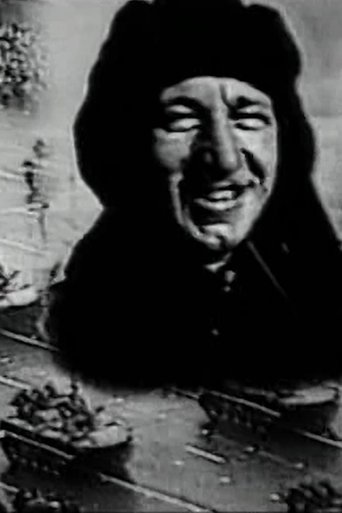
The ritual transmission of a military parade from Moscow’s Red Square: On every anniversary of the October Revolution, this was loyally broadcast by all the television stations in the so-called people’s democracies. In Robakowski’s work, this material is used to reconstruct and deconstruct public spectacle. The substitution of the original television commentary with a song sung in German by Laibach (a group from what was then Yugoslavia and is now Slovenia) removes the spectacle from its pompous temporal context and reveals the absolutism of its alluring power. The totalitarian display is in itself art – politically active art, the art of all-out pathos – even if we call it only “quote art unquote”.
 1, 2, 3, 4 (Light Cheeks) · 1993
1, 2, 3, 4 (Light Cheeks)
1993
Movie
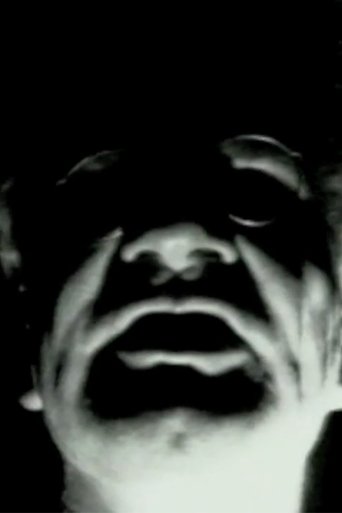
ince the 1970s, Robakowski has been experimenting with the category of the author, transferring the authorship of his works onto the film camera. Implementing the strategy of biological-mechanical records, Robakowski continues his experiments, carried out since the 1970s, consisting in the transfer of the authorship of the film onto the film camera, as well as initiates relations between the mechanical medium and the human organism. On the one hand, it embraces collaboration, on the other, human struggle with the machine, extending from the “integration” of its logic and the attempts at its “anthropomorphisation”.
 From My Window · 1999
From My Window
1999
MovieDocumentary
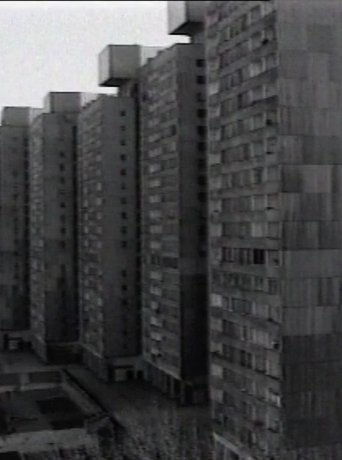
In 1978, Robakowski moved into a new flat in a newly-built high rise in the center of Łódź. That’s when he began filming the people and events he could see from his kitchen window. The film was made on the basis of a dozen or more hours of footage shot during 1978–1999. The artist filmed the front yard of his block of flats in a part of Łódź called “Manhattan”—a cluster of tall, cement housing buildings vaguely resembling New York’s skyscrapers. The images are accompanied by the artist’s commentary, which brings the viewer closer to his neighbors and family, including his then-wife, Małgorzata Potocka. The film comments on the gradual yet profound political and social transformations that took place in Poland over these two decades.
 Nearer – Further · 1985
Nearer – Further
1985
Movie
Robakowski directs the camera to zoom back and forth.
 6,000,000 · 1962
6,000,000
1962
Movie
A short film by Józef Robakowski
 The Energy Manifesto! · 2003
The Energy Manifesto!
2003
Movie
A highly expressive cry from the author of the manifesto, uttered while his head emerges from the water: "I should like to tell you all that art is energy!"
 I'm Going · 1973
I'm Going
1973
Movie
From 'The Workshop of the Film Form'. // In I'm Going Robakowski attempted an iconoclastic representation of the human body. He initiated a situation in which the materiality of film engaged in a dialogue with the materiality of the human body. Over the course of the film, the growing fatigue of the body carrying the film camera can be heard in the artist's voice and increasingly heavy breathing. The effect is that of the artist delving into his own materiality. The subject becomes merely a thing among things, a living fragment of the matter. With their attempt to shift the "film gaze" onto the machine (a non-anthropocentric point of perception of the world), Robakowski's Records most fully illustrate the antivoyeuristic ambitions of structuralist cinema, which aimed to subvert the traditional voyeuristic model.
More Like This
Couldn't load this row right now.