Clear Blue Sky

Clear Blue Sky

NR 2006 · 4 min · ★ 6.0

"The visual was recorded through, not a lens, but an adjustable slit-like opening, which was attached in front of the image sensor. I was changing the length of the slit and rotating the angle to modify the visual, as my response to the activities taken place at Washington Square, San Francisco, on a beautiful sunny day." (Tomonari Nishikawa)

Directed by Tomonari Nishikawa

Your Rating

Make it a double feature

10m together
Both from Tomonari Nishikawa.

More from Tomonari NishikawaSee all →

ApolloApollo · 2003
Apollo
7.02003
Movie
"It shows my interest in materials, medium, and apparatus of cinema. The sound will be produced from the visual on the optical soundtrack – for some parts, I used a 35mm still camera to expose the soundtrack area, and I scratched off the film emulsion directly for other parts. This is my senior thesis project at Binghamton University, and Julie Murray was my advisor." (Tomonari Nishikawa)
Amusement RideAmusement Ride · 2019
Amusement Ride
7.02019
Movie
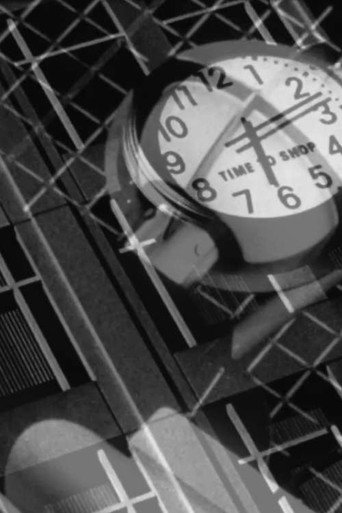
Shot with a telephoto lens from inside a cabin of Cosmo Clock 21, a Ferris wheel at an amusement park in Yokohama, Japan. The distorted image shows the structure of the Ferris wheel, focusing on the intermittent vertical movement, which resembles the movement of a film at the gate of a film projector or camera.
Sketch Film #2Sketch Film #2 · 2005
Sketch Film #2
7.02005
Movie
"The second film in the series, showing my study especially in apparent shapes – a shape that cannot be seen in a single frame but only through a series of consecutive frames when projected. It was edited in camera and hand-processed afterwards." (Tomonari Nishikawa)
Into the MassInto the Mass · 2007
Into the Mass
6.02007
Movie
"The visual was originally captured through two Super 8 cameras, which were attached on the pedals of a bicycle, through my ride from Marin County to San Francisco. The time-lapse footage was optically printed onto 16mm film afterwards, and the double projection would show a new landscape of the photogenic city. The ride ended after joining Critical Mass, an event occurs the last Friday of every month in San Francisco." (Tomonari Nishikawa)
Light, Noise, Smoke, and Light, Noise, SmokeLight, Noise, Smoke, and Light, Noise, Smoke · 2023
Light, Noise, Smoke, and Light, Noise, Smoke
6.02023
Movie
"Fireworks were shot at a summer festival in Japan with a Super 16 format camera in order to obtain images on the optical soundtrack area on the filmstrip. The position of the photocell to read the visual information on the optical soundtrack area in a 16mm film projector is 26 frames in advance of the position of the gate to project the image. Each footage from 2 rolls of 16mm film were cut into shots of 26 frames each, and the shots were alternated from one roll to another, which would further separate the sound and visual, while producing a distinct rhythm throughout the film." (Tomonari Nishikawa)
Ten Mornings Ten Evenings and One HorizonTen Mornings Ten Evenings and One Horizon · 2016
Ten Mornings Ten Evenings and One Horizon
6.02016
Movie
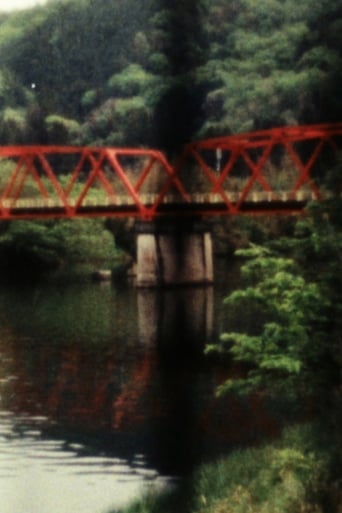
"It displays bridges on Yahagi River, which runs near where I was grown up in Japan. I shot each bridge twice, first in the morning and second in the evening of the day. It was exposed one-sixth of the frame at a time and the result would show the sense of the sun rising or setting." (Tomonari Nishikawa)
Manhattan One Two Three FourManhattan One Two Three Four · 2013
Manhattan One Two Three Four
6.02013
Movie
"A study in visual rhythm with images of architecture in Manhattan, New York, using the technique I did for the first sequence in Sketch Film #3. All edited in-camera and hand-processed afterwards. This film was commissioned by Echo Park Film Center for the celebration of its 12th anniversary." (Tomonari Nishikawa)
Sketch Film #1Sketch Film #1 · 2005
Sketch Film #1
6.02005
Movie
"As a painter carries a sketchbook and practices drawing, I carried a Super 8 camera and shot frame by frame, as an everyday exercise to make animations of lines and shapes found in the public space. The entire film was edited in camera and hand-processed afterwards." (Tomonari Nishikawa)
45 7 Broadway45 7 Broadway · 2013
45 7 Broadway
5.72013
Movie
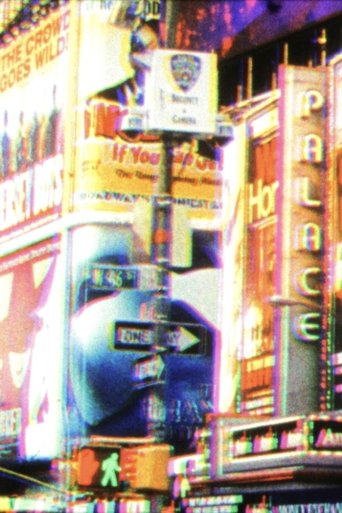
"This is about Times Square, the noise and movements at this most well-known intersection. I used a color separation technique – it was originally shot on black and white film through color filters (red, green, and blue), then optically printed onto color film through these filters. The layered images of shots by the handheld camera would agitate the scenes, and the advertisements on the digital billboards try to pull ahead of others." (Tomonari Nishikawa)
Market StreetMarket Street · 2005
Market Street
5.32005
Movie
"All images were shot on Market Street, one of the main streets in San Francisco. I used Sketch Film #1 and Sketch Film #2 as reference to make a plan of the film structure, and the visual was carefully composed frame by frame, while shooting on the street. This project was commissioned by Exploratorium and San Francisco Arts Commission for the outdoor screening event, A Trip Down Market Street 1905/2005: An Outdoor Centennial Celebration, at Justin Herman Plaza in San Francisco on Sep. 25, 2005."
Sound of a Million Insects, Light of a Thousand StarsSound of a Million Insects, Light of a Thousand Stars · 2015
Sound of a Million Insects, Light of a Thousand Stars
5.02015
Movie
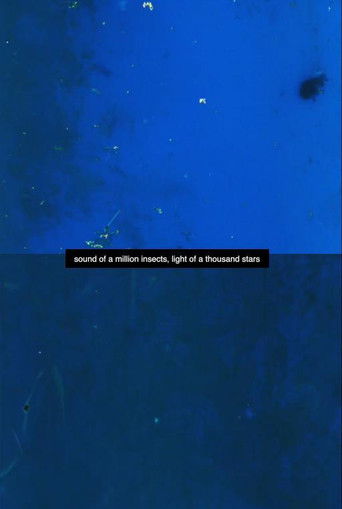
"I buried a 100-foot (about 30 meters) 35mm negative film under fallen leaves alongside a country road, which was about 25 km away from the Fukushima Daiichi Nuclear Power Station, for about 6 hours, from the sunset of June 24, 2014, to the sunrise of the following day. The night was beautiful with a starry sky, and numerous summer insects were singing loud. The area was once an evacuation zone, but now people live there after the removal of the contaminated soil. This film was exposed to the possible remaining of the radioactive materials." (Tomonari Nishikawa)
Sketch Film #3Sketch Film #3 · 2006
Sketch Film #3
5.02006
Movie
"The third film in the series, which starts with a sequence of paired images: a focused image and a blurred image of the same subject, which was caused by a diagonal camera movement. Later, it shows an experiment to produce an apparent depth by rotating an apparent shape. It was edited in camera and hand-processed afterwards." (Tomonari Nishikawa)
Six Seventy-Two Variations, Variation 1Six Seventy-Two Variations, Variation 1 · 2021
Six Seventy-Two Variations, Variation 1
4.72021
Movie
In this live projection performance for 16mm film, Tomonari Nishikawa explores the material specificity of the cinematic apparatus through a real-time manipulation of its physical elements. Scratching directly onto the emulsion of a looping filmstrip in the midst of projection, Nishikawa creates animated abstractions in a pattern of horizontal lines, and also generates the film’s score, a percussive throbbing of noise.
Shibuya - TokyoShibuya - Tokyo · 2010
Shibuya - Tokyo
2010
Movie
"JR (Japan Railway Company) Yamanote Line is one of the Japan's busiest lines, consisting of 29 stations and running as a loop. The film shows scenes around the entrances of 20 stations, from Shibuya Station to Tokyo Station clockwise. The in-camera visual effects and the layered soundtrack would exaggerate the noises and movements at the senses."
Luminous VeilLuminous Veil · 2016
Luminous Veil
2016
MovieMusic
Music & lyrics by Lightning Bug Video by Tomonari Nishikawa
Lumphini 2552Lumphini 2552 · 2009
Lumphini 2552
2009
Movie
"It was shot by a 35mm still camera at Lumphini Park in Bangkok, Thailand, which was named after Lumbini, the birthplace of Buddha. The hand-processed visual shows the organic patterns found in this monumental park, constructing the systematic yet emotional rhythm and pace on the screen, accompanied by the sound from the visual, which was also captured through the still camera on the optical soundtrack area of the 35mm movie format. I am not a Buddhist, but as I grew up in Japan, I am familiar with some of the Buddhist teachings, including the Middle Way, which is a practice to avoid the extremes of the binary oppositions in life. The organic shapes of a leaf is never appears as perfectly straight lines, and I took pictures of leaves to make them appear either horizontal or vertical lines on the screen for a single cartridge of 35mm film (36 exposure for still photography = 3 seconds for the movie format). 2552 is the year on the Buddhist calendar for 2009." (Tomonari Nishikawa)

More Like This

Couldn't load this row right now.
Rate this film

Your ratings make Midnight smarter