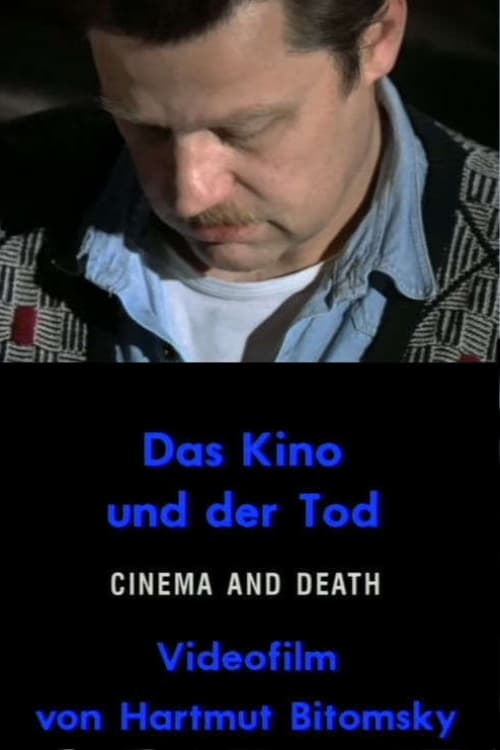
Cinema and Death
1988 · 46 min · ★ 6.5 · Documentary
“Why does cinema need death, when it can’t show it?” The filmmaker’s monologue and the discourse of images meet
Directed by Hartmut Bitomsky · Written by Hartmut Bitomsky
Your Rating
Cast
-
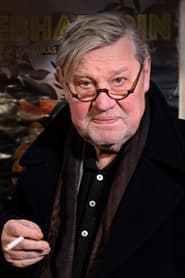 Hartmut Bitomsky Himself
Make it a double feature
1h 50m together
Both from Hartmut Bitomsky.
More from Hartmut BitomskySee all →
 Something Self Explanatory (15x) · 1971
Something Self Explanatory (15x)
★ 10.01971
MovieDocumentary
An educational film about an aspect of political economy. The concepts of use value, barter value and labor as a commodity are the subjects; they are intended to introduce the process of understanding the theory of value of work and the law of values, alienation and fetish.
 3000 Houses · 1967
3000 Houses
★ 9.01967
Movie
“Six young people move through a city in order to establish the starting point of their joint action. But they can’t agree on the topic. In the end everybody goes their own way and leaves the city.” - Hartmut Bitomsky
 Bent or Broken · 1975
Bent or Broken
★ 9.01975
MovieDrama
A darkly comedic exploration of personal struggle and societal pressure, we follow the story of a middle-aged man named Max, who is trapped in a life of monotony and frustration. After a series of unexpected events, Max finds himself in increasingly absurd and challenging situations, forcing him to confront his own limitations and fears. With sharp humor and a critique of societal expectations, the film delves into the pressures that shape our lives and the lengths we go to in order to break free from them. A poignant yet quirky tale about bending to life's demands or breaking under the weight of it all.
 Deutschlandbilder · 1984
Deutschlandbilder
★ 9.01984
MovieDocumentary
This compilation film focuses on the contents of Nazi propaganda shorts such as "The Beauty of Work" (1934), "We Have No Problems" (1933), or "The Will To Live" (1944) that preceded the feature films in German movie theaters between 1933 and 1945. The shorts reveal that men and women workers were idealized, uniformity was stressed, optimism in the face of adversity was the goal, and, in general, all the classic lies that dictatorships use to control and mold their citizens are featured.
 Die UFA · 1992
Die UFA
★ 8.51992
MovieDocumentary
Die UFA, a film essay about the eponymous German studio.
 Es stirbt allerdings ein jeder, fragt sich nur wie und wie Du gelebt hast (Holger Meins) · 1976
Es stirbt allerdings ein jeder, fragt sich nur wie und wie Du gelebt hast (Holger Meins)
★ 7.11976
MovieDocumentary
A look into the life of Holger Meins, the German cinematography student who became a revolutionary and a prominent voice in the Vietnam War protest movement. This film is comprised of interviews with his associates.
 Playback · 1995
Playback
★ 7.01995
MovieDocumentaryTV Movie
The film documents a debate about early 20th century films, mainly 1910 to 1920, from short news reels to excerpts from full-length movies. At Amsterdam's Film Museum, film directors, students, and film researchers and archivists look at the moving images and discuss their meaning, in the social and technical contexts. Moody live music was added to the edited film.
 Before Your Eyes - Vietnam · 1982
Before Your Eyes - Vietnam
★ 7.01982
MovieDrama
An unconventional essay film that interrogates the visual and ideological legacy of the Vietnam War. Blending staged scenes, archival footage, photographs, and philosophical dialogue, the film follows various characters — including an American soldier captured by North Vietnamese villagers — as they reflect on violence, memory, and image-making. Set partly in West Berlin and partly in reconstructed spaces representing Vietnam, the film avoids traditional dramatic narrative in favor of a fragmented montage of voices, documents, and reenactments. Interweaving love stories, political debate, and historical commentary, Farocki creates a critical reflection on how war is represented, seen, and imagined, both in cinema and in public consciousness. The result is a complex meditation on images as weapons and instruments of perception.
 Kampf um ein Kind · 1975
Kampf um ein Kind
★ 7.01975
MovieDrama
A West Berlin doctor, married with a two-year-old child, leaves her husband to go to Munich to work in the birth clinic of a hospital. Her husband doesn’t know that she’s pregnant with their second child. Will she have to choose between motherhood and her career?
 Closed Circuit · 1983
Closed Circuit
★ 7.01983
MovieDramaThriller
IT specialist Victor Faber makes a living securing computers for large corporations and banks. His reclusive private life is upended when he falls in love with a strange woman named Juliet. Her friend convinces Faber to exploit his knowledge to rob a bank.
 Barrage and Bunker · 1991
Barrage and Bunker
★ 6.51991
MovieDocumentary
Barrage and Bunker is an essay film about the (narrative) space imagined by fiction films. Reflections and associations about movement in space are the basis of every kind of story-telling. The film is sometimes referred to as part of Bitomsky's Cinema Trilogy. Sequences from over 20 movies are quoted and commented on by a team of three "researchers" (Bitomsky, Petzold, Tanner) in a sort of laboratory. TV-monitors, production stills and screenshots are used as well as quotations from books. A long night's work.
 Es geht um Alles · 2008
Es geht um Alles
★ 6.52008
MovieDocumentary
 Dust · 2007
Dust
★ 6.42007
MovieDocumentary
A look at the pervasive power of dust from its tiny particles settling in unseen places to its ability to cause illnesses and create the cosmos.
 Workers Leaving the Factory · 1995
Workers Leaving the Factory
★ 6.41995
MovieDocumentaryTV Movie
Using one of the Lumière Brothers' first films of workers leaving the Factory as his starting point, Farocki provides an insight to changes in industrial production, workers' strikes and motion pictures-- via images of workers leaving factories throughout the years.
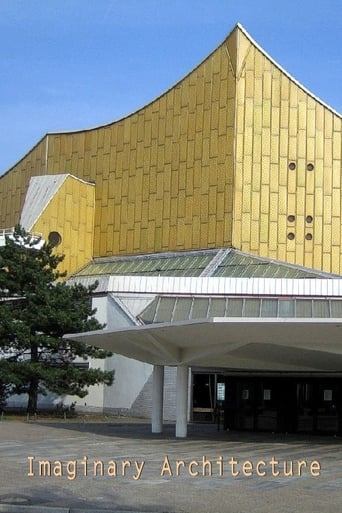 Imaginary Architecture, the architect Hans Scharoun · 1995
Imaginary Architecture, the architect Hans Scharoun
★ 6.01995
MovieDocumentary
Hans Scharoun has built houses which show not only structural substance and aesthetic forms but also how human beings should live in buildings. This depiction can only be imaginary - like reading invisible writing on walls. Bitomsky's film looks at several of Scharoun's buildings.
 The Cinema and the Wind and Photography · 1991
The Cinema and the Wind and Photography
★ 5.81991
MovieDocumentary
How should one define the relationship of documentary film to reality? Does it aim at authenticity or is it rather an “exile of reality”, a “foreign homeland of reality”, where the pre-filmic, stripped of its immediacy, comes to its own right in the first place? Where in its mis-en-scène would be the line drawn to a fictional film, if drawing a line would succeed at all? These are the kind of questions this film essay on the history and aesthetics of documentary film deals with in its seven chapters.
More Like This
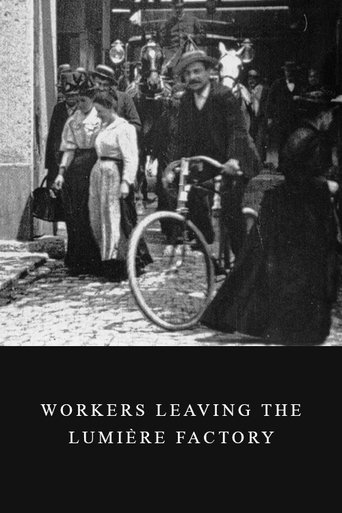 Workers Leaving the Lumière Factory · 1895
Workers Leaving the Lumière Factory
★ 6.71895
MovieDocumentary
“The workers leave the Lumière factory.” Workers pass through the gate of the Lumière factory and are followed by a carriage drawn by two horses.
 The Pixar Story · 2007
The Pixar Story
★ 7.62007
MovieDocumentary
A look at the first years of Pixar Animation Studios - from the success of "Toy Story" and Pixar's promotion of talented people, to the building of its East Bay campus, the company's relationship with Disney, and its remarkable initial string of eight hits. The contributions of John Lasseter, Ed Catmull and Steve Jobs are profiled. The decline of two-dimensional animation is chronicled as three-dimensional animation rises. Hard work and creativity seem to share the screen in equal proportions.
 Loose Change · 2005
Loose Change
★ 6.82005
MovieDocumentary
2nd Edition of Loose Change documentary. What if...September 11th was not a surprise attack on America, but rather, a cold and calculated genocide by our own government?We were told that the twin towers were hit by commercial jetliners and subsequently brought down by jet fuel. We were told that the Pentagon was hit by a Boeing 757. We were told that flight 93 crashed in Shanksville, Pennsylvania. We were told that nineteen Arabs from halfway across the globe, acting under orders from Osama Bin Laden, were responsible. What you will see here will prove without a shadow of a doubt that everything you know about 9/11 is a complete fabrication. Conspiracy theory? It's not a theory if you can prove it.Written and narrated by Dylan Avery, this film presents a rebuttal to the official version of the September 11, 2001 terrorist attacks and the 9/11 Commission Report.
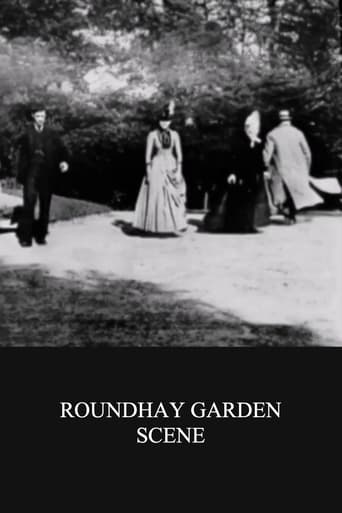 Roundhay Garden Scene · 1888
Roundhay Garden Scene
★ 6.51888
MovieDocumentary
The earliest surviving motion-picture film, and believed to be one of the very first moving images ever created, was shot by Louis Aimé Augustin Le Prince using the LPCCP Type-1 MkII single-lens camera. It was taken on paper-based photographic film in the garden of Oakwood Grange, the Whitley family house in Roundhay, Leeds, West Riding of Yorkshire (UK), on 14 October 1888. The film shows Adolphe Le Prince (Le Prince’s son), Mrs. Sarah Whitley (Le Prince’s mother-in-law), Joseph Whitley, and Miss Harriet Hartley walking around in circles, laughing to themselves, and staying within the area framed by the camera. Roundhay Garden Scene is often associated with a recording speed of around 12 frames per second and runs for about 2 to 3 seconds.