The Mysteries

The Mysteries

1968 · 64 min · ★ 9.0 · Mystery, Drama

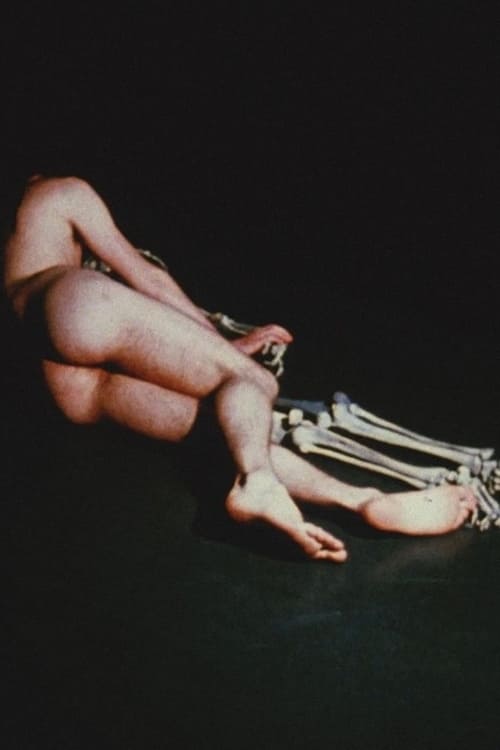
"In my film I suggest that there is no greater mystery than that of the protagonists. War and Love are simply equated for what they are; the aftermath is inevitable, and a normal human condition, for which like the ancients one can only have pity and understanding. In this lies the mystery. All else is irrelevant. That there are other sub-currents of equal power in The Mysteries goes without saying; and, those who are capable of the numerous visual visitations and annunciations which the film offers them will realize what is the Ultimate Mystery of my work."

Directed by Gregory J. Markopoulos · Written by Gregory J. Markopoulos

Your Rating

Cast

Make it a double feature

2h 26m together
The Mysteries
Galaxie

Both from Gregory J. Markopoulos.

More from Gregory J. MarkopoulosSee all →

GalaxieGalaxie · 1966
Galaxie
10.01966
MovieDocumentary
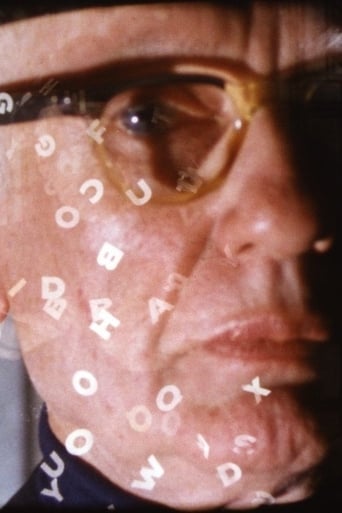
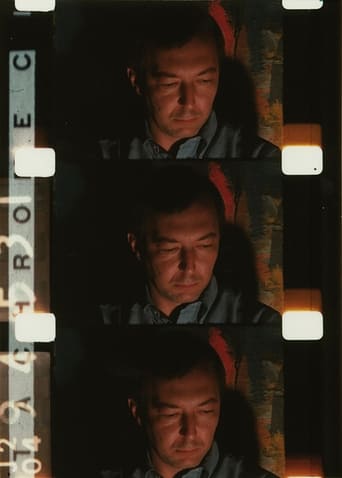
In March and April of 1966, Markopoulos created this filmic portrait of writers and artists from his New York circle, including Parker Tyler, W. H. Auden, Jasper Johns, Susan Sontag, Storm De Hirsch, Jonas Mekas, Allen Ginsberg, and George and Mike Kuchar, most observed in their homes or studios. Filmed in vibrant color, Galaxie pulses with life. It is a masterpiece of in-camera composition and editing, and stands as a vibrant response to Andy Warhol's contemporary Screen Tests. Preserved by the Academy Film Archive in 2001.
A Christmas CarolA Christmas Carol · 1940
A Christmas Carol
10.01940
MovieDramaFantasy
Miser Ebenezer Scrooge is awakened on Christmas Eve by spirits who reveal to him his own miserable existence, what opportunities he wasted in his youth, his current cruelties, and the dire fate that awaits him if he does not change his ways. Scrooge is faced with his own story of growing bitterness and meanness, and must decide what his own future will hold: death or redemption.
The Dead OnesThe Dead Ones · 1967
The Dead Ones
8.01967
MovieDrama
Markopoulos’ first attempt at making a 35mm feature film, clearly inspired by the cinema of Jean Cocteau, was left unfinished and the materials were lost for many years.
SorrowsSorrows · 1969
Sorrows
7.91969
Movie
Set to music by Beethoven, this lyrical portrait moves from a chilled and misty exterior to the crystalline interior of the Swiss chateau that King Ludwig II built for Wagner.
GammelionGammelion · 1968
Gammelion
7.41968
Movie
Gammelion 1968, filmed at Il Castello Roccasinibalda in Rieti, Italy, is a major work in Markopoulos’s oeuvre, marking the transition into his late period and anticipating his epic final film, Eniaios 1947–91. Shot with only two rolls of film, the work extends seven minutes of footage to almost one hour of viewing time using hundreds of fades in and out. - Tate Modern
The PaintingThe Painting · 1972
The Painting
7.01972
MovieDocumentary
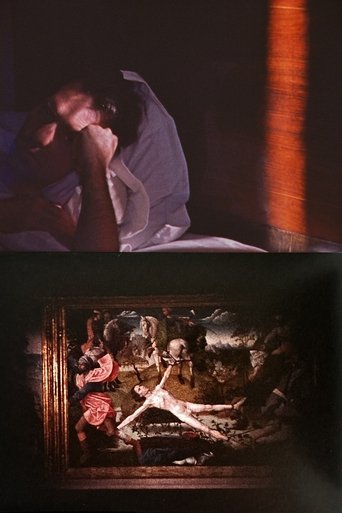
Beavers intercuts scenes of traffic in Bern with details from the 15th-century altarpiece The Martyrdom of St. Hippolytus. In its revised form, the film gains a psychodramatic intensity, juxtaposing Markopoulos in shafts of light with a torn self-portrait and recurring shots of a shattered windowpane.
DionysusDionysus · 1964
Dionysus
7.01964
Movie
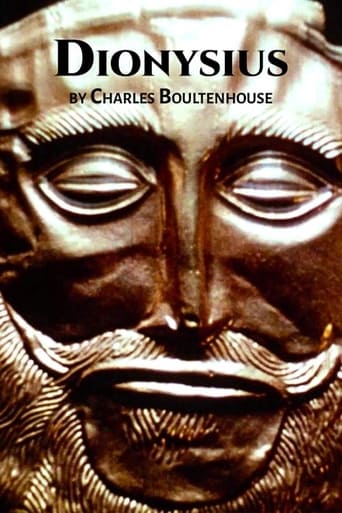
In 1963 Boultenhouse wrote, produced, and directed Dionysius,which he described as a “free treatment of Euripides' The Bacchae.”It starred the dancers Louis Falco, Anna Duncan, and Nicolas Magallanes as Dionysius, Agave, and Pentheus respectively, and the experimental filmmakers Charles Levine, Willard Maas, Gregory Markopoulos, Marie Menken, Lloyd Williams and William Wood as the Chorus of Cameras. The film's score was by Teiji Ito.
GeniusGenius · 1970
Genius
7.01970
Movie
Based upon the theme of Faust, with the characters portrayed serving as representatives of the crises of their time. A triple portrait of three important figures in the art world: British artist David Hockney, Argentine surrealist painter Leonor Fini, and German-French art dealer Daniel-Henry Kahnweiler.
PsychePsyche · 1948
Psyche
7.01948
MovieDramaRomance
Psyche 1947, made while a student at USC, shows Markopoulos’ developing style and his sensuous use of colour and composition. Shot in the Hollywood hills, the film was inspired by an unfinished novella by Pierre Louÿs. - Tate Modern
GaliniGalini · 1961
Galini
6.81961
MovieHistoryDrama
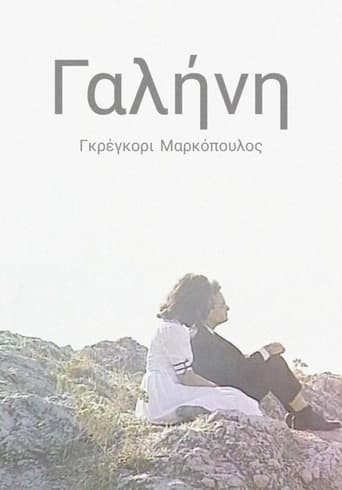
Originally edited in two versions. Version I, 70 minutes; version II, 90 minutes. (The only known existing version is not Markopoulos’s edit and contains additional titles, music and voice-over added later than 1961. 65 minutes.) Filmed in Mytilene and Annavysos, Greece, 1958. Existing copy on video, J. and M. Paris Films, Athens.
SwainSwain · 1950
Swain
6.81950
MovieDrama
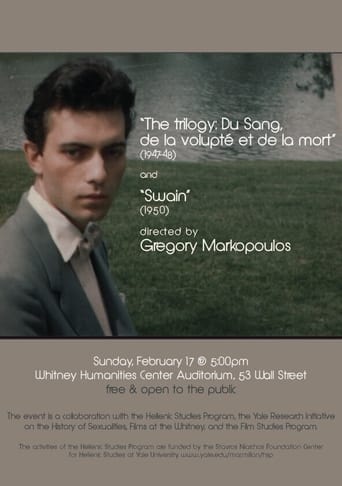
Swain is inspired by Nathaniel Hawthorne’s Fanshawe, features a dreamlike narrative of a young man’s ritualized rejection of heterosexuality, as a mysterious woman in white gossamer pursues him through a ruined landscape.
SotirosSotiros · 2000
Sotiros
6.72000
MovieDocumentary
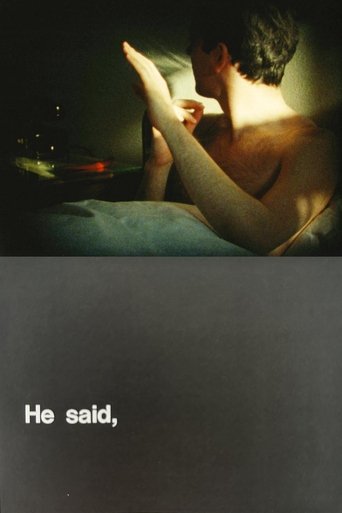
Distilled in 1996 from an earlier 50-minute trilogy, this 26-minute film was shot in Greece and Austria and structured around two recurring intertitles, “He said” and “he said.” Each introduces delicate studies of light and place—hotel interiors, cafés, hillsides, storefronts, and street life—framed in parallel variations. The title invokes Apollo as savior and healer.
LysisLysis · 1949
Lysis
6.31949
MovieDrama
Markopoulos called Lysis “a study in stream-of-consciousness poetry of a lost, wandering, homosexual soul” and felt that the film foreshadowed The Illiac Passion.
CharmidesCharmides · 1949
Charmides
6.01949
MovieDrama
Based on Plato's dialogue Charmides.
Twice a ManTwice a Man · 1963
Twice a Man
5.61963
MovieDrama
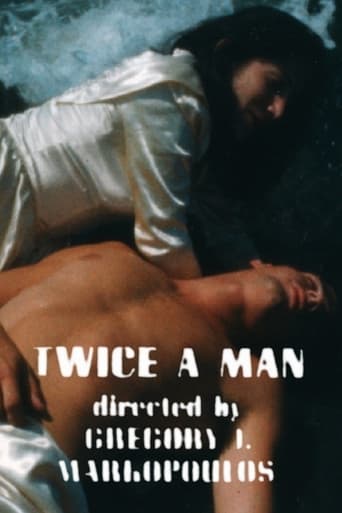
A reworking of the myth of Hippolytus, in which a chaste youth rejects the incestuous advances of his mother and is saved from death by a caring physician.
The Illiac PassionThe Illiac Passion · 1967
The Illiac Passion
4.31967
MovieDramaFantasy
Prometheus, on an Odyssean journey, crosses the Brooklyn Bridge in search of the characters of his imagination. After meeting the Muse, he proceeds to the "forest." There, under an apple tree, he communes with his selves, represented by celebrated personages from the New York "underground scene" who appear as modern correlatives to the figures of Greek mythology. The filmmaker, who narrates the situations with a translation of Aeschylus' Prometheus Bound, finds the personalities of his characters to have a timeless universality.

More Like This

The Baby of MâconThe Baby of Mâcon · 1993
The Baby of Mâcon
6.81993
MovieDramaHistory
In 17th-century Tuscany, a church play is performed for the benefit of young aristocrat Cosimo. In the play, a grotesque old woman gives birth to a beautiful baby boy. The child's older sister is quick to exploit the situation, selling blessings from the baby, and even claiming she's the true mother by virgin birth. However, when she attempts to seduce the bishop's son, the Church exacts a terrible revenge.
Blow-UpBlow-Up · 1966
Blow-Up
7.31966
MovieDramaMystery
A successful mod photographer in London whose world is bounded by fashion, pop music, marijuana, and easy sex, feels his life is boring and despairing. But in the course of a single day he unknowingly captures a death on film.
MirrorMirror · 1975
Mirror
8.01975
MovieDramaHistory
A dying man in his forties recalls his childhood, his mother, the war and personal moments that tell of and juxtapose pivotal moments in Soviet history with daily life.
Drowning by NumbersDrowning by Numbers · 1988
Drowning by Numbers
7.01988
MovieComedyCrime
Cissie Colpitts drowns her cheating husband and, in the ensuing cover-up, enlists the help of lonely coroner Henry Madgett, an old friend with a longstanding weakness for her charms. But when Cissie's daughter and granddaughter—both also named Cissie Colpitts—decide to resort to the same methods for solving conflicts with their own frustrating husbands, the women and their repeated appeals for help begin to wear on Madgett's conscience.

Rate this film

Your ratings make Midnight smarter