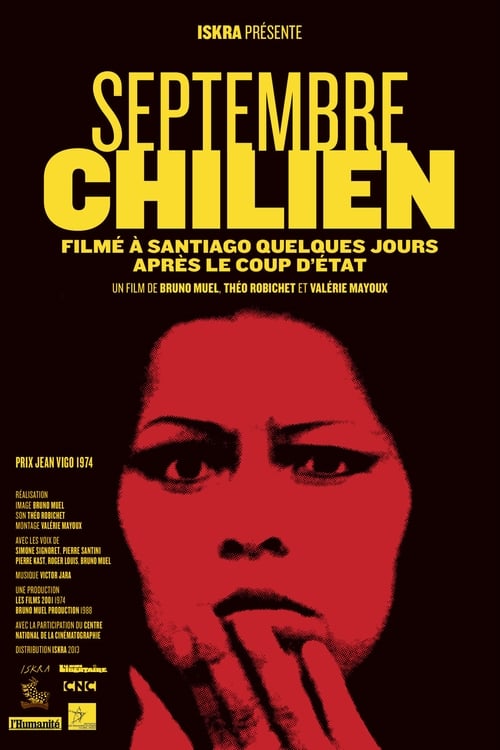
Septembre Chilien

Septembre Chilien

1973 · 39 min · ★ 10.0 · Documentary

Bruno Muel's documentary on the coup in Chile in 1973. Muel, who was part of the famed Medvedkine group, along with Chris Marker and Jean-Luc Godard, among others, captured one of the most powerful portraits of the early days of Dictatorship. Profound solidarity with the socialist cause, Muel and his team showed great courage to mix the official registration of images with those triumphant, clandestine, of the nascent opposition.

Directed by Bruno Muel

Your Rating

Where to Watch

Rent or Buy

Sooner

Cast

Make it a double feature

1h 19m together
Septembre Chilien
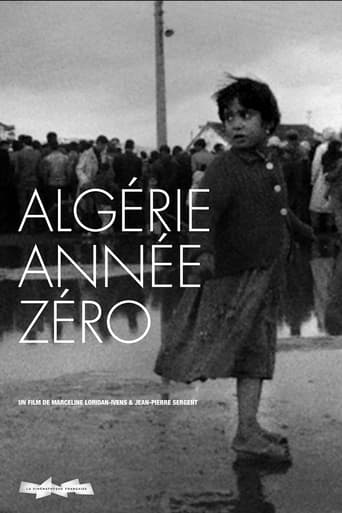
Algeria, Year Zero

Both from Bruno Muel.

More from Bruno MuelSee all →

Algeria, Year ZeroAlgeria, Year Zero · 1965
Algeria, Year Zero
10.01965
MovieDocumentary
Documentary on the beginnings of Algerian independence filmed during the summer of 1962 in Algiers. The film was banned in France and Algeria but won the Grand Prize at the Leipzig International Film Festival in 1965. Out of friendship, the production company Images de France sent an operator, Bruno Muel, who later declared: "For those who were called to Algeria (for me, 1956-58), participating in a film on independence was a victory over horror, lies and absurdity. It was also the beginning of my commitment to the cinema."
Les AjoncsLes Ajoncs · 1970
Les Ajoncs
8.51970
MovieComedyAdventure
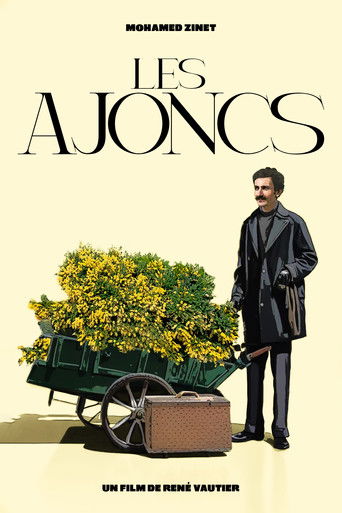
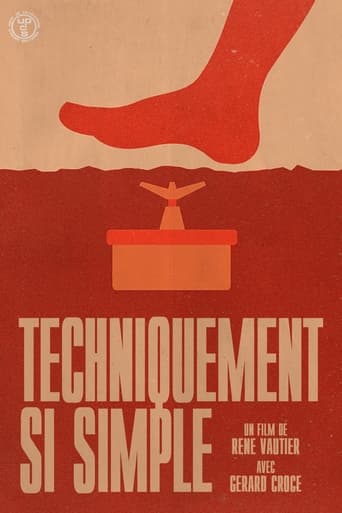
An unemployed Algerian worker leaves Paris by hitchhiking. He soon found himself in Brittany and, seduced by the beauty of wild gorse, eventually established himself as a gorse merchant. But for problems with parking his little cart, he had a rough explanation with a law enforcement officer. The happy intervention of factory workers, the eager kindness they showed him, saved him from despair. This film is part of a trilogy "Them And Us" with the films "Les 3 Cousins" and "Techniquement Si Simple".
Techniquement Si SimpleTechniquement Si Simple · 1971
Techniquement Si Simple
8.31971
MovieHistoryDrama
Tahia Ya Didou !Tahia Ya Didou ! · 1971
Tahia Ya Didou !
8.01971
MovieComedy
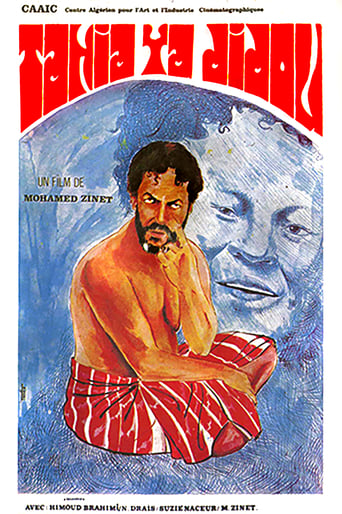
Originally commissioned by the city of Algiers to promote tourism, Mohamed Zinet’s Tahia ya Didou blends documentary with fiction to create a poetic, acerbic and rapturous portrait of the director’s native city. The camera travels freely, through the port, market, streets and cafés, capturing everyday people, some of whom recur frequently enough to seem like protagonists. The nominal plotline follows a French tourist couple’s leisurely visit to the city, the man having previously served in the army during the Algerian war. As they walk around, his comments betray his mindset’s racist colonial prejudices, while his wife reiterates asinine clichés. Their unhurried wandering is interrupted when he comes across a blind man and realises that he tortured him during his army service. The film is punctuated with punchy sequences that show a poet named Momo delivering verse as an elegy for Algiers.
Les Trois CousinsLes Trois Cousins · 1970
Les Trois Cousins
8.01970
MovieDramaComedy
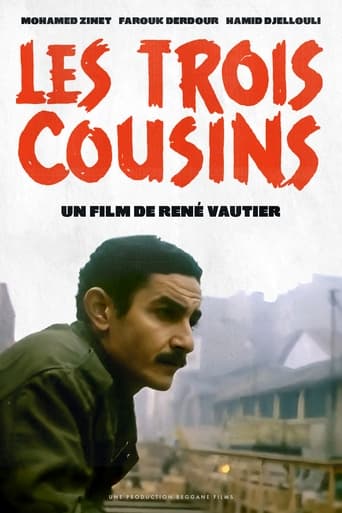
The Three Cousins ​​is a comedy-drama by René Vautier released in 1970 about the living conditions of three Algerian immigrant cousins ​​looking for work in Paris. Housed in a narrow construction shed, the coal stove will cause them to suffocate. The Three Cousins ​​won the Best Human Rights Film Award in Strasbourg in 1970.
Quand les femmes ont pris la colèreQuand les femmes ont pris la colère · 1977
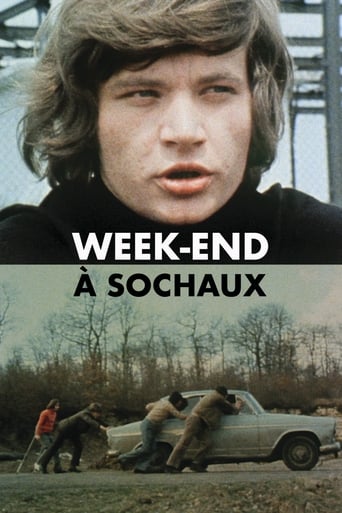
Quand les femmes ont pris la colère
8.01977
MovieDocumentary
The action takes place in a metallurgical factory which was part of the Pechiney-Ugine-Külhman trust in Couëron, Loire-Atlantique, in 1975. To show their solidarity with their husbands on strike, workers' wives invaded the director's office and obtained in two hours what was refused to them for months. But the management complained and sued. Twelve wives were charged with forcible confinement. The mobilization then widened. The women called on the Bretagne Cinema Production Unit (UPCB) to make a film about their struggle. Narrating the courageous action of solidarity of women with the strikers of the factory and the emergence of a collective awareness, both feminist and working-class, the film is also an echo chamber sensitive to the aspirations of the twelve women who were charged.
Week-end à SochauxWeek-end à Sochaux · 1972
Week-end à Sochaux
7.51972
MovieDocumentary
A group of young militant workers, OS at the Peugeot plant, solicited at home by the in-house recruiters, disembark in Sochaux carrying all their belongings on their backs and immediately snatched up by the chains of the Peugeot empire, manufacturing chain, bachelor hotel chain, Peugeot department store chain, jokingly named Ravi...
Far from VietnamFar from Vietnam · 1967
Far from Vietnam
7.11967
MovieDocumentaryWar
In seven different parts, Godard, Ivens, Klein, Lelouch, Marker, Resnais, and Varda show their sympathy for the North-Vietnamese army during the Vietnam War.
Be Seeing YouBe Seeing You · 1968
Be Seeing You
6.31968
MovieDocumentary
A documentary look at striking workers in a textile plant in Besançon, France, centering on interviews with workers about their motivations for becoming involved with the union and the struggles of their day to day life.
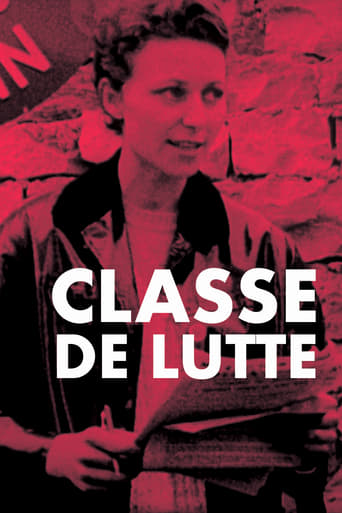
Class of StruggleClass of Struggle · 1969
Class of Struggle
6.21969
MovieDocumentary
A follow-up to Be Seeing You (À bientôt, j’espère), this collective work—initiated by Chris Marker and the Medvedkin Group—was made in collaboration with workers at the Yema Watch Factory in Besançon. It follows a female worker who becomes active in labor organizing, depicting everyday struggles and the growing consciousness within the French labor movement.
The Pan-African Festival in AlgiersThe Pan-African Festival in Algiers · 1969
The Pan-African Festival in Algiers
6.01969
MovieDocumentaryMusic
Festival panafricain d'Alger is a documentary by William Klein of the music and dance festival held 40 years ago in the streets and in venues all across Algiers. Klein follows the preparations, the rehearsals, the concerts… He blends images of interviews made to writers and advocates of the freedom movements with stock images, thus allowing him to touch on such matters as colonialism, neocolonialism, colonial exploitation, the struggles and battles of the revolutionary movements for Independence.
Rio ChiquitoRio Chiquito · 1965
Rio Chiquito
1965
Movie
Documentary filmed in 1965 by two journalists in the remote town of Rio Chiquito, Colombia, a self-proclaimed communist "republic." The film shows the live of villagers and guerilleros before and after an attack by Colombian government forces.
Le Dos au murLe Dos au mur · 1981
Le Dos au mur
1981
MovieDocumentary
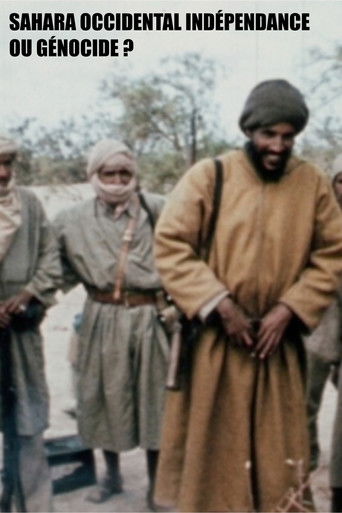
Sahara Occidental : indépendance ou génocide ?Sahara Occidental : indépendance ou génocide ? · 1976
Sahara Occidental : indépendance ou génocide ?
1976
MovieDocumentaryWar
With the Blood of OthersWith the Blood of Others · 1974
With the Blood of Others
1974
MovieDocumentary
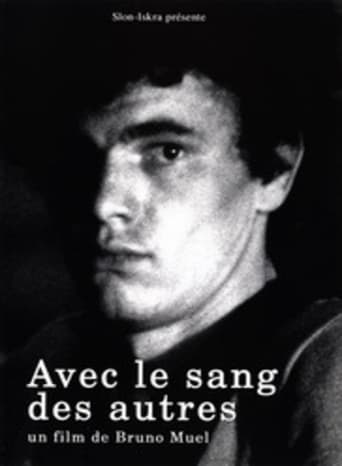
A famous documentary about the Peugeot factory in Sochaux in the 1970s. In this region, everything is owned by Peugeot: homes, stores, schools and leisure - there is no escaping it. The production line dictates the rhythm of everyday life: a horrible machine, draining workers' energy and hope.
Sochaux June 11th 1968Sochaux June 11th 1968 · 1970
Sochaux June 11th 1968
1970
Movie
Witnesses tell of the day the police took over the Peugeot factories in Sochaux on strike for 22 days. Balance: two dead, one hundred and fifty wounded. The first film by Sochaux's Medvedkine group, this film recounts one of the most violent episodes of May 68: the murder of two Peugeot factory workers by a CRS brigade during clashes on June 11, 1968. The film was shown two years later, on June 11, 1970, in a cinema opposite the factory, on the day commemorating the death of the two workers.

More Like This

Roundhay Garden SceneRoundhay Garden Scene · 1888
Roundhay Garden Scene
6.51888
MovieDocumentary
The earliest surviving motion-picture film, and believed to be one of the very first moving images ever created, was shot by Louis Aimé Augustin Le Prince using the LPCCP Type-1 MkII single-lens camera. It was taken on paper-based photographic film in the garden of Oakwood Grange, the Whitley family house in Roundhay, Leeds, West Riding of Yorkshire (UK), on 14 October 1888. The film shows Adolphe Le Prince (Le Prince’s son), Mrs. Sarah Whitley (Le Prince’s mother-in-law), Joseph Whitley, and Miss Harriet Hartley walking around in circles, laughing to themselves, and staying within the area framed by the camera. Roundhay Garden Scene is often associated with a recording speed of around 12 frames per second and runs for about 2 to 3 seconds.
Workers Leaving the Lumière FactoryWorkers Leaving the Lumière Factory · 1895
Workers Leaving the Lumière Factory
6.71895
MovieHistoryDocumentary
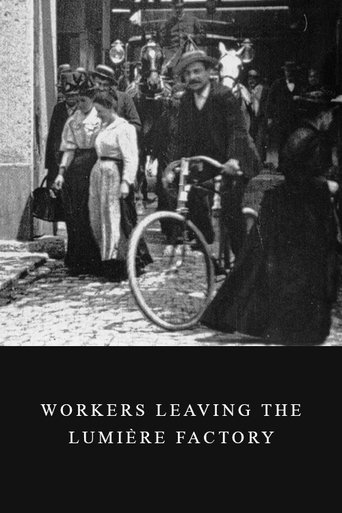
Working men and women leave through the main gate of the Lumière factory in Lyon, France. Filmed on 22 March 1895, it is often referred to as the first real motion picture ever made, although Louis Le Prince's 1888 Roundhay Garden Scene pre-dated it by seven years. Three separate versions of this film exist, which differ from one another in numerous ways. The first version features a carriage drawn by one horse, while in the second version the carriage is drawn by two horses, and there is no carriage at all in the third version. The clothing style is also different between the three versions, demonstrating the different seasons in which each was filmed. This film was made in the 35 mm format with an aspect ratio of 1.33:1, and at a speed of 16 frames per second. At that rate, the 17 meters of film length provided a duration of 46 seconds, holding a total of 800 frames.

Rate this film

Your ratings make Midnight smarter