The Gulls
1944 · 18 min · ★ 7.5 · Documentary
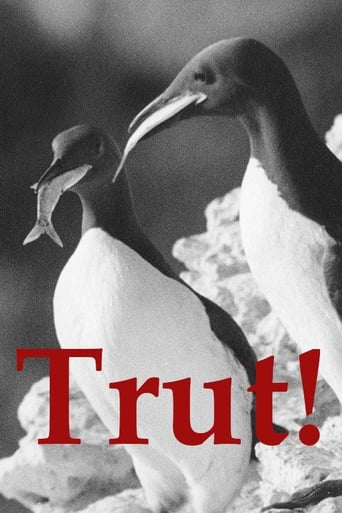
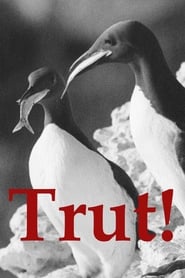
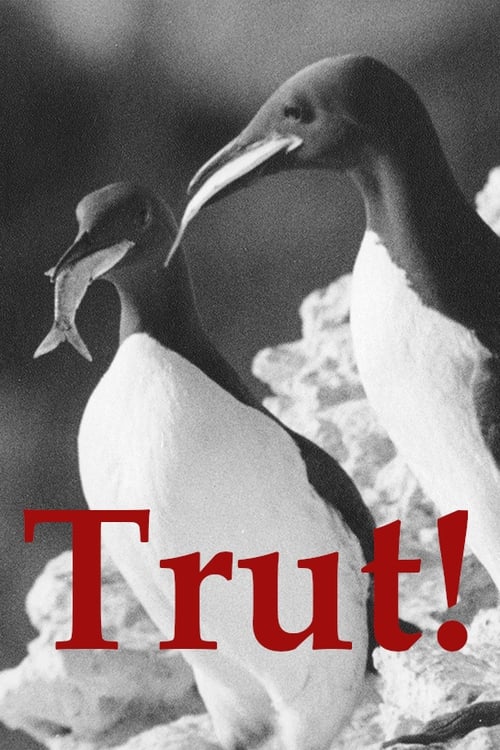
Arne Sucksdorff’s short documentary observes gulls raiding nests and stealing eggs with ruthless persistence. Though presented as pure nature study, the film was widely read as an allegory of Nazism—a symbolic parable of predation and violence during wartime. Sucksdorff himself denied such intent, but remarked that “a film that is not open to interpretation is a dead film.”
Directed by Arne Sucksdorff · Written by Arne Sucksdorff
Your Rating
Cast
-
Willy Peters Narrator (voice)
More from Arne SucksdorffSee all →
Shadow of the Hunter · 1944Shadow of the Hunter
★ 9.01944
MovieDocumentary
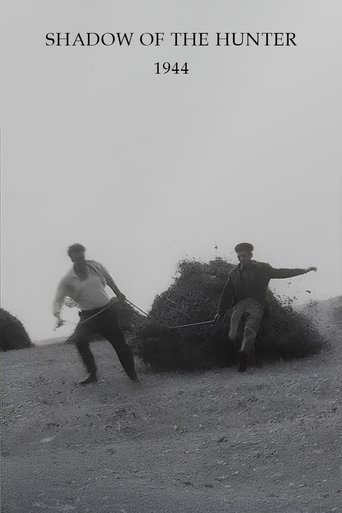
Gryning is a short Swedish film by Arne Sucksdorff, presented without narration or dialogue. It follows a hunter tracking animals through the forest at daybreak, but as the dawn light transforms the landscape, he lowers his rifle, overcome by the beauty of the morning, and walks away. The film is also known by the English titles The Shadow of the Hunter and Dawn.
The Great Adventure · 1953The Great Adventure
★ 7.11953
MovieAdventureFamily
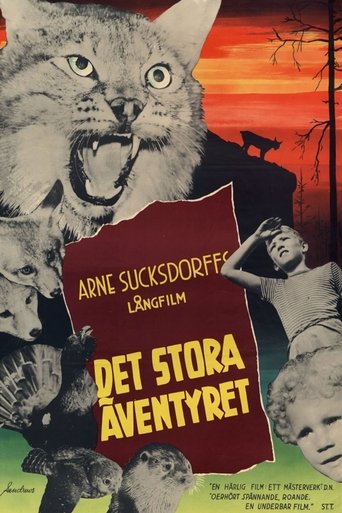
Arne Sucksdorff’s celebrated nature film follows two brothers in rural Sweden as they witness a fox raid and secretly raise an orphaned otter. Told through an adult’s memories, it reflects on childhood, nature, and the fragile balance between wilderness and civilization. The film won the International Prize at the 1954 Cannes Film Festival.
The Boy in the Tree · 1961The Boy in the Tree
★ 7.01961
MovieDrama
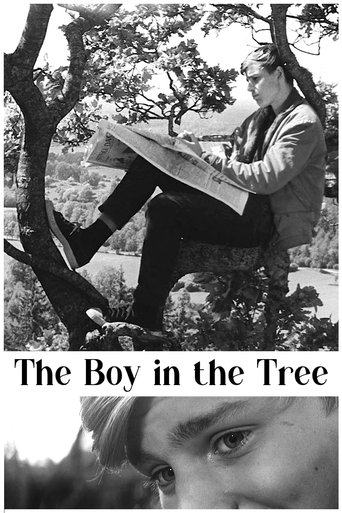
Göte is a young teen who seems to be at odds with his family and may not know his own mind that well either. Discontented and rebellious, Göte joins up with two mean-spirited game poachers in spite of the fact that he loves animals and nature. This contradiction between his own feelings and his need to rebel reaches a climax when a forest ranger starts to track down the young men in ever-tightening circles.
The Flute and the Arrow · 1957The Flute and the Arrow
★ 6.91957
MovieDramaDocumentary
Arne Sucksdorff’s ethnographic feature documents the life and rituals of the Muria people in the Bastar jungle of central India, focusing on their traditions, music, and relationship to the natural environment. Presented with Sucksdorff’s lyrical visual style, the film was selected for the 1958 Cannes Film Festival.
Symphony of a City · 1947Symphony of a City
★ 6.91947
MovieDocumentary
An impressionistic short film celebrating Stockholm’s rhythms of life, blending images of its streets, waterways, people, and architecture into a visual “symphony.” Winner of the Academy Award (Oscar) for Best Short Subject, One-Reel in 1949 — the first Swedish film ever to receive an Oscar.
A Divided World · 1948A Divided World
★ 6.91948
MovieDocumentary
A ten-minute study of wild animal life in a Swedish forest; stoat, fox, hare, and owl, who stalk and savage one another, are photographed with extraordinary vividness and intimacy. It is perhaps the most striking of Sucksdorff's animal studies, in spite of an abrupt introduction and ending.
An August Rhapsody · 1940An August Rhapsody
★ 6.81940
MovieDocumentary
Arne Sucksdorff’s debut—made when he was 23— is a lyrical short about Sweden’s late-summer crayfish fishery: night-time trapping on water, daybreak on the shore, and the rhythms of August nature rendered in carefully composed images. Often grouped with This Land Is Full of Life as one of Sucksdorff’s “hymns to the Swedish summer,” the film distills a 24-hour cycle into a seven-minute nature rhapsody.
My Home Is Copacabana · 1965My Home Is Copacabana
★ 6.81965
MovieAdventureDrama
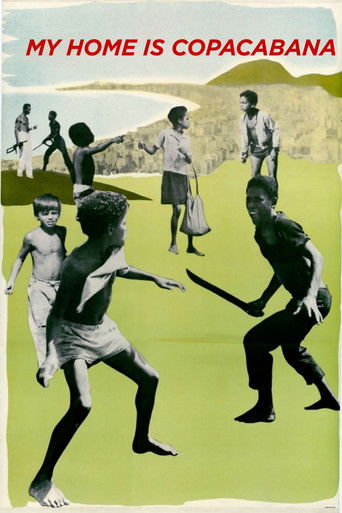
Arne Sucksdorff’s drama follows four homeless children—Jorginho, Rico, Lici, and Paulinho—struggling to survive in the Rio de Janeiro slums. They shine shoes, scavenge food, and pickpocket while dreaming of escape from the streets. When Rico, once escaped from a brutal institution in Caxambu, falls ill, he chooses to return there rather than die outside. A somber portrait of poverty and resilience, the film was selected for the 1965 Cannes Film Festival.
Summer's Tale · 1941Summer's Tale
★ 6.61941
MovieDocumentary
Arne Sucksdorff’s first film for Svensk Filmindustri, this lyrical short follows a fox cub through his playful explorations and predatory instincts in the Swedish forest. Blending moments of enchantment with unsentimental depictions of cruelty, the film captures the cycle of survival among animals with striking rhythmic editing and sensuous close-ups of fur, eyes, and forest textures. Rich in light and detail, Summer’s Tale became an enormously popular nature film and established Sucksdorff’s reputation for poetic documentary.
The Wind from the West · 1942The Wind from the West
★ 6.51942
MovieDocumentary
A short drama documentary about the life of a Sami family in the northernmost part of Sweden, Lappland.
June Night · 1940June Night
★ 6.11940
MovieDrama
A woman flees to avoid rumors of promiscuity, but is trailed by a reporter who wants to expose her dark past.
Shadows on the Snow · 1946Shadows on the Snow
★ 6.01946
MovieDocumentary
A nature documentary about the predators in the Swedish winter mountains: the owl, the bear and man.
Shore · 1950Shore
★ 6.01950
MovieDrama
A documentary about the fishing industry on the west coast of Sweden.
The Wind and the River · 1953The Wind and the River
★ 6.01953
MovieDocumentary
A lyrical short documentary by Arne Sucksdorff about life along the Jhelum River in Kashmir. Through images of the people who live and work on its banks, the film captures the interplay between daily labor, the landscape, and the rhythms of the river itself.
On the Far Side of the Earth · 1972On the Far Side of the Earth
★ 6.01972
MovieDocumentary
This four-episode Swedish documentary series by Arne Sucksdorff draws on footage shot over four years in Brazil—especially in the Pantanal wetlands—and is narrated from Sucksdorff’s personal diary. It combines images of plants, animals, landscapes, and daily camp life with moments of tension (e.g. threats to wildlife) and reflection on humanity’s relationship with nature.
Indian Village · 1951Indian Village
★ 5.81951
MovieDocumentary
A short documentary by Swedish filmmaker Arne Sucksdorff portraying everyday life in a rural Indian village. Through carefully composed images of people, landscapes, and communal rhythms, the film offers an intimate view of village life. It was awarded the Special Jury Prize at the 1952 Cannes Film Festival.
More Like This
The Year Earth Changed · 2021The Year Earth Changed
★ 7.92021
MovieDocumentary
Never-before-seen footage shows how our living in lockdown opened the door for nature to bounce back and thrive. Across the seas, skies, and lands, Earth found its rhythm when we came to a stop.
Roundhay Garden Scene · 1888Roundhay Garden Scene
★ 6.51888
MovieDocumentary
The earliest surviving motion-picture film, and believed to be one of the very first moving images ever created, was shot by Louis Aimé Augustin Le Prince using the LPCCP Type-1 MkII single-lens camera. It was taken on paper-based photographic film in the garden of Oakwood Grange, the Whitley family house in Roundhay, Leeds, West Riding of Yorkshire (UK), on 14 October 1888. The film shows Adolphe Le Prince (Le Prince’s son), Mrs. Sarah Whitley (Le Prince’s mother-in-law), Joseph Whitley, and Miss Harriet Hartley walking around in circles, laughing to themselves, and staying within the area framed by the camera. Roundhay Garden Scene is often associated with a recording speed of around 12 frames per second and runs for about 2 to 3 seconds.
Carmencita · 1894Carmencita
★ 5.21894
MovieDocumentary
The first woman to appear in front of an Edison motion picture camera and possibly the first woman to appear in a motion picture within the United States. In the film, Carmencita is recorded going through a routine she had been performing at Koster & Bial's in New York since February 1890.