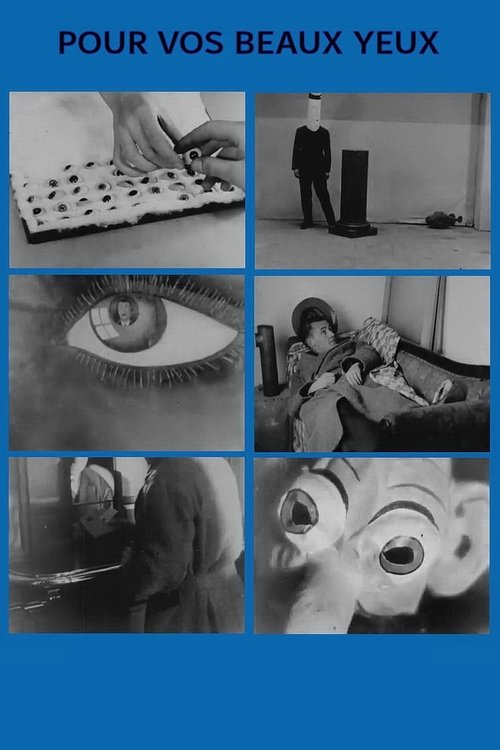
For Your Beautiful Eyes
1929 · 8 min · ★ 5.9
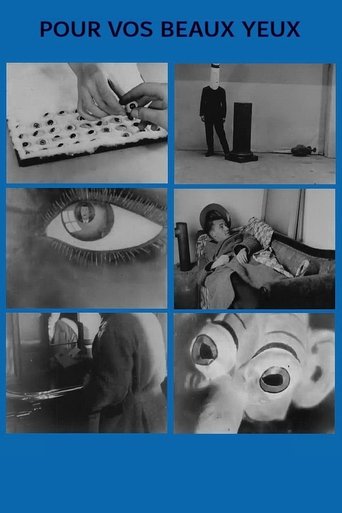
"Pour vos beaux yeux" (For Your Beautiful Eyes) is an eight-minute surrealist short by Henri Storck, conceived from an idea by Félix Labisse. In just 75 shots, it follows a young man who discovers a glass eye in a park, becomes consumed by its strange allure, and tries in vain to rid himself of it by mailing it away. Featuring Henry Van Vyve in the lead role, with cameo appearances by Labisse and his sister Ninette, the film stands as a playful yet unsettling exploration of obsession and absurdity—released only a year after "Un Chien Andalou."
Directed by Henri Storck · Written by Félix Labisse
Your Rating
Cast
More from Henri StorckSee all →
Outside the Border of the Camera · 1932Outside the Border of the Camera
★ 9.01932
Movie
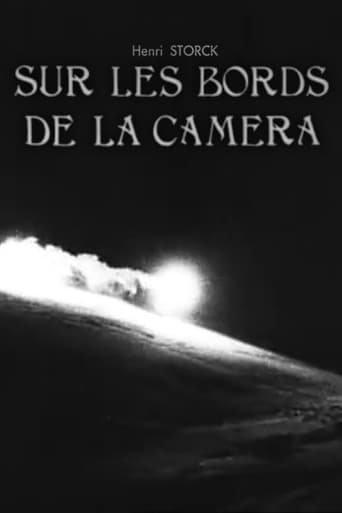
A montage of images from newsreels; Storck's edit contains comical, poignant, even chilling juxtapositions.
Henri Storck, ooggetuige · 1986Henri Storck, ooggetuige
★ 9.01986
MovieDocumentary
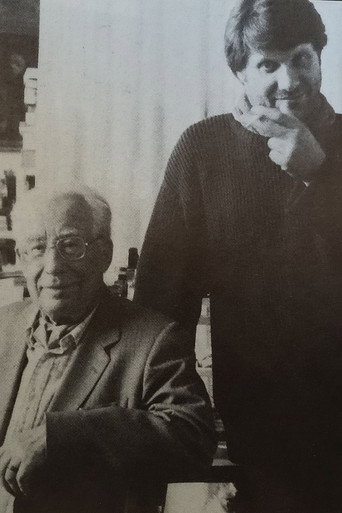
Robbe de Hert’s Henri Storck, ooggetuige (1986) is a brilliant cinematic homage to the founding father of Belgian documentary cinema. Filmed around Storck’s 80th birthday, the film eschews standard biographical formulas. Instead, De Hert crafts an intelligent, vibrant collage that synthesizes rare archival footage with intimate anecdotes told by Storck himself.The documentary excels at tracing Storck’s evolution from an Ostend avant-garde poet to a fierce social activist. De Hert’s signature rebellious tone shines through in bold creative choices, such as overlaying John Lennon's "Working Class Hero" onto the silent, gritty footage of Misère au Borinage (1933). This creates a powerful bridge between 1930s labor struggles and modern social critique
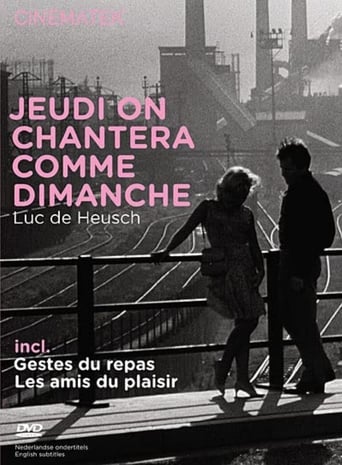
Thursday We Shall Sing Like Sunday · 1967Thursday We Shall Sing Like Sunday
★ 7.81967
MovieRomanceComedy
A bitter-sweet story of a young sales assistant and a truck driver trapped between their dreams and the economic depression.
Peasant Symphony · 1944Peasant Symphony
★ 7.51944
MovieDocumentary
From 1942 to 1944, Henri Storck composed his Symphonie paysanne, in which he describes the day to day life and rituals of the farmers on the rhythm of the seasons. The film is a poem to nature, a lyrical masterpiece on life and death, on animals and plants, on man and his labour.
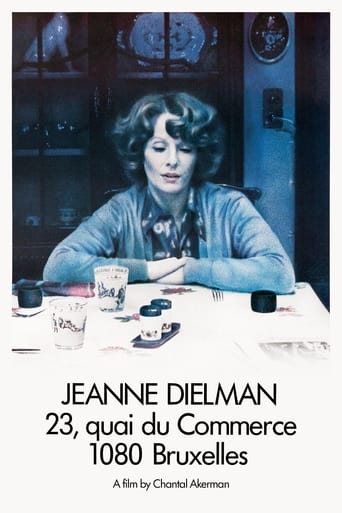
Jeanne Dielman, 23, quai du Commerce, 1080 Bruxelles · 1976Jeanne Dielman, 23, quai du Commerce, 1080 Bruxelles
★ 7.41976
MovieDrama
A lonely young widow lives with her son following an immutable order: while the boy is in school, she cares for their apartment, does chores, and receives clients in the afternoon.
Vacances · 1938Vacances
★ 7.01938
MovieDocumentary
This trailer for the pleasures of living between La Panne and Le Zoute testifies to the post-1936 euphoria that came with paid holidays, with sun and rest for everybody.
Pleasure Trips · 1930Pleasure Trips
★ 7.01930
MovieDocumentary
The beach and the bathers, poses and gestures. A series of sketches and portraits, little touches that build up into a wry, affectionate portrait of a Sunday at the beach.
Zero for Conduct · 1933Zero for Conduct
★ 6.91933
MovieComedyDrama
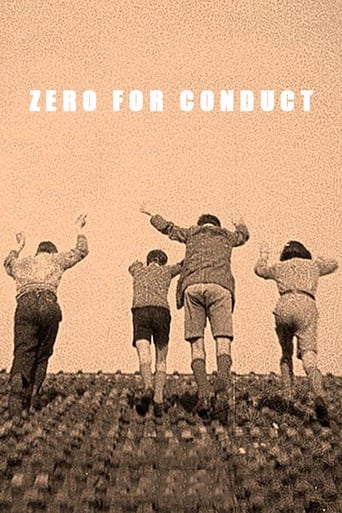
In a repressive boarding school with rigid rules of behavior, four boys decide to rebel against the director on a celebration day.
Dainah the Mixed · 1932Dainah the Mixed
★ 6.71932
MovieDrama
After three weeks and a long, hot voyage across the Pacific, an ocean liner finally arrives at its destination, Ecuador. That evening, the event is marked by a masked ball and a magic show.
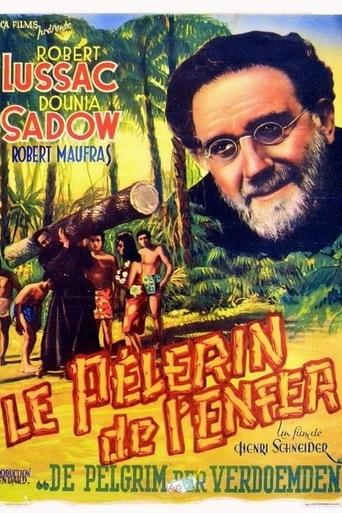
Pilgrimage to Hell · 1946Pilgrimage to Hell
★ 6.51946
MovieDrama
Biopic about Father Damian and his life and work on the island of Molokai.
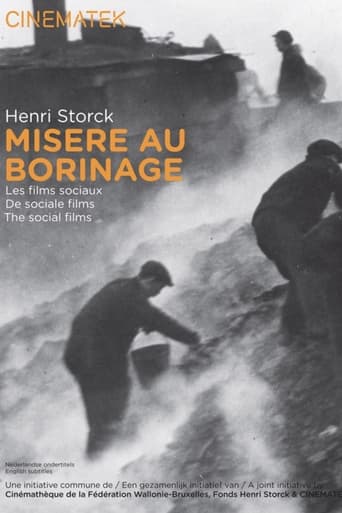
Borinage · 1934Borinage
★ 6.31934
MovieDocumentary
Henri Storck and Joris Ivens’ landmark of social documentary, blending staged scenes with locals and on-the-spot reportage to depict the 1932 miners’ strike in Belgium’s Borinage—evictions, hunger, and police repression—transforming outrage into a call for solidarity.
The Open Window · 1952The Open Window
★ 6.01952
MovieDocumentary
One of the first European films commissioned by the countries that signes the Brussels treaty and filmed in the museums of Brussels, Amsterdam, Paris, London, Ghent and The Hague. The film shows, by means of 59 works of art, how painting discovered the landscape once it left the strictly religious context behind. Henri storck wrote, "We have tried to eliminate the artificiality of filming. We have tried to hide the camera in order to immerse the audience in the world of the painting and the landscape that it depicts. We want the viewer to discover the feeling of nature for himself, through the artists.... It is not our ambition to make a critical or informative work." This iconic journey from Bosch to Manet and Turner is accompanied by music by Georges Auric.
Meeting of Artists · 1945Meeting of Artists
★ 6.01945
MovieDocumentary
A family film, a short summer film, made to record the joy of being together. But what a family! Léon Spilliaert, Paul Delvaux, Edgar Tytgat and his wife Maria, Luc and Paul Haessaerts. A garden, some seats and a camera that films the group of friends. They talk (given all the jollity, laughter and gestures seen it is a shame that it is a silent film). A period document only a few minutes long, a witness that puts names to faces, a reminder of a sunny afternoon. Emotion that loses itself in the moment.
Rubens · 1948Rubens
★ 5.81948
MovieDocumentary
This surreal abstract film falls into three sections, or movements, the first taking place on the ground, the second in the air and the third again on the ground. In the first movement various motifs or themes are introduced, which are again picked up and developed in the third movement. Six spheres, evolved in the first movement, become the sole subject matter–or “dancers”–of the second movement, which consists of a simple type of ballet using the floor-plan choreography or traditional ballet as a basis of interest.
Smuggler's Ball · 1952Smuggler's Ball
★ 5.81952
MovieComedyDrama
Smuggler's Ball is the English-language title for this French-Belgian seriocomedy. The action takes place along the borders separating Belgium, Holland and France. It is here that the worldly Pierre (J. P. Kieran) carries on a profitable smuggling operation, all the while romancing Siska (Christian Lenier), the daughter of a local customs official. Various subplots and secondary characters weave in and out as the plotline guides the viewer through the WW II years. Towards the end, the story shifts gears when the Benelux Frontier Agreement eliminates all government regulations. The film's screenplay is by Charles Spaak, himself the descendant of a Belgian political family, and thus well-versed in bureaucracy and red tape.
Paul Delvaux or the Forbidden Women · 1970Paul Delvaux or the Forbidden Women
★ 5.81970
MovieDocumentary
The second part of "Le monde de Paul Delvaux" (1944/1946)
More Like This
People on Sunday · 1930People on Sunday
★ 7.21930
MovieDrama
A semi-documentary experimental 1930 German silent film created by amateurs with a small budget. With authentic scenes of the metropolis city of Berlin, it's the first film from the later famous screenwriters/directors Billy Wilder and Fred Zinnemann.
Berlin: Symphony of a Great City · 1927Berlin: Symphony of a Great City
★ 7.51927
MovieDocumentary
A day in the city of Berlin, which experienced an industrial boom in the 1920s, and still provides an insight into the living and working conditions at that time. Germany had just recovered a little from the worst consequences of the First World War, the great economic crisis was still a few years away and Hitler was not yet an issue at the time.
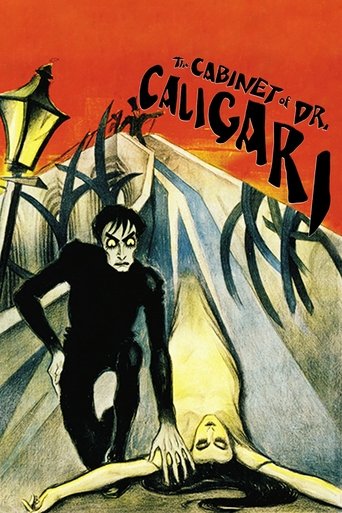
The Cabinet of Dr. Caligari · 1920The Cabinet of Dr. Caligari
★ 7.91920
MovieDramaHorror
Francis, a young man, recalls in his memory the horrible experiences he and his fiancée Jane recently went through. Francis and his friend Alan visit The Cabinet of Dr. Caligari, an exhibit where the mysterious doctor shows the somnambulist Cesare, and awakens him for some moments from his death-like sleep.
The Birth of a Nation · 1915The Birth of a Nation
★ 5.91915
MovieDramaHistory
Two families, abolitionist Northerners the Stonemans and Southern landowners the Camerons, intertwine. When Confederate colonel Ben Cameron is captured in battle, nurse Elsie Stoneman petitions for his pardon. In Reconstruction-era South Carolina, Cameron founds the Ku Klux Klan, battling Elsie's congressman father and his African-American protégé, Silas Lynch.
Sunrise: A Song of Two Humans · 1927Sunrise: A Song of Two Humans
★ 7.81927
MovieDramaRomance
A married farmer falls under the spell of a slatternly woman from the city, who tries to convince him to drown his wife.