Sea Ballerinas

Sea Ballerinas

1956 · 13 min · ★ 6.5 · Documentary

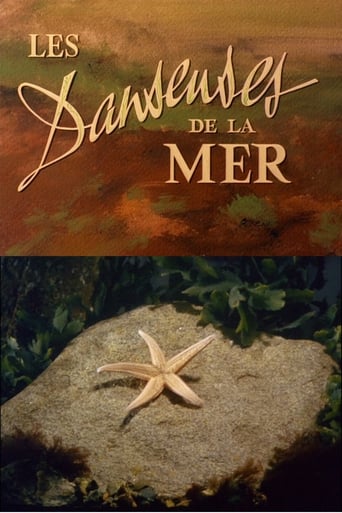
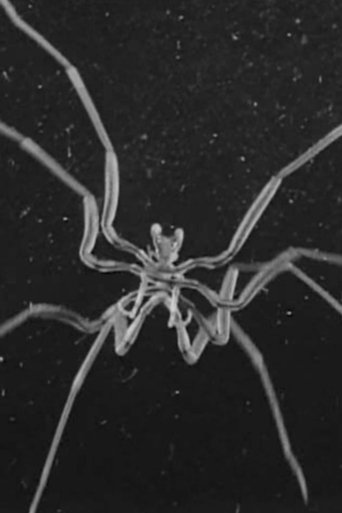
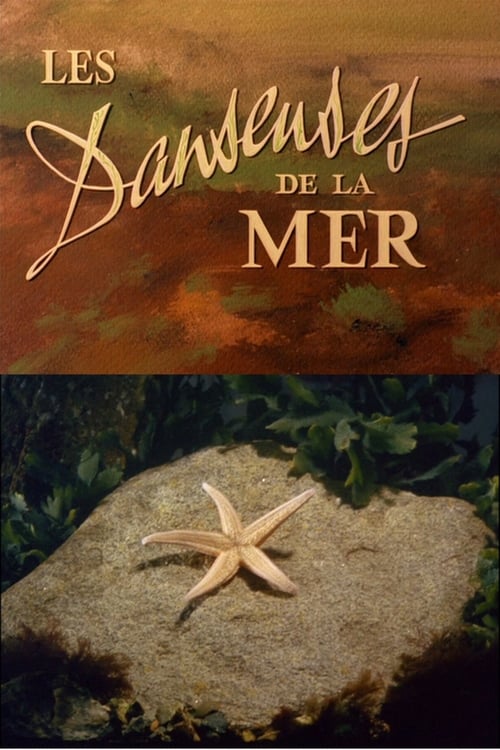
Two kinds of starfish, the brittle and the feather. The brittle star moves its arms alone, without the aid of suckers. Underneath is a single opening. Stalks move food close to the mouth and move waste away. We see vents, used in reproduction and breathing. We watch the hatched young expelled into the water. The camera shows us brittle stars' intricate patters. We observe feather stars in clusters, like ferns. One turns over slowly; arms have branches with stalks for breathing and gathering microscopic food. Reproductive organs are inside branches. We see eggs develop at 1,400 nature's speed. Larvae emerge, 0.1 mm long. They grow. A feather star takes a walk.

Directed by Jean Painlevé

Your Rating

Where to Watch

Streaming

Criterion Channel

Make it a double feature

36m together

Sea Ballerinas

Blood of the Beasts

Both from Jean Painlevé.

More from Jean PainlevéSee all →

Blood of the BeastsBlood of the Beasts · 1949
Blood of the Beasts
7.51949
MovieDocumentary
An early example of ultra-realism, this movie contrasts the quiet, bucolic life in the outskirts of Paris with the harsh, gory conditions inside the nearby slaughterhouses. Describes the fate of the animals and that of the workers in graphic detail.
Liquid CrystalsLiquid Crystals · 1978
Liquid Crystals
7.01978
MovieDocumentary
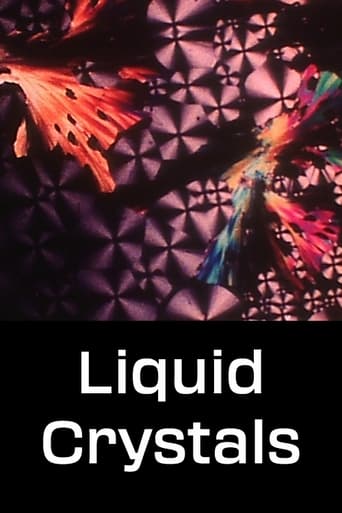
Title cards introduce images we watch without narration; they are displays of shape and color. François de Roubaix's electronic music accompanies these images, photographed under a polarizing microscope. The crystals appear to move like tiny organisms: small four-part fans share the frame with flowing lines of pink. Multiple patterns appear side by side.
The Evil EyeThe Evil Eye · 1937
The Evil Eye
7.01937
MovieDramaRomance
When a wanderer arrives in a village in the East Flanders countryside, strange events begin to unfold. The villagers, unsettled by his presence, come to believe he is an evil spirit. In truth, he is searching for his long-lost lover. Years ago, the two of them had committed a terrible crime: the killing of an illegitimate child. They had then planned to end their own lives by drowning. Yet the wanderer failed to keep his part of the pact and survived the suicide attempt. Ever since, he has been desperately seeking the woman he once loved, haunted by the past that refuses to let him go.
Hermit crabHermit crab · 1929
Hermit crab
6.81929
MovieDocumentary
Painlevé’s first film on animal behavior, focusing on the Hermit Crab. On this film we see the Hermit Crab trying to find shelter.
The Love Life of an OctopusThe Love Life of an Octopus · 1967
The Love Life of an Octopus
6.71967
MovieDocumentary
An octopus slithers into a narrow crack near the shore; we see its eye up close. It feeds on a crab. In spring it's time to mate. A male grabs a female; he inserts his third arm in her respiratory cavity. We watch another pair: a larger female is the aggressor here. Mating is repeated over hours and days. The female releases strings of fertilized eggs that hang from the roof of a nest. She guards her spawn for a month, fanning the strings to circulate water for oxygen and cleanliness.
The Sea HorseThe Sea Horse · 1935
The Sea Horse
6.61935
MovieDocumentary
Examines the sea horse, the only fish that swims upright. We watch it use its prehensile tail to wrap around plants and other sea horses. A frontal bulge houses organs including an air ballast. Three fins propel this fish. We see a female place her eggs in a male's pouch where they are fertilized and nurtured until birth in violent contractions. Inside the pouch are nurturing blood vessels. We then follow the growth of an embryo, greatly magnified: we examine its heart beating and its dorsal fin moving. Young sea horses attach themselves to each other. The film ends with images of many sea horses moving on the ocean floor, superimposed on a horse race.
The VampireThe Vampire · 1945
The Vampire
6.51945
MovieDocumentary
After a look at some strange creatures, the narrator and camera take us to the Chaco forest, on the borders of Paraguay, Argentina, and Brazil, where a vampire bat lives, desmodus rotondus, attacking wildlife and domesticated creatures, killing small ones by draining all their blood and killing large ones by leaving a parasite in their bloodstream. Four inches long, with a 12-inch wingspread, we see it walk, approach a victim, pull out a patch of fur large enough for it to engage its teeth, then lap six or seven ounces of blood. Its saliva may be an anesthetic keeping its victims from waking. A stub nose and harelip contribute to its efficiency and its hideous look.
The OctopusThe Octopus · 1928
The Octopus
6.51928
MovieDocumentary
An octopus slithers over objects on land—a doll, a skull—then oozes along the shore into the sea. It secretes its ink. The camera follows it along rocks into deeper water, watching closely as it breathes. Its eye is closed then open. Simple titles, in French and German, suggest what to watch. The octopus alternates the use of breathing tubes on either side. It changes color as cells on its skin contract or dilate. Extreme magnification helps us see these changes. Two struggle, one dies. On shore, fishermen catch them and put them in pails. A single tentacle still has life. Back in the sea, two octopi attack a crab. Soon only a couple of crab legs are visible in the mouth of the victor.
Freshwater AssassinsFreshwater Assassins · 1947
Freshwater Assassins
6.51947
MovieDocumentary
In a freshwater pond, it's "eat or be eaten." A dragonfly larva eats a midge; a water beetle larva eats a damselfly larva. Snail larvae grow. A beetle larva eats one. Up close, we see the eating apparatus of a damselfly larva—with a retractable hook beneath mandibles. Some creatures bite and chew, others suck. A water beetle larva holds on to its prey, injects a poison that turns the victim's insides to soup, and then sucks it dry. We watch one eat a damselfly larvae and then another water beetle larva. Some have ingenious ways to camouflage themselves, like the water scorpion, and to breathe air while hunting under water. Caddisfly larvae hide in debris, then eat.
Sea UrchinsSea Urchins · 1929
Sea Urchins
6.41929
MovieDocumentary
A close-up look at sand urchins and rock urchins. At the seashore, a man digs up a sand urchin. We look closely. He sets it back in the sand, and it burrows out of sight. Its intestines take nutrients out of sand. Using magnification 200,000 times normal size, we see a rock urchin's spines with suckers on the end; a drawing illustrates how they work. A sea urchin walks toward a rock. We see three-fingered jaws—pedicellaria at the end of flexible stems—take in algae and other bits. We also see cilia less than 0.001 ml in length; their motion constant, creating whirlpools. On the shore again, we watch the setting sun. Occasional titles in French tell us what to watch for.
How Some Jellyfish Are BornHow Some Jellyfish Are Born · 1960
How Some Jellyfish Are Born
6.41960
MovieDocumentary
At a marine biology station, a clump of algae reveals polyps, stomachs with limbs, limbs with buds, buds with poison cells. This animal reproduces by buds, which we watch close up in time-lapse images. In another kind of jellyfish, the buds grow inside then live outside for a few days until being on their own. Another produces eggs, sometimes self-fertilized. Some single eggs become buds with colonies. Another clump gathered at low tide consists of filaments of a colony - plumes with poison ends. In images taking 72 hours, we see filaments grow and produce a feeding organ from which a plume emerges. New jellyfish emerge from buds twice a day at set times to form a new colonies.
DiatomsDiatoms · 1968
Diatoms
6.41968
MovieDocumentary
The one-celled long and slender diatom, up close: discovered in 1703 with the invention of the microscope. We observe them magnified 10,000 times: water expelled through the skeleton, mucilage constantly emitted, allowing it to glide. Their energy comes from sunlight. They divide and disperse. The narrator, conversing with a young woman, says their remains cover one-third of the earth's surface. They have uses in petroleum, explosives, and polish. Some live in isolation, some in colonies, like elaborate fans. They can move in clusters. Many small animals eat them. We watch them slide on each other in long strings.
Sea UrchinsSea Urchins · 1954
Sea Urchins
6.31954
MovieDocumentary
Underwater photography, magnified close-ups, and film through microscope present the sea urchin, a complex creature. We see their mouth and five teeth close and open. After injecting one with gelatin, the shell is removed and we see the muscle structure, digestive tube, and reproductive organs. Magnified stems reveal suction cups; stems lengthen and contract allowing the sea urchin to move. We see microscopic calcareous stems; at their ends are jaws with various uses. Cilia everywhere are in constant motion, stirring up water and debris. African music on the soundtrack suggests a shuffle dance.
Voyage to the SkyVoyage to the Sky · 1937
Voyage to the Sky
6.21937
MovieDocumentaryScience Fiction
We begin on planet Earth, with a demonstration of measuring distances using triangulation. Then, an imaginary voyage begins from earth to the moon, on to Mars, Saturn, the closest star (besides the sun), and beyond to the edge of our universe. The film depicts imagined landscapes, and it speculates on universes beyond ours. It ends with philosophical musings about the significance of Earth.
BluebeardBluebeard · 1936
Bluebeard
6.11936
MovieAnimationMusic
Perrault's fairy tale presented in claymation with choral voices. Bluebeard goes courting, all six of his wives having died. He arrives at the house of a widow with two daughters. He's greatly feared, but he overcomes objections with a generous dowry. One sister (Anne) refuses him; the other accepts. At his castle, the damsel delights in precious minutes away from Bluebeard in the rose garden. The Saracens declare war; Bluebeard goes off to fight them, leaving the keys to the castle in the damsel's hands. He warns her not to enter the forbidden room. As war rages, she discovers riches in the castle and then enters the forbidden room. Will Bluebeard discover her act? Can she escape death?
DaphniaDaphnia · 1928
Daphnia
6.11928
MovieDocumentary
Titles in French and English help us know what we're seeing. In all waters, daphnia abound. They are crustaceans about 2 ml long, with one eye that turns in all directions. Antennae enable daphnia to move: in a close up magnified 150,000 times, we see the muscles of the antennae pulse. We see the eye, the nerve mass, blood globules, and the heart, beating several times per second. The intestine forms a long line. All are females; eggs develop above the intestine. New generations come rapidly. Inside each daphnia are tiny infusoria; we watch them clean the intestine of a dead daphnia. An enemy, the hydra, approaches. A daphnia dies, but many remain.

More Like This

Couldn't load this row right now.
Rate this film

Your ratings make Midnight smarter