
Don't Mix
2008 · 5 min
Watch the video! The image is flickering. The sound is choppy. The black dots are developer. The white spots are the fixer. I paint the developer and fixer directly onto the raw film. I produced this work with the slogan "Bring darkroom work to light". I approached the appeal of developing and fixing with my own unique aesthetic.
Directed by Jun'ichi Okuyama
Your Rating
More from Jun'ichi OkuyamaSee all →
 Movie Watching · 1982
Movie Watching
1982
Movie
An infinite horizon line and the image of continuous waves... Experimentation with the vertical displacement of the image of a 35 mm film. 35mm film has four perforations per image. If the perforations are offset from the projector window, the image is split in two on the screen: for example, in a face image, the eyes are at the bottom and the mouth is at the top; The image has two displaced parts. To avoid this mistake, this multi-image movie uses collage. The filmmaker assembles an image by perforation (the normal technique is an image by 4 perforations). Therefore, there is never a vertical shift in the projected image.
 Bang Voyage · 1967
Bang Voyage
1967
Movie
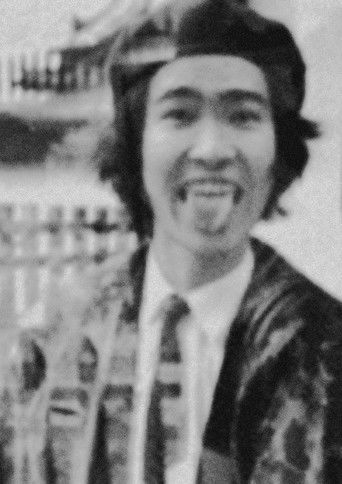
A typical university study trip. The camera is the gun, the lens is the muzzle. While moving with this in mind I shot a lot 8mm continuously. Stop-motion documentary with a keen sense control the camera freely, swinging the timing to press the shutter subtly adjust to the subject and boldly change. It produced unique movements and images.
 Wakka (Being Painted) · 1970
Wakka (Being Painted)
1970
Movie
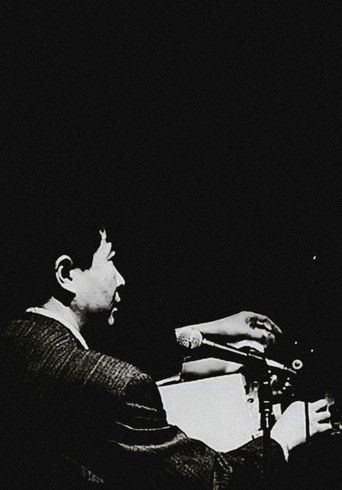
At the screening venue, making a film while it's being projected. It is the {original live film}. Painting on a loop of snooker film, screening will be held. Even now, sometimes, in 16mm, do a live performance. It is a long-lasting work.
 Swing Movie · 1975
Swing Movie
1975
Movie
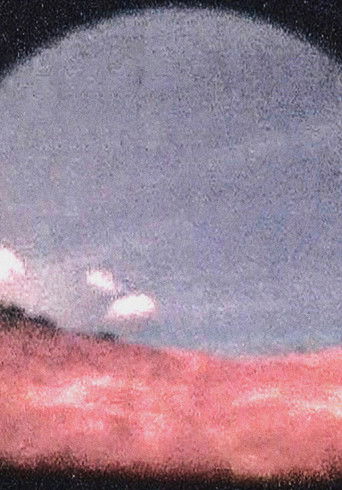
Sky and earth. The image begins to move slowly. The sound of water moving in and out of the distance. The image begins to fluctuate, while rotating, it will come off the frame. Everything swings. A moment when you just drop by. Installation and performance work.
 Cut-Off Movie · 1969
Cut-Off Movie
1969
Movie
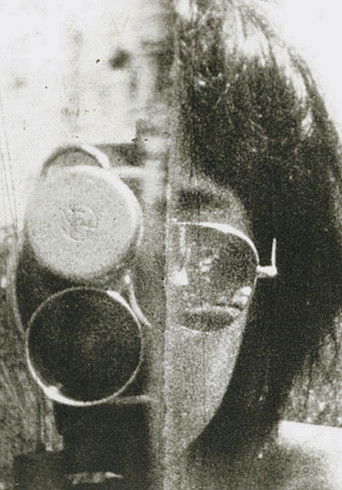
Raw material spliced into projection film, paper, leaves, vinyl, 6mm audio tape. Depending on hair, etc. the film breaks during projection. The film gets shorter with each projection, the author wrote this {Disappearance Movie} and named it.
 Regular8 is 16mm Film · 2006
Regular8 is 16mm Film
2006
Movie
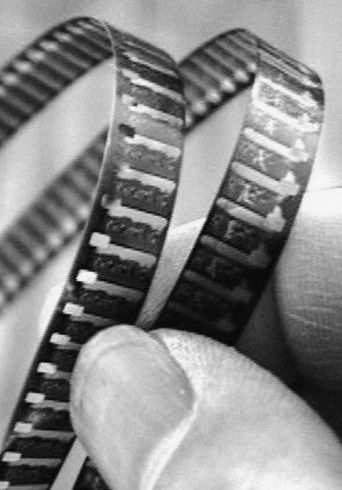
I found an old 8mm film can! It's W8 (Regular 8). I want to see it!! But the projector is broken and doesn't work. I still want to see it!!! That's right. Each one is 8mm, but two lined up together are 16mm. Just show it on a 16mm projector!!!
 Frameless 35 · 1968
Frameless 35
1968
Movie
Accumulated in cardboard, a pile of unused negative film, snapshots, student ID photos, etc. These were all shot for purposes completely unrelated to film. When I decided to "get rid of it," I had an idea. A discontinuous sequence, film that does not have the frames of a normal movie. What happens if you film it? I couldn't sit still any longer. Then, I diligently pieced together these short negatives, it was compiled into a film. In other words, it is a work that uses waste materials. To add some flavor, additional photography was done with a half-size camera.
 Frameless 16 · 1971
Frameless 16
1971
Movie
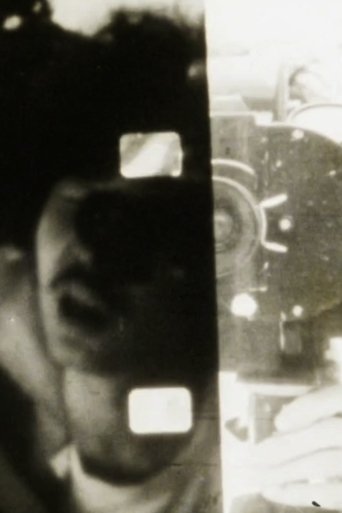
What is a frame? He attempts to make a film that doesn't have the normal 16mm frame. He also doesn't respect standard recording principles. Thus, a distinction must be made between: - the real time during which he films the object (himself) through his camera. - the time the film is recorded. These two periods do not always correspond to real time. The image must illustrate the search for these different notions of time. To achieve this, he experiments and places a 16mm film on top of a 35mm film during the shooting.
 The Time Slit · 1989
The Time Slit
1989
Movie
This film was very delicate to process because of the static electricity that sucks up dust. The filmmaker wanted to keep on the screen a kind of dust protection that would be the equivalent of human eyelashes. This is why eyelashes appear continuously throughout the film. The image of the comb, which gradually becomes a musical instrument, was also indispensable. The dust gradually covers the image. The sound is also dusty. Suddenly, the image splits in two and the time of the cinema begins to double.
 Le Cinéma · 1975
Le Cinéma
1975
Movie
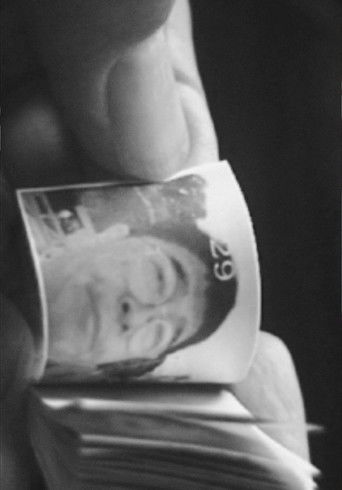
After directing Kami eiga (Paper Movie in 1972, which used paper film), I ended up with a dead track with Kanko eiga (Sightseeing Movie of 1973). Ideas no longer arose. I realized that I needed a fresh start to make films, and I thought that carefully studying the object that is a second, the most basic unit of time, would allow me to do things again, to find a new way of living. That's why it can be called an exercise. It's a film in which I say to myself: it's a film; that's how the second is, that's what happens when a photogram is over. When the twenty-four photograms are passed, the film is finished. I had fun making this movie. It is a film for which nothing knows anything about the cinema or begins to study it. It tells us what the film is, and how it is done.
 One Frame per Second · 2012
One Frame per Second
2012
Movie
Short film by Japanese filmmaker Jun’ichi Okuyama, premiered at the Image Forum Festival in 2012.
 Origin of Motion Picture · 1978
Origin of Motion Picture
1978
Movie
Dancing man. A woman clapping her hands to the rhythm. Narrow down your theme communication between men and women rhythmically expressed. People's movements stripped down to the bare minimum, the start and end points of the movement. A composed work by just two photos. Inspired by cinematic expression before the birth of cinema, it was made using a simple method.
 Everything about 8mm Raw Film · 2016
Everything about 8mm Raw Film
2016
Movie
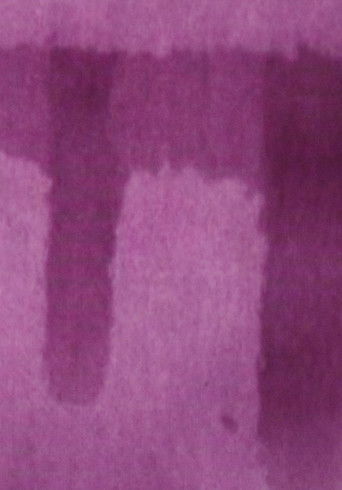
This work brings together undeveloped raw 8mm film.
 Being Painted 9.5mm · 2023
Being Painted 9.5mm
2023
Movie
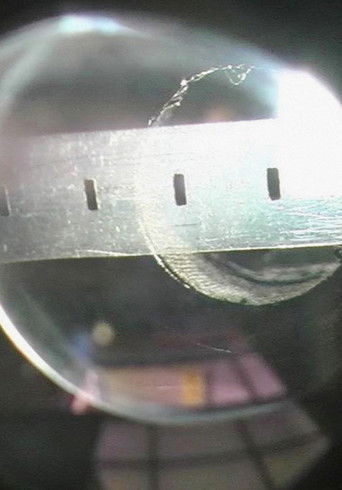
Live performance using a hand crank projector presented at the retrospective dedicated to the filmmaker at the 2023 Image Forum Festival.
 Sync Pic · 2001
Sync Pic
2001
Movie
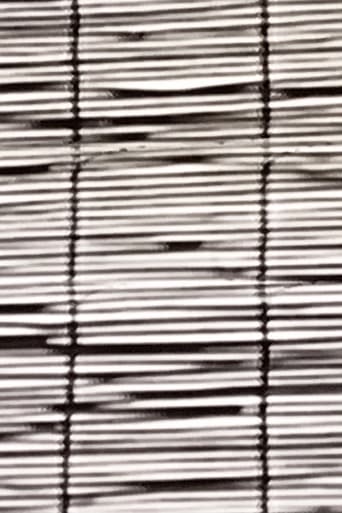
This work is based on the theme of "cinematic time on film." Suddenly, I noticed the musical scale of the curtain hanging on the window in my room. The film was shot with a modified 16mm camera. The footage even made it onto the soundtrack. On film, the picture and sound are the same and it's perfectly synchronized. However, due to the structure of the projector, the sound reproduction part is separated from the image,. The picture and sound on the screen are out of sync. However, if you organize the preceding sounds into a phrase, the misalignment on the screen appears to be perfectly synchronized.
 Sandwiches · 1998
Sandwiches
1998
Movie
Two rolls of raw film. I took a sandwich photo with paper tape What can be seen and what cannot be seen? What is captured and what is not captured? Why was the opaque paper tape. Will it be transparent when photographed? We approach one of the mysteries of film.
More Like This
Couldn't load this row right now.
