Directing
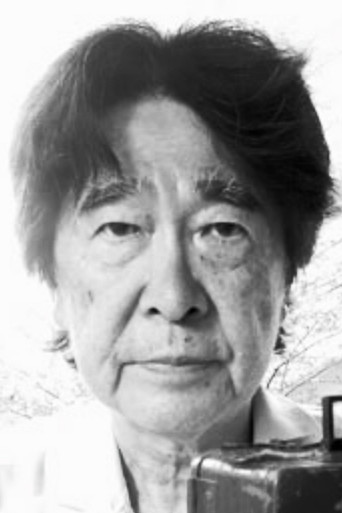
Jun'ichi Okuyama
OKUYAMA Jun’ichi (1947, Tokyo) graduated from Tamagawa University. He consistently offers a radical expression of cinema itself, using diverse and wide-ranging techniques.
Known For
 Movie Watching · 1982
Movie Watching
1982
Movie
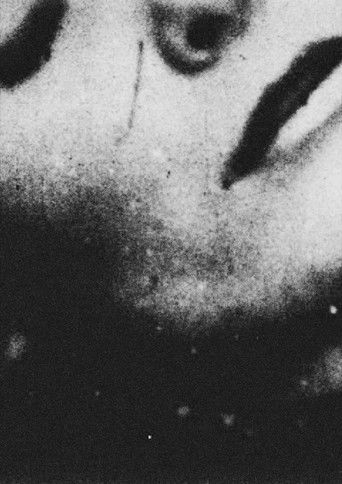
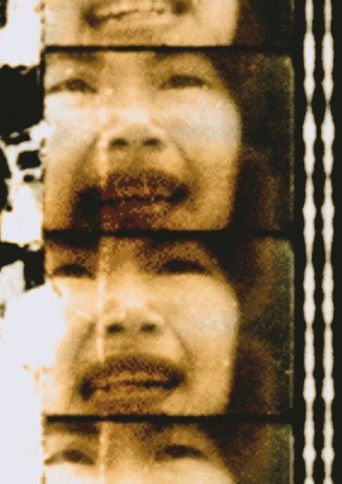
An infinite horizon line and the image of continuous waves... Experimentation with the vertical displacement of the image of a 35 mm film. 35mm film has four perforations per image. If the perforations are offset from the projector window, the image is split in two on the screen: for example, in a face image, the eyes are at the bottom and the mouth is at the top; The image has two displaced parts. To avoid this mistake, this multi-image movie uses collage. The filmmaker assembles an image by perforation (the normal technique is an image by 4 perforations). Therefore, there is never a vertical shift in the projected image.
 Bang Voyage · 1967
Bang Voyage
1967
Movie
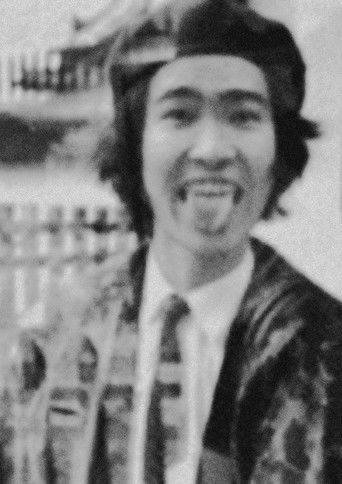
A typical university study trip. The camera is the gun, the lens is the muzzle. While moving with this in mind I shot a lot 8mm continuously. Stop-motion documentary with a keen sense control the camera freely, swinging the timing to press the shutter subtly adjust to the subject and boldly change. It produced unique movements and images.
 Wakka (Being Painted) · 1970
Wakka (Being Painted)
1970
Movie
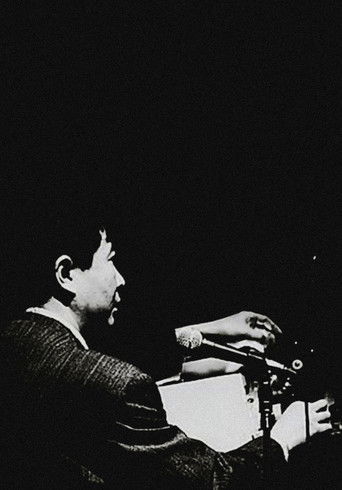
At the screening venue, making a film while it's being projected. It is the {original live film}. Painting on a loop of snooker film, screening will be held. Even now, sometimes, in 16mm, do a live performance. It is a long-lasting work.
 Swing Movie · 1975
Swing Movie
1975
Movie
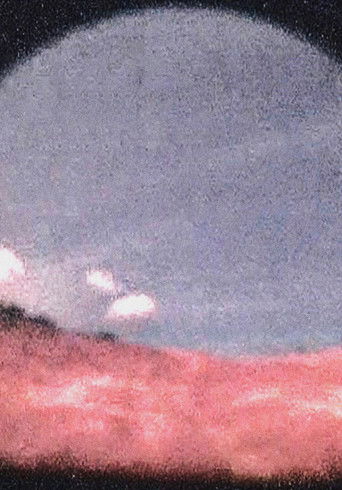
Sky and earth. The image begins to move slowly. The sound of water moving in and out of the distance. The image begins to fluctuate, while rotating, it will come off the frame. Everything swings. A moment when you just drop by. Installation and performance work.
 Cut-Off Movie · 1969
Cut-Off Movie
1969
Movie
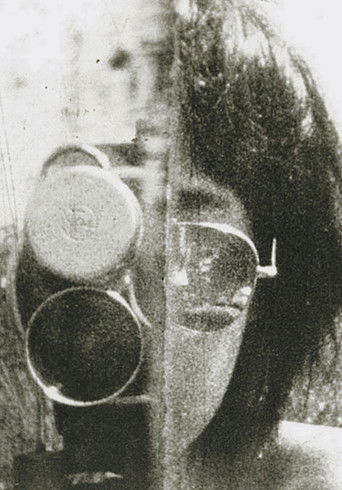
Raw material spliced into projection film, paper, leaves, vinyl, 6mm audio tape. Depending on hair, etc. the film breaks during projection. The film gets shorter with each projection, the author wrote this {Disappearance Movie} and named it.
 Regular8 is 16mm Film · 2006
Regular8 is 16mm Film
2006
Movie
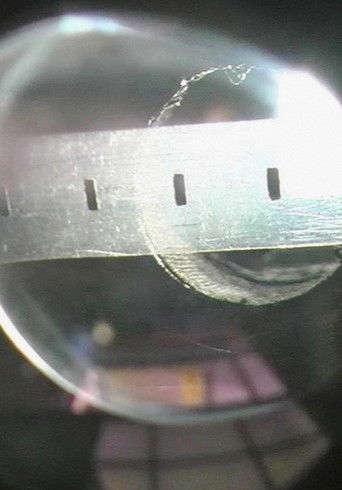
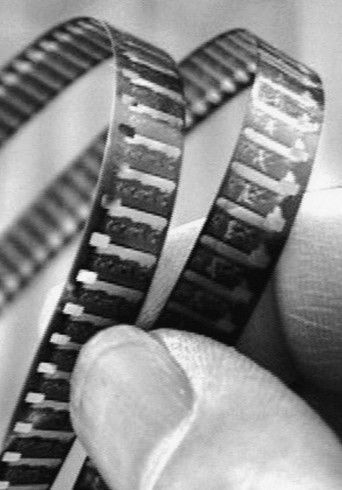
I found an old 8mm film can! It's W8 (Regular 8). I want to see it!! But the projector is broken and doesn't work. I still want to see it!!! That's right. Each one is 8mm, but two lined up together are 16mm. Just show it on a 16mm projector!!!
 Frameless 35 · 1968
Frameless 35
1968
Movie
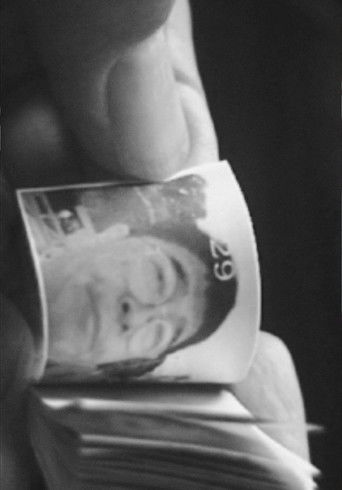
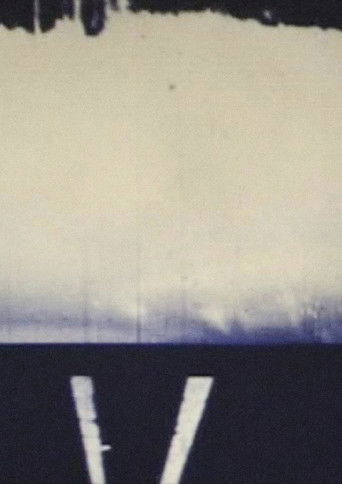
Accumulated in cardboard, a pile of unused negative film, snapshots, student ID photos, etc. These were all shot for purposes completely unrelated to film. When I decided to "get rid of it," I had an idea. A discontinuous sequence, film that does not have the frames of a normal movie. What happens if you film it? I couldn't sit still any longer. Then, I diligently pieced together these short negatives, it was compiled into a film. In other words, it is a work that uses waste materials. To add some flavor, additional photography was done with a half-size camera.
 Frameless 16 · 1971
Frameless 16
1971
Movie
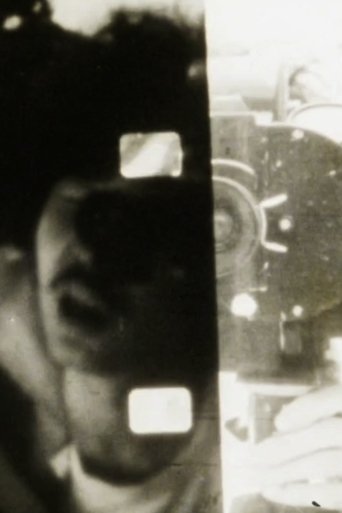
What is a frame? He attempts to make a film that doesn't have the normal 16mm frame. He also doesn't respect standard recording principles. Thus, a distinction must be made between: - the real time during which he films the object (himself) through his camera. - the time the film is recorded. These two periods do not always correspond to real time. The image must illustrate the search for these different notions of time. To achieve this, he experiments and places a 16mm film on top of a 35mm film during the shooting.
Filmography
Sort