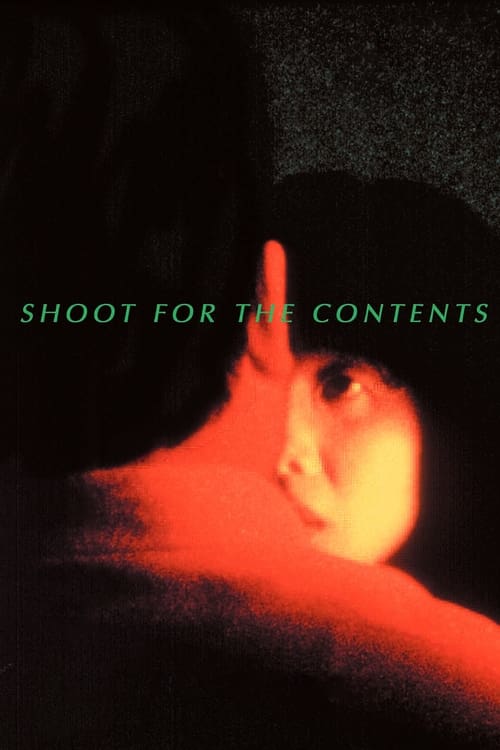
Shoot for the Contents

Shoot for the Contents

1992 · 101 min · ★ 5.4 · Documentary

Reflecting on Mao's famous saying, "Let a hundred flowers blossom and a hundred schools of thought contend," Trinh T. Minh-ha's film — whose title refers in part to a Chinese guessing game — is a unique excursion into the maze of allegorical naming and storytelling in China.

Directed by Trịnh T. Minh-hà

Your Rating

Where to Watch

Streaming

DocAlliance Films

Rent or Buy

DocAlliance Films

Cast

Make it a double feature

3h 8m together
Shoot for the Contents
The Fourth Dimension

Both from Trịnh T. Minh-hà.

More from Trịnh T. Minh-hàSee all →

The Fourth DimensionThe Fourth Dimension · 2001
The Fourth Dimension
7.62001
MovieDocumentary
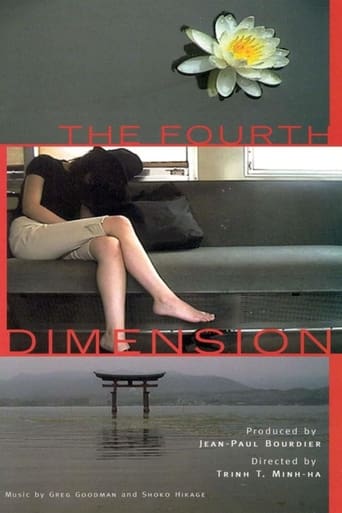
This is an elegant meditation on time, travel, and ceremony in the form of a journey. In her first foray into digital video, Trinh T. Minh-ha deconstructs the role of ritual in mediating between the past and the present.
Naked Spaces: Living Is RoundNaked Spaces: Living Is Round · 1985
Naked Spaces: Living Is Round
6.31985
MovieDocumentary
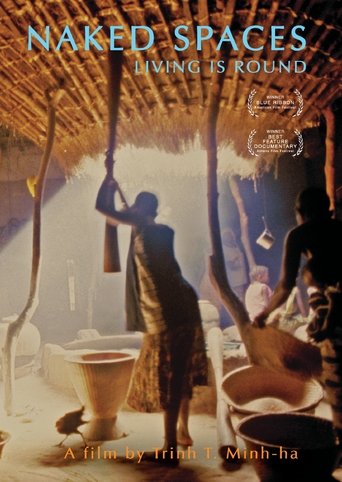
Shot with stunning elegance and clarity, NAKED SPACES explores the rhythm and ritual of life in the rural environments of six West African countries (Mauritania, Mali, Burkino Faso, Togo, Benin and Senegal). The nonlinear structure of NAKED SPACES challenges the traditions of ethnographic filmmaking, while sensuous sights and sounds lead the viewer on a poetic journey to the most inaccessible parts of the African continent: the private interaction of people in their living spaces.
Reassemblage: From the Firelight to the ScreenReassemblage: From the Firelight to the Screen · 1983
Reassemblage: From the Firelight to the Screen
6.01983
MovieDocumentary
A complex visual study of the women of rural Senegal. Through a complicity of interaction between film and spectator, Reassemblage reflects on documentary filmmaking and the ethnographic representation of cultures.
Surname Viêt Given Name NamSurname Viêt Given Name Nam · 1989
Surname Viêt Given Name Nam
5.51989
MovieDocumentaryHistory
The film evolves around questions of identity, popular memory and culture. While focusing on aspects of Vietnamese reality as seen through the lives and history of women resistance in Vietnam and in the U.S, it raises questions on the politics of interviewing and documenting.
Night PassageNight Passage · 2020
Night Passage
5.02020
MovieScience Fiction
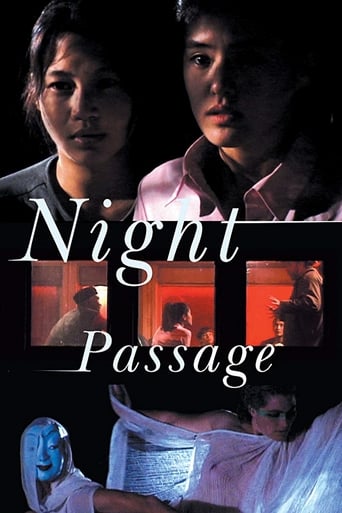
Night Passage is a digital film on friendship and death. Made in homage to Miyazawa Kenji's classic novel, Milky Way Railroad, the story evolves around the spiritual journey of a young woman, in the company of her best friend and a little boy, into a world of rich in-between realities. Their venture into and out of the land of "awakened dreams" occurs during a long ride on a night train. The filmmaker elegantly depicts each encounter in two-dimensional space with a unique artistic gesture and ingeniously frames the passage as a series of rhythmic image sequensces as seen through the window of a train.
A Tale of LoveA Tale of Love · 1995
A Tale of Love
3.81995
MovieDramaRomance
Portraying the Vietnamese immigrant experience through Kieu, A Tale of Love follows the quest of a woman in love with Love. Voyeurism runs through the history of narrative and is here one of the threads that structure the film. Playing with the fiction of love in love stories, the film invites a different experience of cinema with non-naturalistic acting and layered interaction of performed reality, memory and imagination.
What about China?What about China? · 2020
What about China?
2020
MovieDocumentary
The film takes the notion of harmony in China as a site of creative manifestation, and draws from footage shot in 1993 and 1994, in Eastern and Southern China, specifically from provinces Anhui, Hubei, Zhejiang, Fujian and Guangxi—linked to the remote origins of Chinese civilisation.
Repetition in re-creationRepetition in re-creation · 2026
Repetition in re-creation
2026
MovieDocumentary
Forgetting VietnamForgetting Vietnam · 2016
Forgetting Vietnam
2016
MovieDocumentary
“It all begins with two”: departure/return, earth/water, history/tourism… Starting from the ancient myth of Vietnam’s foundation – a battle between two dragons – and from the balance between earth and water that defines the country geographically, Trinh Minh-ha composes a palimpsest of words and images filmed in 1995 in Hi-8 video, then in HD in 2012. Words, superimposed, come and go like a graphic ballet that adds a layer to the archaeology visible in the landscape, a mix of ancient traditions and authoritarian attempts to eradicate them.
The Machine That Killed Bad PeopleThe Machine That Killed Bad People · 1990
The Machine That Killed Bad People
1990
MovieDocumentary
The Machine That Killed Bad People is about the cultural and political history of the Philippines leading up to the overthrow of President Ferdinand Marcos in 1986. It also addresses the role of electronic media in the struggle for power, and more broadly, American intervention in the Third World. Using a structure that emulates the way television news programs construct meaning through fragmentation, the tape interweaves clips of Filipino activists and reporters, a fictional television anchorwoman and correspondent, commentary by independent filmmaker Trinh T. Minh-ha, Fagin's off-camera voice and script, and anonymous excerpts from commercial television.
Toc StoreeToc Storee · 1992
Toc Storee
1992
MovieDocumentary
The film utilizes the story-telling format to create a multilevel narrative that explores the relations between speech, language, and desire. Addresses issues of sexuality, subjectivity, tradition, and identity in gay Asian contexts.
bodies of the desertbodies of the desert · 2005
bodies of the desert
2005
Movie
Trinh T. Minh-ha | USA 2005

More Like This

Rate this film

Your ratings make Midnight smarter