Migraine Particles

Migraine Particles

1984 · 12 min

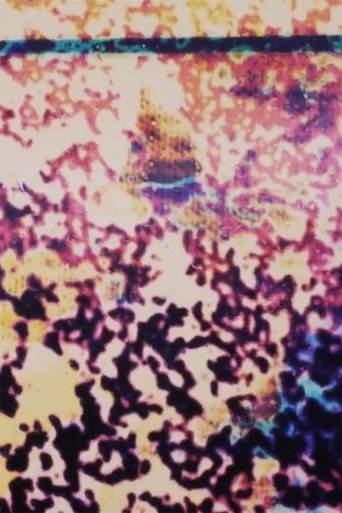
We are told at the beginning that “this film is dedicated to Len Lye” and indeed the camera-less techniques used here – various combinations of dyeing, cutting, scratching and painting the film strip – as well as much of the imagery in Migraine Particles are strongly reminiscent of Lye’s work, with certain key differences. The organic shapes resembling indigenous figuration of sea creatures, the intersecting vertical lines, the animation of forms which appear to interact and the moments of striking three dimensionality all recall Lye’s Tusalava (1929), Free Radicals (1958) and Color Box (1935). De Bruyn’s film seems somewhat free-form at first but in ways that also nod to Lye’s work, a structure of developing sections and a layered repetition of shapes in a loose fugal pattern becomes clearer as the film progresses. -Steven McIntyre

Directed by Dirk de Bruyn

Your Rating

More from Dirk de BruynSee all →
Rote MovieRote Movie · 1994
Rote Movie
5.01994
Movie
"'Rote Movie' is part of a series of works examining aspects of the traumatic experience. It is an examination of decay and forgetting, where what both distance and time can bring to one's private feelings of belonging and home. Highly immersed in a fragmented and disjointed haptic space of its own materiality, this film stutters out its thoughts frame by frame" - Steven Ball, 'Mesh' 3, Autumn 1994.
ExperimentsExperiments · 1982
Experiments
5.01982
Movie
de Bruyn uses animation, optical illusions, time lapse, solarization, hand tinting, flash frames, refilming and flicker effects, accompanied by a dense atmosphere of word puns, dialogue, primal screams, music and even recycled and letraseted soundtracks. By setting experiments entirely within his Moonee Ponds house, de Bruyn creates such a complex sense of claustrophobia, the spectator, while recognising the staid, conservative trappings of urban Melbourne, is present with the sort of art neurosis more commonly found in megacities like New York. The principal actor in Experiments is the narrator, whose anarchistic mind ruminates, struggles and screams from relief from the ravages of suburban Moonee Ponds, and the psychological suburbia of his mind... Experiments, its cacophony of images flickering on two screens, throws up everything from schizophrenic madness to baby nappies, inviting you to participate in the cathartic recesses of a personal nightmare. (Steven McIntyre)
RunningRunning · 1976
Running
3.01976
Movie
The film tries to 'destroy time' by the cyclical reworking of a short period of time. Gradually the image becomes less discernible and the flashing positive and negative images force the viewer to stare rather than looking at the film. As the film progresses the viewer becomes trapped in a short period of time.
Between UsBetween Us · 1989
Between Us
1989
Movie
The story of Rick, a washing-machine serviceman, and his relationships with two very different women.
My BlessingsMy Blessings · 1997
My Blessings
1997
Movie
A diary film, chronicling six days in the life of a woman in her early 30's. A portrait of isolation, striving, rejection and hope.
DissociationDissociation · 2016
Dissociation
2016
Movie
Dissociation is an abstract materialist film that has migrated from 16mm film to the digital. It is made up of scratches, half-baked images and flicker. The film explores the tension between the image, the written text and the spoken word and the consequent struggle for meaning. A report on the anti-social nature of corporate space inspired by the first non-sense poem “The Great Lalula” by Christian Morgenstern.
RemmbrMeRemmbrMe · 2007
RemmbrMe
2007
Movie
Dirk De Bruyn’s eleven-minute RemmbrME (2007) is a visually engaging film that documents in a painterly fashion the numerous gaps and intersections between analogue and digital moving image manipulation. RemmbrME is a work that critically focuses on the re-shaping of the lost material that is germane to a basic cameraless direct-on-film practice and resonates important ideas concerning the increasing fusion between analogue and digital image-making in our everyday culture.
FeyersFeyers · 1979
Feyers
1979
Movie
Feyers is Dirk de Bruyn's most complicated work employing the many techniques he has experimented with over the years. Appropriately subtitled 'a dance', this film's interweaving of various experimentations lends itself to a stunning, rhythmic effect.
FramesFrames · 1986
Frames
1986
Movie
Frames like de Bruyn's other recent effort Cha-Hit (1986) is an overwhelming film constantly in motion, blitzing its audience with abstract visuals. The film is a mixture of flickery, Letraset, light, scratching and hand-drawn colours. So rapid is the movement that it makes you wonder at times if you are looking at an image or its afterimage. Could a film like Frames be damaging to your retina or neurological functions? If you sat in front of this type of film long enough, would it send you on a trip? Could it awaken a patient out of a coma? After a confronting seven minutes I felt exhausted and slightly frazzled, such is the power of the film. A Dirk de Bruyn retrospective would certainly kill me. -Glen Hannah
Pattern RecognitionPattern Recognition · 2019
Pattern Recognition
2019
MovieAnimation
An intriguing exploration of the changing impact of speed on our ability to view an image and construct meaning and narrative.
Understanding ScienceUnderstanding Science · 1992
Understanding Science
1992
Movie
A taxonomical crash course listing, ordering, classifying phrases, words, letter and numbers. A collision course of the domesic and fragments received from "out there." A visual assault course of home movie footage of the filmmaker's family, drawings and text repeated and reprocessed on film, video and computer. A correspondence course from expatriot Australian de Bryun. Can we ever truly understand science?
ZoomfilmZoomfilm · 1976
Zoomfilm
1976
Movie
An experimental film dedicated to the "blink". Dynamic abstractions (created through the use of prodigious optical printing and directly working the film frame) investigate the nature of human optics. Music by Maurizio Kagel.
Traum A DreamTraum A Dream · 2002
Traum A Dream
2002
Movie
By Traum a Dream (2002) the unintelligent memories have become distinctly more sinister. Samples of found footage suggesting memory and repression vie chaotically for attention with Dirk’s voice reciting repeated words and phrases, punctuated by splutters and coughs, as though attempting to wrest some meaning. This meaning comes at last with the final sentence dragged out phrase by phrase in the third person: “he began to remember what he didn’t want to remember, what had been taken from when before he knew a secret of before he knew himself”. Steven Ball
Analog StressAnalog Stress · 2004
Analog Stress
2004
Movie
Consists of scratched and reanimated found industrial and discarded personal footage. The sonic soundtrack is similarly reconstructed from scratches, pen marks, Letraset strips and the music and phrases of found films.
Living in the PastLiving in the Past · 2016
Living in the Past
2016
Movie
This film re-animates stereoscopic images of Melbourne from the 1920s. Technically the film makes a statement about how each new iteration of moving image technology reclaims artifacts and gestures from the past. Such an archeology enables the viewer to approach these images in new ways. Further, just as the image has become unstable so have our beliefs. Living in the Past recycles Jethro Tull’s lyrics to indicate that we no longer understand the political situation we live in. This film re-animates stereoscopic images of 1920s Melbourne to create a dynamic Cubist space. Technically the film makes a statement about how each new iteration of moving image technology reclaims past artifacts and gestures. Just as the image has become unstable so have our beliefs.
EmpireEmpire · 2014
Empire
2014
Movie
Empire re-animates found historic stereographic photographs predominantly of Melbourne’s city centre between 1927 and 1940 when the colonial trace was slowly receding to produce a stereoscopic effect. Melbourne’s main Flinder’s Street Intersection is unsettlingly transformed into a Cubist perceptual maelstrom through repetition and flicker.

More Like This

Couldn't load this row right now.

Rate this film

Your ratings make Midnight smarter