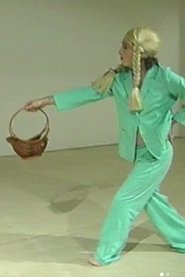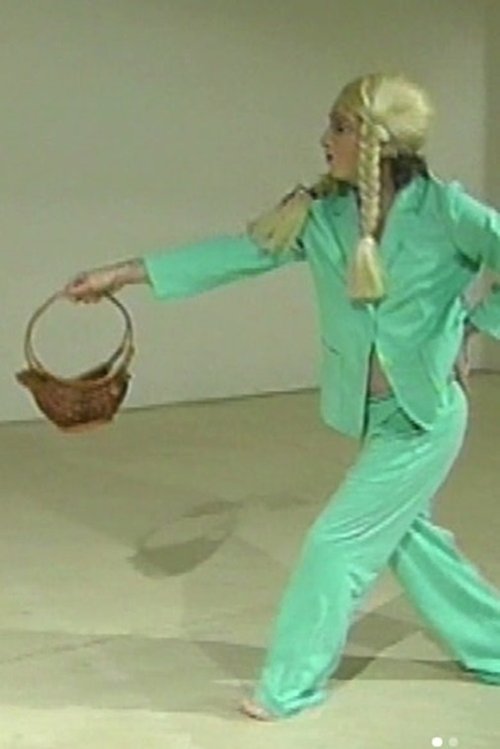
Heidi’s Four Basket Dances
2001 · 15 min
Following the piece Heidi, a loose interpretation of Joanna Spyri’s novel by the duo of Mike Kelley and Paul McCarthy, Kelley performed four dances with just an apparently innocent basket as a prop.
Directed by Paul McCarthy
Your Rating
More from Paul McCarthySee all →
 Painter · 1995
Painter
★ 10.01995
Movie
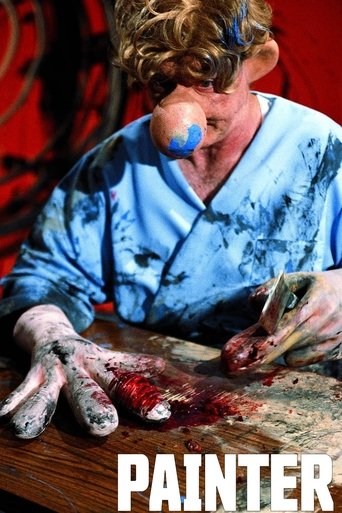
In Painter, the mythology of the artist as hero is attacked in a grotesque, parodic performance that unambiguously points to the abstract expressionists. Performing as the painter, McCarthy undermines pre-packaged ideas about the creative process by turning it into an absurdist soap-opera.
 Pinocchio Pipenose Household Dilemma · 1994
Pinocchio Pipenose Household Dilemma
★ 2.01994
Movie
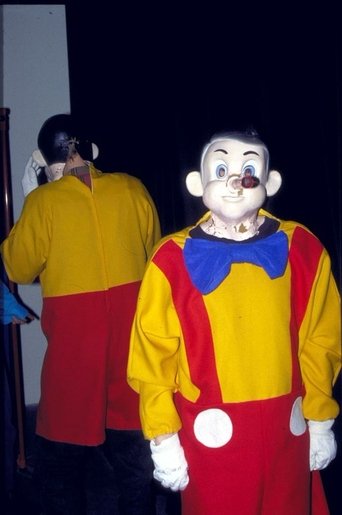
With his Pinocchio Pipenose Household Dilemma, Paul McCarthy shows that interfaces don't always have to be a complicated business. Contact with the world of this American artist is established by dressing in red & yellow coveralls, enormous red plastic shoes and a mask with a long tube for a nose. Dressed in this low tech interface the audience can see on video how another Pinocchio - Paul McCarthy himself - covers himself in ketchup and chocolate paste.
 Cultural Soup · 1987
Cultural Soup
1987
Movie
A man makes soup with mayonnaise and dolls. McCarthy: "I was given access to a community television studio for two days of shooting and one day of editing. I had been given the grant based on a proposal to do a video tape on child abuse. I taped for one day alone and one day with Mike Kelley. I asked Mike Kelley to be the son and I would be the father. There was no written script. After taping for two days, I edited the tapes, making two separate tapes: Family Tyranny and Cultural Soup. They are often shown together."
 The Art Foundry · 2014
The Art Foundry
2014
MovieDocumentary
 Bossy Burger · 1991
Bossy Burger
1991
Movie
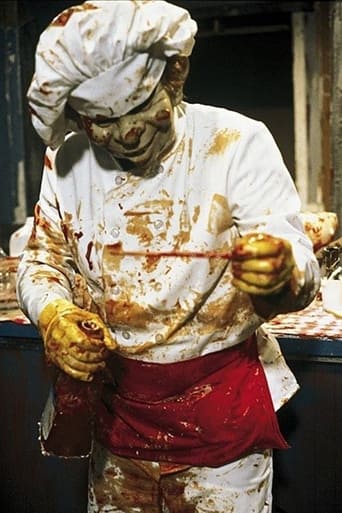
Paul McCarthy, with the mask of Mad Magazine icon Alfred E. Neuman, prepares a meal – makes a mess – in the set of the America soap ‘Family Affair’.
 Sauce · 1974
Sauce
1974
Movie
The performance takes place in a small setting with an audience, but that's only a part of the artwork. After filming the performance he uses them again in installations where he is Miss Piggy or Heidi. And of course lots of ketchup, Mayonnaise and chocolate sauce.
 Rocky · 1976
Rocky
1976
Movie
Rocky comprises a single monitor video and fourteen related drawings. The video begins with a man, McCarthy himself, waiting before the camera with his back turned and then turning to face it. Wearing shorts and boxing gloves, he begins to address the viewer in muttered sounds which mimic the manner in which actor Sylvester Stallone speaks as the character Rocky in the eponymous 1976 film. He begins occasionally to hit himself on the head, as though to clear his thoughts and to demonstrate his virility, but gradually the number and violence of the blows increases. It appears as though the Rocky character is having an imaginary fight with another person, but as the film develops it turns into a masochistic fight with himself.
 Fresh Acconci · 1995
Fresh Acconci
1995
MovieHorror
Artists McCarthy and Kelley re-stage classic 1970s performance pieces by Vito Acconci, with a decidedly ironic Southern California sensibility. States McCarthy: "[The piece] is a reference to art now, to a resurgence of the 1970s and an interest in youth in the art world. There are also references to Hollywood 8 movies and soft porn made in the Hollywood hills... In Fresh Acconci, the New York art scene is sandwiched with Hollywood. Two kinds of aesthetics overlap. The tape itself crosses lines of what is politically correct, exploitation and softening or obscuring the meaning."
 Experimental Dancer · 1975
Experimental Dancer
1975
MovieComedy
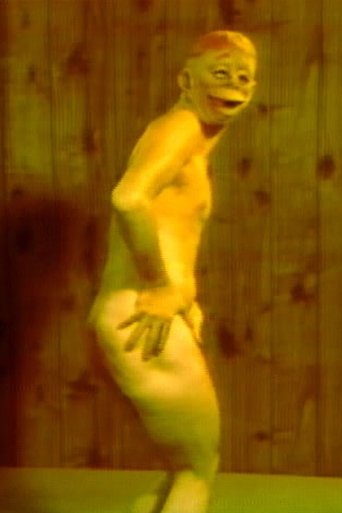
In contrast with McCarthy's recent projects, however, many of his older works are little short of incendiary--particularly three videos from 1975, whose now lo-fi texture and queasy saturation only add to their bad-dream quality. Here is McCarthy, in Experimental Dancer, as something legitimately alarming: an idiot self-celebrant prancing naked in a grotesque, grinning mask, tucking his cock between his legs or pulling it into distension, waving scissors around, ceremonially trimming his pubic hair, and pushing his anus toward the camera.
 Class Fool · 1976
Class Fool
1976
Movie
In a shamanistic, quasi-sexual ritual performance, McCarthy threw himself around a ketchup-spattered classroom at the University of California, San Diego until dazed and self-injured. He then vomited several times and inserted a Barbie doll into his rectum. The piece ended when the audience could no longer stand to watch his performance.
 Family Tyranny (Modeling and Molding) · 1987
Family Tyranny (Modeling and Molding)
1987
Movie
Experimental video about child abuse. McCarthy: "I was given access to a community television studio for two days of shooting and one day of editing. I had been given the grant based on a proposal to do a video tape on child abuse. I taped for one day alone and one day with Mike Kelley. I asked Mike Kelley to be the son and I would be the father. There was no written script. After taping for two days, I edited the tapes, making two separate tapes: Family Tyranny and Cultural Soup. They are often shown together."
 Basement Clown · 1975
Basement Clown
1975
Movie
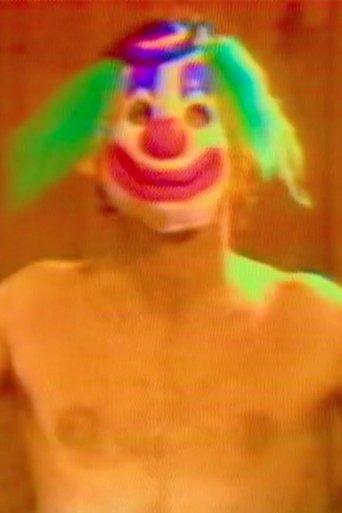
Dressed in a green wig, clown mask, and small hat, the artist raises and lowers his hands, sways his unclothed body, and hums a simple melody. He performs in front of a wooden partition, with close-up shots of his face intercut with views of his full body or torso. Eventually, he makes a loud exit from the frame. This work is the precursor to Experimental Dancer.
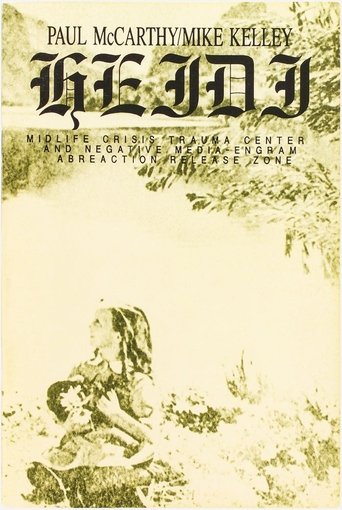 Heidi: Midlife Crisis Trauma Center and Negative Media-Engram Abreaction Release Zone · 1992
Heidi: Midlife Crisis Trauma Center and Negative Media-Engram Abreaction Release Zone
1992
Movie
A collaborative work based on Joanna Spyri's novel, Heidi.. The entire work consisted of a fabricated set, a group of partial and full life-size rubber figures, two large backdrop paintings, and a video tape shot entirely on the set. The set was installed at the center of the gallery (Galerie Krinzinger, Vienna)... We were interested in imitating film and television production, and exaggerating the fractured process of film. - Paul McCarthy In Heidi we toyed with this illusionary nature by treating the doubles and stand-ins for the actors as obvious sculpture, more in the manner of a puppet show than traditional film. - Mike Kelley
 WGG (Wild Gone Girls) · 2004
WGG (Wild Gone Girls)
2004
MovieDocumentary
Depicting a sailing party gone wrong. McCarthy questions the effects that violence and mutilation, both real and simulated, have on the viewer in contemporary culture.
 Sailor's Meat (Sailor's Delight) · 1975
Sailor's Meat (Sailor's Delight)
1975
MovieDocumentary
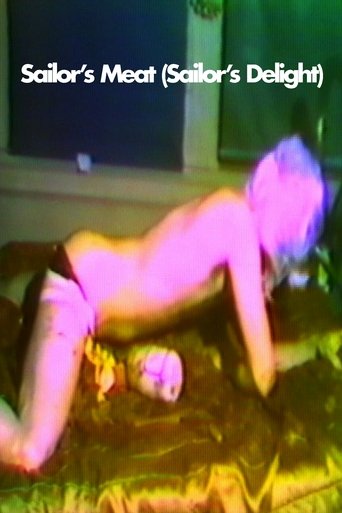
Here, the artist performs as the female protagonist of Russ Meyer’s soft-porn film, Europe in the Raw! (1963). Done up in black lace lingerie, heavy makeup, and a seductive expression, he meanders across the room, methodically exposing different body parts, accentuated by cropped close-ups. Yet the work quickly deviates from standard realms of sexual fantasy, devolving into something unexpectedly abnormal. Having thrust a hot dog up his ass and smeared himself with ketchup, he positions himself on all fours and “goes down” on a slab of glistening raw meat, burying his face in it, taking it in his teeth, drooling and spitting on it, and finally rubbing it over his body. He then adds ground beef to the mix, spreading it across the bed along with the steak, hot dogs, and ketchup and thrusting his body back and forth with increasing agitation, as if simultaneously humping and being humped by it. Such antics continue for nearly 45 minutes.
 Paul McCarthy: Destruction of the Body · 2001
Paul McCarthy: Destruction of the Body
2001
MovieDocumentary
Drawing on the idiom and imagery of the consumer culture he grew up in, video artist Paul McCarthy distorts and mutates the familiar into the disturbing and grotesque as fairy tale narratives and foods are transformed into tableaus of abuse and violation.
More Like This
Couldn't load this row right now.