Directing
Mike Kelley
Born October 27, 1954 · Wayne, Michigan, USA
Died January 31, 2012 · aged 57
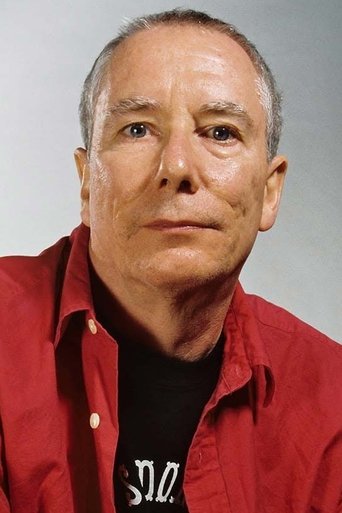
Mike Kelley was one of the most provocative and influential figures in contemporary art. His idiosyncratic works negotiate a charged terrain of desire, dread and sociopathology in everyday life. With deadpan humor, he invests childhood toys, kitsch, and ordinary objects with subversive meaning. His video projects, often created with collaborators such as Paul McCarthy, Raymond Pettibon, and Tony O…
Known For
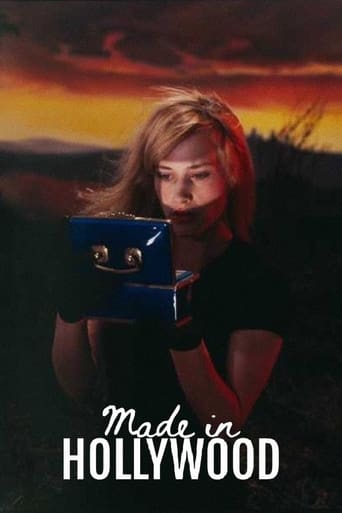 Made in Hollywood · 1990
Made in Hollywood
★ 7.31990
Movie
A parable of the Hollywood image-making industry told through a pastiche of narrative cliches.
 Extracurricular Activity Projective Reconstruction #1 (Domestic Scene) · 2000
Extracurricular Activity Projective Reconstruction #1 (Domestic Scene)
2000
Movie
"Extracurricular Activity Projective Reconstruction #1 (Domestic Scene)" 2000, 29:44 min, b&w, sound Kelley has constructed a half-hour drama inspired by a photo found in a high school yearbook. The original, a still from a school play, depicts two young men in a shabby apartment. From this image Kelley has re-staged a 'Domestic Scene': the protagonists' unnerving, at times histrionic, relationship.
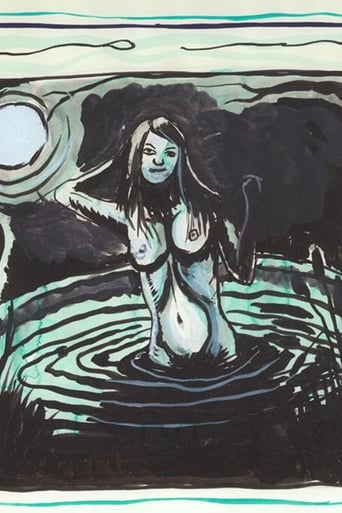 Kappa · 1986
Kappa
★ 7.01986
MovieDocumentaryAnimation
Deconstructing the myth of Oedipus within the framework of an ancient Japanese folk story, the Yonemotos craft a highly charged discourse of loss and desire. Quoting from Bunuel, Freud, pop media and art, they place the symbology of Western psychosexual analytical theory into a cross-cultural context, juxtaposing the Oedipal and Kappa myths in a delirious collusion of form and content. The Kappa, a malevolent Japanese water imp, is played with eerie intensity by artist Mike Kelley; actress Mary Woronov plays Jocasta as a vamp from a Hollywood exploitation film. Steeped in perversions and violent longings, both the Kappa and Oedipus legends are presented in highly stylized, purposefully "degraded" forms, reflecting their media-exploitative cultural contexts. In this ironic yet oddly poignant essay of psychosexual compulsion and catharsis, the Yonemotos demonstrate that even in debased forms, cultural archetypes hold the power to move and manipulate.
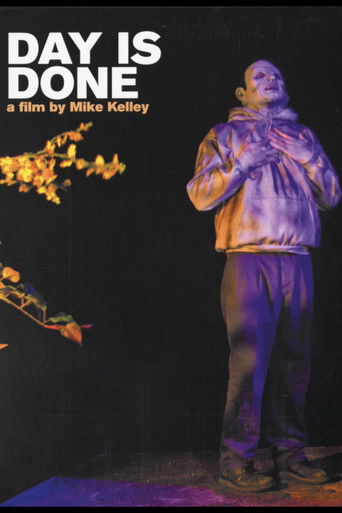 Day Is Done · 2006
Day Is Done
2006
Movie
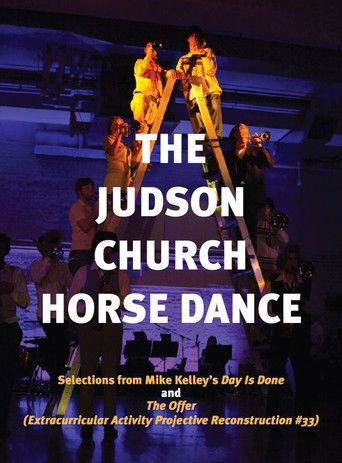
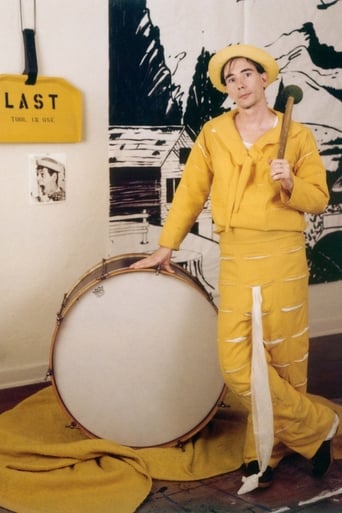
Day Is Done is a carnivalesque opus, a genre-smashing epic in which vampires, dancing goths, hillbillies, mimes and demons come together in a kind of subversive musical theater/variety revue. Running over two-and-a-half hours, this riotous theatrical spectacle unfolds as a series of episodes that form a loose, fractured narrative. The video comprises parts 2 through 32 of Kelley's multi-faceted project Extracurricular Activity Projective Reconstructions, in which trauma, abuse and repressed memory are refracted through personal and mass-cultural experience. The source material is a series of high school yearbook photographs of "extracurricular activities," specifically those that represent what Kelley has termed "socially accepted rituals of deviance." Kelley then stages video narratives around these found images.
 Family Tyranny (Modeling and Molding) · 1987
Family Tyranny (Modeling and Molding)
1987
Movie
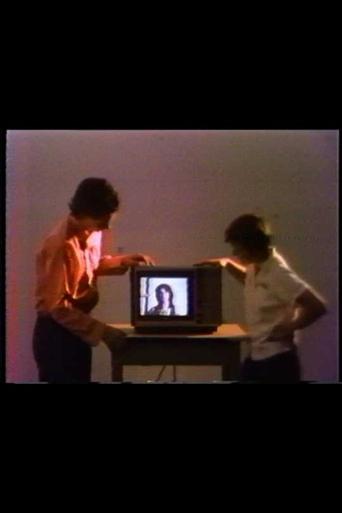
Experimental video about child abuse. McCarthy: "I was given access to a community television studio for two days of shooting and one day of editing. I had been given the grant based on a proposal to do a video tape on child abuse. I taped for one day alone and one day with Mike Kelley. I asked Mike Kelley to be the son and I would be the father. There was no written script. After taping for two days, I edited the tapes, making two separate tapes: Family Tyranny and Cultural Soup. They are often shown together."
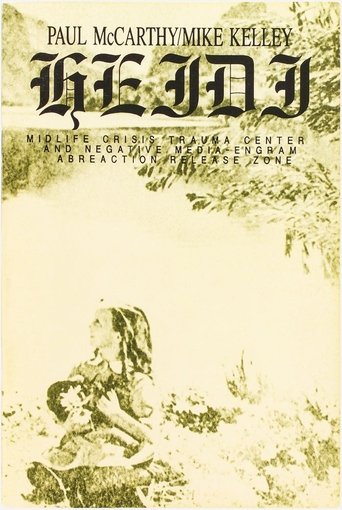 Heidi: Midlife Crisis Trauma Center and Negative Media-Engram Abreaction Release Zone · 1992
Heidi: Midlife Crisis Trauma Center and Negative Media-Engram Abreaction Release Zone
1992
Movie
A collaborative work based on Joanna Spyri's novel, Heidi.. The entire work consisted of a fabricated set, a group of partial and full life-size rubber figures, two large backdrop paintings, and a video tape shot entirely on the set. The set was installed at the center of the gallery (Galerie Krinzinger, Vienna)... We were interested in imitating film and television production, and exaggerating the fractured process of film. - Paul McCarthy In Heidi we toyed with this illusionary nature by treating the doubles and stand-ins for the actors as obvious sculpture, more in the manner of a puppet show than traditional film. - Mike Kelley
 Cinderella · 1986
Cinderella
★ 8.01986
MovieAnimation
“CINDERELLA is a musical treatment of the fairy tale. I have broken apart the story and set it as a mechanical game with a series of repetitions where CINDERELLA is projected back and forth like a ping-pong ball between the hearth and the castle. She never succeeds in satisfying the requirements of the ‘Cinderella Game’. The film was shot MOS, the dialogue is lip-synched, and along with the out-front score and effects track magnifies the film’s sense of alienation.” — E.B. 1984 - Preserved by the Academy Film Archive in 2017.
 Fresh Acconci · 1995
Fresh Acconci
1995
MovieHorror
Artists McCarthy and Kelley re-stage classic 1970s performance pieces by Vito Acconci, with a decidedly ironic Southern California sensibility. States McCarthy: "[The piece] is a reference to art now, to a resurgence of the 1970s and an interest in youth in the art world. There are also references to Hollywood 8 movies and soft porn made in the Hollywood hills... In Fresh Acconci, the New York art scene is sandwiched with Hollywood. Two kinds of aesthetics overlap. The tape itself crosses lines of what is politically correct, exploitation and softening or obscuring the meaning."
Filmography
Sort