The 4th, 5th, and the Exclusionary Rule

The 4th, 5th, and the Exclusionary Rule

1973 · 80 min

This film consists of sequences from the Pittsburgh Police footage intercut with a panel discussion moderated by Professor James Vorenberg of Harvard Law School. Community organizers, police, students and lawyers discussed the issues raised by four sequences, including the implications of the 4th and 5th Constitutional amendments, and the Exclusionary Rule of Evidence for search, seizure, and interrogation procedures. The film demonstrates the multiplicity of roles in police work, and examines the conflicts between how the police define their duties and what the public expects of them.

Directed by John Marshall

Your Rating

Make it a double feature

2h 44m together
The 4th, 5th, and the Exclusionary Rule
Titicut Follies

Both from John Marshall.

More from John MarshallSee all →
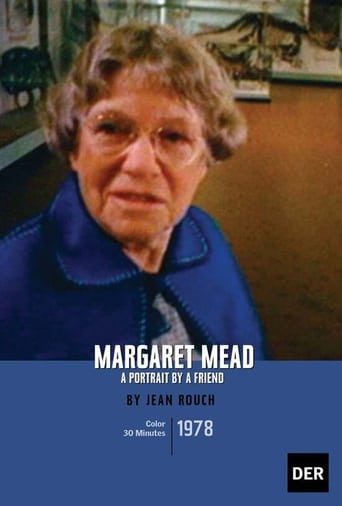
Margaret Mead: A Portrait By a FriendMargaret Mead: A Portrait By a Friend · 1978
Margaret Mead: A Portrait By a Friend
9.01978
Movie
Jean Rouch filmed this loving and humorous portrait of anthropologist and filmmaker Margaret Mead in September 1977 while he was a guest of the first Margaret Mead Film Festival. As both a friend and colleague, Rouch reveals a glimpse of the legendary Mead in her later years.
Bitter MelonsBitter Melons · 1971
Bitter Melons
8.01971
MovieDocumentary
This film, shot in 1955, focuses on a small band of /Gwi San living in the arid landscape of the central Kalahari Desert in present-day Botswana.
Titicut FolliesTiticut Follies · 1967
Titicut Follies
7.31967
MovieDocumentaryDrama
A stark and graphic portrayal of the conditions that existed at the State Prison for the Criminally Insane at Bridgewater, Massachusetts, and documents the various ways the inmates are treated by the guards, social workers, and psychiatrists.
N!ai, The Story of a !Kung WomanN!ai, The Story of a !Kung Woman · 1981
N!ai, The Story of a !Kung Woman
6.81981
MovieDocumentary
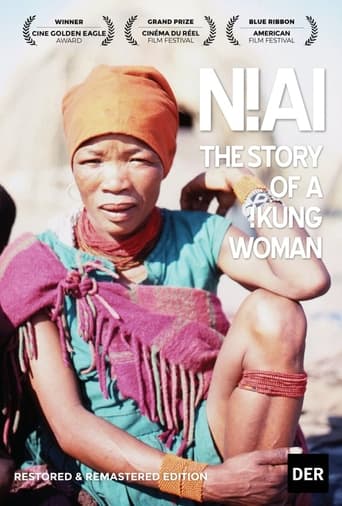
This film provides a broad overview of Ju/'hoan life, both past and present, and an intimate portrait of N!ai, a Ju/'hoan woman who in 1978 was in her mid-thirties. N!ai tells her own story, and in so doing, the story of Ju/'hoan life over a thirty year period. "Before the white people came we did what we wanted," N!ai recalls, describing the life she remembers as a child: following her mother to pick berries, roots, and nuts as the season changed; the division of giraffe meat; the kinds of rain; her resistance to her marriage to /Gunda at the age of eight; and her changing feelings about her husband when he becomes a healer. As N!ai speaks, the film presents scenes from the 1950's that show her as a young girl and a young wife. The uniqueness of N!ai may lie in its tight integration of ethnography and history. While it portrays the changes in Ju/'hoan society over thirty years, it never loses sight of the individual, N!ai.
The HuntersThe Hunters · 1957
The Hunters
6.51957
MovieDocumentary
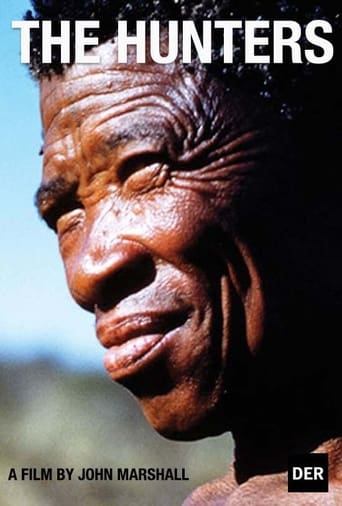
An ethnographic documentary following four Ju/’hoansi (!Kung) men during a multi-day giraffe hunt in the Kalahari Desert, filmed during the Smithsonian–Harvard Peabody expedition of 1952–53.
The InformantThe Informant · 1973
The Informant
1973
Movie
This film focuses on a black burglary suspect who, during interrogation by police offers his services as an "undercover" informant - providing the police will suppress his charge.
Wrong KidWrong Kid · 1973
Wrong Kid
1973
Movie
The police, looking for a suspect, question the wrong youth.
901/904901/904 · 1972
901/904
1972
MovieDocumentary
Follows police patrol cars 901 and 904 as they ply the streets of Pittsburgh, responding to diverse situations.
To Hold Our Ground: A Field ReportTo Hold Our Ground: A Field Report · 1991
To Hold Our Ground: A Field Report
1991
MovieDocumentary
For thousands of years Ju/'hoansi have lived in the Nyae Nyae region in northeastern Namibia. In the 1950s, most Ju/'hoansi had been exterminated or were dispossessed by white colonists and black farmers, but in Nyae Nyae Ju/'hoansi were still the only permanent inhabitants. Waterless approaches isolated their ancient communal land and protected them from enslavement.
Yanomamo: A Multidisciplinary StudyYanomamo: A Multidisciplinary Study · 1968
Yanomamo: A Multidisciplinary Study
1968
MovieDocumentary
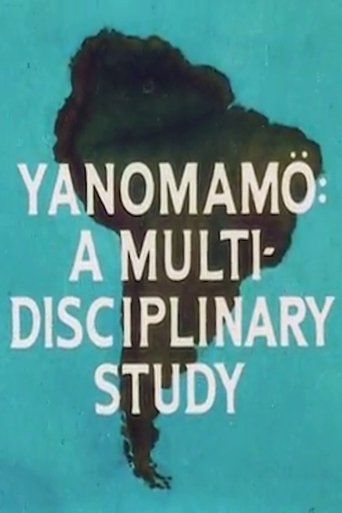
This film illustrates the field techniques used by a multidisciplinary team of researchers from the University of Michigan in collaboration with their Venezuelan colleagues. The film also includes a brief sketch of Yanomamo culture and society.

More Like This

Couldn't load this row right now.
Rate this film

Your ratings make Midnight smarter