Oh Dem Watermelons

Oh Dem Watermelons

1965 · 12 min · ★ 6.1 · Music

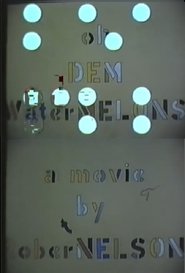
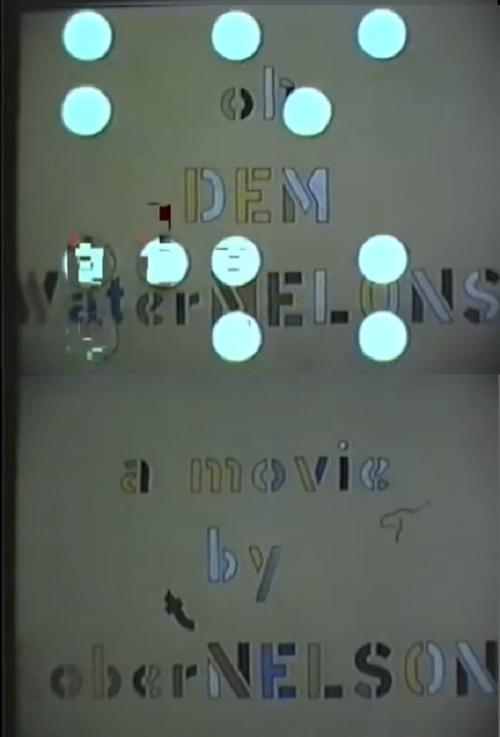
Commissioned by the San Francisco Mime Troupe as a short to be screened during intermission for its rather infamous 1965 Minstrel Show (Civil Rights from the Cracker Barrel), which assaulted racial stereotypes by wildly exaggerating them. Scored by Steve Reich. Preserved by the Academy Film Archive in 2007.

Directed by Robert Nelson · Written by Robert Nelson

Your Rating

Cast

Make it a double feature

3h 6m together
Oh Dem Watermelons
The Sound of Music

A close match in mood and era.

More from Robert NelsonSee all →
RiverbodyRiverbody · 1970
Riverbody
10.01970
MovieDrama
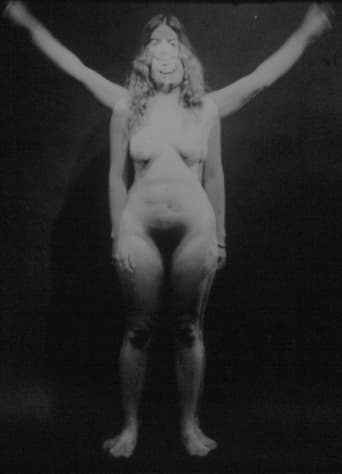
A continuous dissolve of 87 male and female nudes. "The film's fascination lies with the suspense of that magic moment, halfway between two persons, when the dissolve technique produces composite figures, oftentimes hermaphroditic, that inspires awe for the mystery of the human form." - B. Ruby Rich, Chicago Art Institute
Grateful DeadGrateful Dead · 1967
Grateful Dead
9.01967
Movie
A chaotic film featuring the Grateful Dead. The songs that are included are Sitting on Top of the World, Good Morning Little Schoolgirl, Cold Rain and Snow, and something that might be Viola Lee Blues. Preserved by the Academy Film Archive in 2007.
Bleu ShutBleu Shut · 1970
Bleu Shut
5.81970
Movie
"Even when we know the game is an illusion, the experience of Bleu Shut is entirely a pleasure: the ‘game’ is fun, the Nelson/Wiley debates, infectiously funny; and Nelson’s choice of imagery, quirky and amusing. Bleu Shut reveals, and allows us to enjoy, our gullibility within the pervasive absurdity of modern life." –Scott MacDonald
The Great BlondinoThe Great Blondino · 1967
The Great Blondino
4.61967
MovieDrama
Shooting in 1966 without script, story, or any narrative preconception, Nelson and Wiley created a masterwork of ‘60s independent cinema. The Great Blondino follows an anachronistically attired young fellow as he navigates a beguiling, sometimes troubling world with a curiosity that opens us wide to the filmmakers’ inspired, freeform vision. In many ways, the wonder of Blondino may echo the excitement of invention and exploration that Nelson and Wiley experienced in the making of the film. Utterly exuberant and freed from rote cinematic restriction, it embodies an artistic rigor and direction that also prevents it from ever seeming too unhinged. An incredible feat of tightrope walking. —Mark Toscano. Preserved by the Academy Film Archive in 2009.
The Off-Handed Jape... & How to Pull It OffThe Off-Handed Jape... & How to Pull It Off · 1967
The Off-Handed Jape... & How to Pull It Off
4.01967
Movie
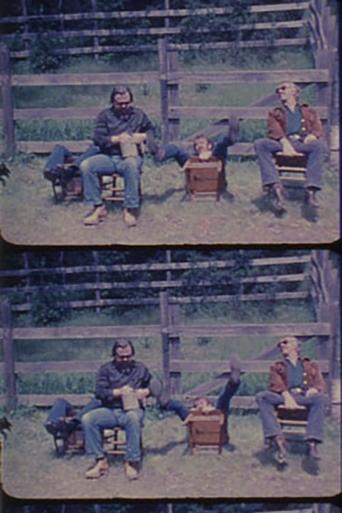
The Off-Handed Jape is an afternoon’s lark made by Nelson and his artist friend William Wiley. The two men perform whimsical actions and poses for the camera, then recontextualize this imagery by improvising their own commentary on the action at a later time. —Andy Ditzler. Preserved by the Academy Film Archive in 2002.
Deep WesturnDeep Westurn · 1974
Deep Westurn
1974
Movie
A ‘film wake’. Though celebratory in mood, it has a mournful subtext… death and dying. We dedicated it to Dr. Sam West, departed friend and patron of the arts, trusting that his ghost would approve our hi-jinx and seeming irreverence. Preserved by the Academy Film Archive in 2002.
Suite California Stops & Passes Part 1:  Tijuana to Hollywood via Death ValleySuite California Stops & Passes Part 1: Tijuana to Hollywood via Death Valley · 1976
Suite California Stops & Passes Part 1: Tijuana to Hollywood via Death Valley
1976
Movie
The first part of what was intended to be a three-part experimental travelog for Nelson’s home state of California, this film covers the Mexican border, Death Valley, and Hollywood/Los Angeles.
The Awful BacklashThe Awful Backlash · 1967
The Awful Backlash
1967
Movie
“In their starkly minimal film, The Awful Backlash, directors Robert Nelson and William Allan, focus solely on a pair of hands as they begin to unravel what appears to be a tangled fishing line. Any further evidence of the title’s confusing ‘awfulness’ – other than the literal disentanglement of the line remains, however, tentative, left as it were, literally, at a loose end. The viewer knows nothing of the incident that led to this backlash or entanglement; nor of the directors’ initial motive for the title indeed not of any other attempt at blending an additional storyline beyond what is seen. There is, perhaps, one link with a reverse reaction – a sense of gradual recovery taking place, as the thread unfolds from a position of multiplicity back to a singular line.” (Pamela Kember, Rethinking Refunctioning, ‘Awful Backlash’ catalogue, May 2000) Preserved by the Academy Film Archive in 2005.
Penny Bright & Jimmy WitherspoonPenny Bright & Jimmy Witherspoon · 1967
Penny Bright & Jimmy Witherspoon
1967
Movie
Nelson sets minimal, repetitive imagery against a looping recording of his daughter Oona, which goes gradually from sweet to curious to mysterious to cacophonous as the loops overlap each other. Since its premiere alongside The Great Blondino and other shorts in April 1967, the film has rarely been seen. It stands out as a more textural piece from Nelson, which, rather than retreating into pure abstraction or bland trippiness, subtly transmits an undercurrent of its ominous source material. —Mark Toscano. Preserved by the Academy Film Archive in 2010.
Travelogue: Portraits – Images from a journeyTravelogue: Portraits – Images from a journey · 1969
Travelogue: Portraits – Images from a journey
1969
Movie
A black-and-white travel journal, in which the themes of memories and their relationship to the past suddenly catch up and rush away from us. The film is based on a series of portraits of American artists, all of whom belong to a young and politicized generation, presented in static tableaus from their studios, films and home environments.
Plastic HaircutPlastic Haircut · 1963
Plastic Haircut
1963
Movie
"Dada-inspired performance in which absurd actions take place in an environment of strange symbols and graphic forms." -Mark Webber. Design by William T. Wiley and Robert Hudson. Sound collage by Steve Reich.

More Like This

Rate this film

Your ratings make Midnight smarter