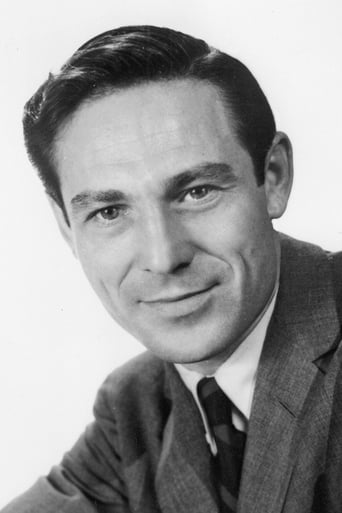
Joseph Wiseman

Acting

Joseph Wiseman

Born May 15, 1918 · Montreal, Quebec, Canada

Died October 19, 2009 · aged 91

Joseph Wiseman (May 15, 1918 – October 19, 2009) was a Canadian theater and film actor, best known for starring as the titular antagonist of the first James Bond film, Dr. No, as well as his career on Broadway. He was once called "the spookiest actor in the American theater".

Known For
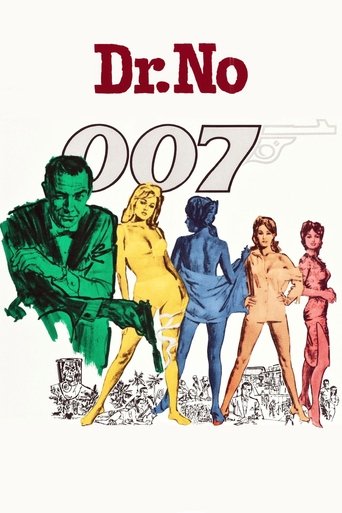
Dr. NoDr. No · 1962
Dr. No
7.01962
MovieAdventureAction
Agent 007 battles mysterious Dr. No, a scientific genius bent on destroying the U.S. space program. As the countdown to disaster begins, Bond must go to Jamaica, where he encounters beautiful Honey Ryder, to confront a megalomaniacal villain in his massive island headquarters.
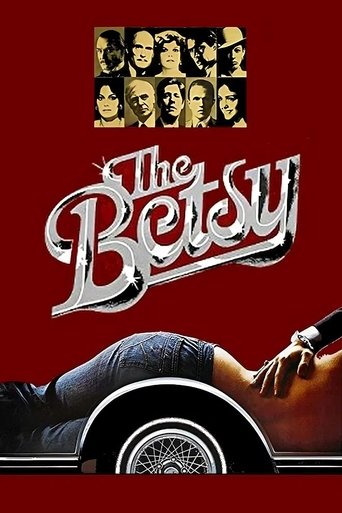
The BetsyThe Betsy · 1978
The Betsy
4.81978
MovieDramaRomance
Ruthless patriarch Loren hires racecar driver Angelo to build a more efficient vehicle against the wishes of his grandson. But things get even messier when Angelo romances two women in Loren's life -- his great-granddaughter and his grandson's mistress.
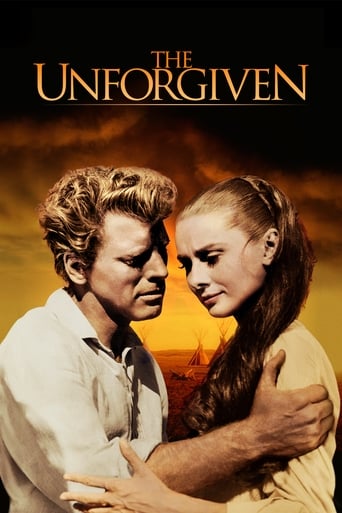
The UnforgivenThe Unforgiven · 1960
The Unforgiven
6.21960
MovieWesternDrama
The neighbors of a frontier family turn on them when it is suspected that their beloved adopted daughter was stolen from the Kiowa tribe.
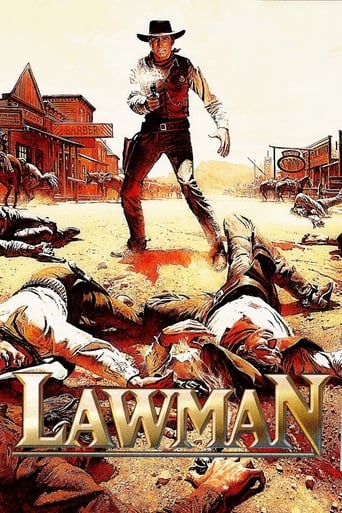
LawmanLawman · 1971
Lawman
6.51971
MovieWestern
While passing through the town of Bannock, a bunch of drunken cattlemen go overboard with their celebrating and accidentally kill an old man with a stray shot. They return home to Sabbath unaware of his death. Bannock lawman Jered Maddox later arrives there to arrest everyone involved on a charge of murder. Sabbath is run by land baron Vince Bronson, a benevolent despot, who, upon hearing of the death, offers restitution for the incident.
The Valachi PapersThe Valachi Papers · 1972
The Valachi Papers
6.51972
MovieCrimeDrama
When Joe Valachi has a price put on his head by Don Vito Genovese, he must take desperate steps to protect himself while in prison. An unsuccessful attempt to slit his throat puts him over the edge to break the sacred code of silence.
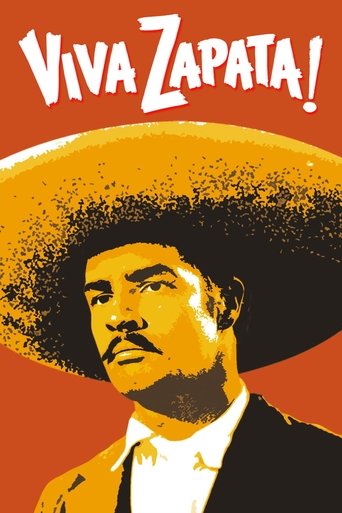
Viva Zapata!Viva Zapata! · 1952
Viva Zapata!
6.91952
MovieHistoryDrama
The story of Mexican revolutionary Emiliano Zapata, who led a rebellion against the corrupt, oppressive dictatorship of president Porfirio Díaz in the early 20th century.
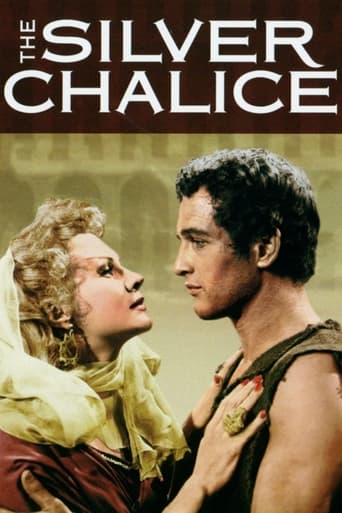
The Silver ChaliceThe Silver Chalice · 1954
The Silver Chalice
4.41954
MovieDramaRomance
A Greek artisan is commissioned to cast the cup of Christ in silver and sculpt around its rim the faces of the disciples and Jesus himself. He travels to Jerusalem and eventually to Rome to complete the task. Meanwhile, a nefarious interloper is trying to convince the crowds that he is the new Messiah by using nothing more than cheap parlor tricks.
The Garment JungleThe Garment Jungle · 1957
The Garment Jungle
6.51957
MovieDramaCrime
Alan Mitchell returns to New York to work for his father Walter, the owner of a fashion house that designs and manufactures dresses. To stay non-union, Walter has hired Artie Ravidge, a hood who uses strong-arm tactics to keep the employees in line.

Filmography

Sort
Champ for a DayChamp for a Day · 1953
Champ for a Day
7.01953
MovieCrimeComedy
An up-and-coming heavyweight fighter, George Wilson, arrives in Vulcan City, a small mid-western town over-run by racketeers, to fight a heavily-favored Frankie Sebastian. George arrives but his manager Dolan is nowhere to be found. But Ma and Pa Karlsen, owners of Karlsen's Kozy Kottages motel and restaurant take him under their wing. He meets Miss Gormley who is also there to meet the no-show manager who is blackmailing her brother. Dolan still hasn't arrived by the date of the fight but, to the surprise of sports-promoters Tom Healy and Dominic Guido, George shows up and wins the fight. This wins him the friendship of trainer Al Muntz and the enmity of Willie Foltis, a punchy ex-fighter and a Healy henchman. This leads George to a fight with "Soldier" Freeman, whose manager Scotty Cameron has made arrangements for the favored-Freeman to take a dive, so he and Healy and Guido can clean up betting on the underdog. But Honest George has other plans.

Dominic Guido

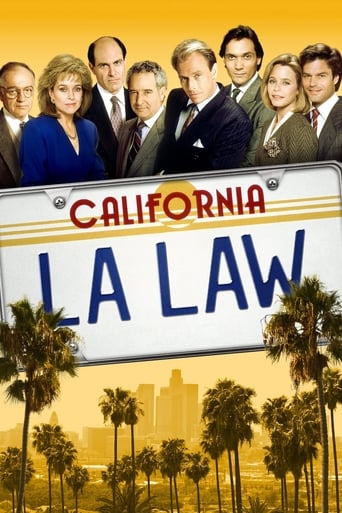
L.A. LawL.A. Law · 1986
L.A. Law
7.11986
SeriesDramaWar & Politics
L.A. Law is an American television legal drama series that ran for eight seasons on NBC from September 15, 1986, to May 19, 1994. Created by Steven Bochco and Terry Louise Fisher, it contained many of Bochco's trademark features including a large number of parallel storylines, social drama and off-the-wall humor. It reflected the social and cultural ideologies of the 1980s and early 1990s, and many of the cases featured on the show dealt with hot-topic issues such as abortion, racism, gay rights, homophobia, sexual harassment, AIDS, and domestic violence. The series often also reflected social tensions between the wealthy senior lawyer protagonists and their less well-paid junior staff. The show was popular with audiences and critics, and won 15 Emmy Awards throughout its run, four of which were for Outstanding Drama Series.

Isidore Schoen

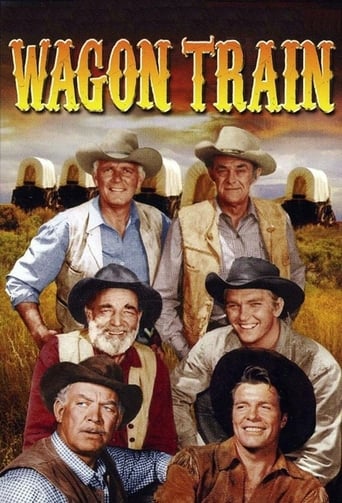
Wagon TrainWagon Train · 1957
Wagon Train
6.61957
SeriesWesternDrama
The series initially starred veteran movie supporting actor Ward Bond as the wagon master, later replaced upon his death by John McIntire, and Robert Horton as the scout, subsequently replaced by lookalike Robert Fuller a year after Horton had decided to leave the series. The series was inspired by the 1950 film Wagon Master directed by John Ford and starring Ben Johnson, Harry Carey Jr. and Ward Bond, and harkens back to the early widescreen wagon train epic The Big Trail starring John Wayne and featuring Bond in his first major screen appearance playing a supporting role. Horton's buckskin outfit as the scout in the first season of the television series resembles Wayne's, who also played the wagon train's scout in the earlier film.
Jim Case

Matinee TheaterMatinee Theater · 1955
Matinee Theater
5.31955
SeriesDrama
Matinee Theater is an American anthology series that aired on NBC during the Golden Age of Television, from 1955 to 1958. The series, which ran daily in the afternoon, was frequently live. It was produced by Albert McCleery, Darrell Ross, George Cahan and Frank Price with executive producer George Lowther. McCleery had previously produced the live series Cameo Theatre which introduced to television the concept of theater-in-the-round, TV plays staged with minimal sets. Jim Buckley of the Pewter Plough Playhouse recalled: When Al McCleery got back to the States, he originated a most ambitious theatrical TV series for NBC called Matinee Theater: to televise five different stage plays per week live, airing around noon in order to promote color TV to the American housewife as she labored over her ironing. Al was the producer. He hired five directors and five art directors. Richard Bennett, one of our first early presidents of the Pewter Plough Corporation, was one of the directors and I was one of the art directors and, as soon as we were through televising one play, we had lunch and then met to plan next week’s show. That was over 50 years ago, and I’m trying to think; I believe the TV art director is his own set decorator —yes, of course! It had to be, since one of McCleery’s chief claims to favor with the producers was his elimination of the setting per se and simply decorating the scene with a minimum of props. It took a bit of ingenuity.
Lights OutLights Out · 1949
Lights Out
6.01949
SeriesSci-Fi & FantasyCrime
Lights Out was an extremely popular American old-time radio program, an early example of a network series devoted mostly to horror and the supernatural, predating Suspense and Inner Sanctum. Versions of Lights Out aired on different networks, at various times, from January 1934 to the summer of 1947 and the series eventually made the transition to television. In 1946, NBC Television brought Lights Out to TV in a series of four specials, broadcast live and produced by Fred Coe, who also contributed three of the scripts. NBC asked Cooper to write the script for the premiere, "First Person Singular", which is told entirely from the point of view of an unseen murderer who kills his obnoxious wife and winds up being executed. Variety gave this first episode a rave review ("undoubtedly one of the best dramatic shows yet seen on a television screen"), but Lights Out did not become a regular NBC-TV series until 1949.