E
Acting
Erich Haußmann
Born July 13, 1900 · Ulm, Germany
Died September 9, 1984 · aged 84
Erich Haußmann was born on July 13, 1900 in Ulm, Baden-Württemberg, Germany. He was an actor, known for Durch die Wüste (1936), Life Begins Tomorrow (1933) and Gold (1934). He was married to Ruth Wenger. He died on September 9, 1984 in Weimar, German Democratic Republic.
Known For
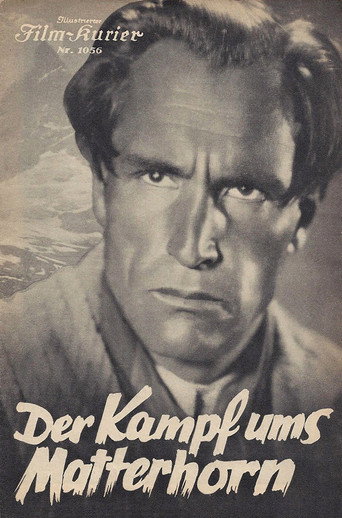 The Fight for the Matterhorn · 1934
The Fight for the Matterhorn
1934
MovieDrama
Sounded version of the 1928 film 'Der Kampf ums Matterhorn'. The added sound track included music composed by Schmidt-Boelckeb and dubbed dialogs by different actors. This version is slightly shorter than the silent film due to the disappearance of the movie titles. The story, based on the novel by Carl Haensel recreates the struggle between Edward Whymper and Jean-Antoine Carrel for the first successful ascent of the Matterhorn in 1865. In 1938 two new versions of the movie were filmed under the direction of Luis Trenker, who acted again in the role of Carrel. One version was shot in German (Der Berg ruft) and the other in English (The Challenge).
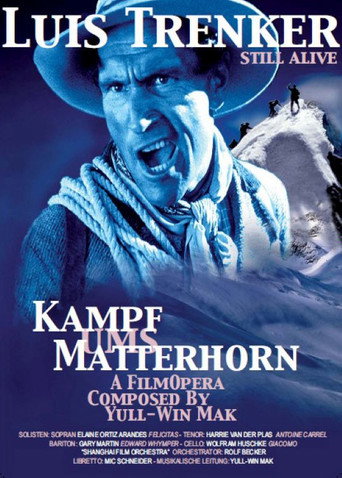 The Fight for the Matterhorn · 1928
The Fight for the Matterhorn
★ 8.21928
MovieDrama
Struggle for the Matterhorn (German: Der Kampf ums Matterhorn) is a 1928 German-Swiss silent drama film co-directed by Mario Bonnard and Nunzio Malasomma and starring Luis Trenker, Marcella Albani, and Alexandra Schmitt. The film is part of the popular cycle of mountain films of the 1920s and 1930s. Art direction was by Heinrich Richter. Based on a novel by Carl Haensel, the film depicts the battle between British and Italian climbers to be the first to climb the Matterhorn. Trenker later remade the film as The Challenge in 1938.
 Across the Desert · 1936
Across the Desert
★ 6.21936
MovieAdventure
Set in the Ottoman Empire during the Nineteenth century, the film portrays a series of oriental adventures of the two travellers Kara Ben Nemsi and Hadschi Halef Omar.
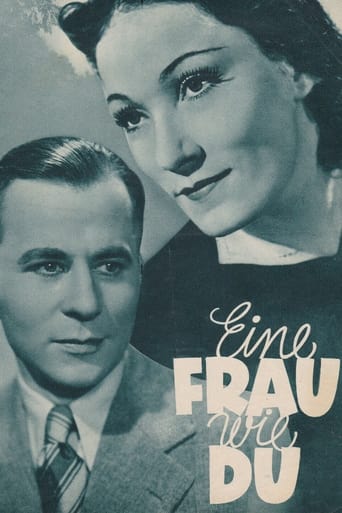 A Woman Like You · 1939
A Woman Like You
★ 5.61939
MovieDrama
Maria Pretorius is the leader of a counseling office in a large factory. She is completely engrossed by her career and so gives the cold shoulder to her colleague Wallrodt, who wants to marry her. Only the young Manfred Thiele is successful in winning her sympathy through his perseverence. That, however, pisses off Lyda Lehmann, who has long had the hots for him.
 Twilight · 1940
Twilight
★ 7.51940
MovieDrama
Walter Gruber once belonged to a group of unscrupulous, money-grubbing poachers. Now released from prison, he is determined never to touch a gun again. He was imprisoned for poaching, but they couldn't prove he fired the shot that wounded forester Kuhnert. Upon his return home, Walter is horrified to discover that his former lover, Kuhnert's daughter Grete, has since married someone else. Grete still loves Walter, with whom she was pregnant. But her father would have made life a living hell for her and the child had she not married another man. This man, Robert Thiele, is still poaching and is extremely ruthless in his methods. Robert eventually blackmails Walter into rejoining the poachers. When the gang shoots the old forester Kuhnert, Robert shifts suspicion onto Walter.
 Der Streit um den Sergeanten Grischa · 1968
Der Streit um den Sergeanten Grischa
★ 9.01968
MovieDrama
Russian soldier Grisha escapes from a German prisoner-of-war camp in the spring of 1917. He is caught and is to be shot as a spy. This decision is controversial. The dispute continues. Grisha is executed on the orders of the army high command.
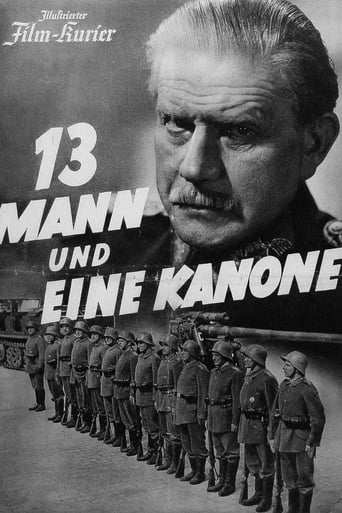 Thirteen Men and a Cannon · 1938
Thirteen Men and a Cannon
★ 5.81938
MovieWarComedy
World War I, Eastern Front. A special battery consisting of thirteen soldiers and one cannon successfully holds back the enemy. But then the position of the gun is betrayed to the Russians and the cannon is destroyed. Each of the thirteen men is now suspected of being the traitor.
 Life Begins Tomorrow · 1933
Life Begins Tomorrow
★ 7.11933
MovieDrama
Musician Robert Sand is released from prison in April 1933, after serving five years for manslaughter. Disappointed not to find his wife Marie waiting for him outside the prison gates, he heads into the city. At the same time, Marie makes her way in the other direction. For one portentous day, they look for each other in the noisy city of Berlin. Doubt, mistrust, and jealousy begin to germinate in Robert’s mind.
Filmography
Sort