Production
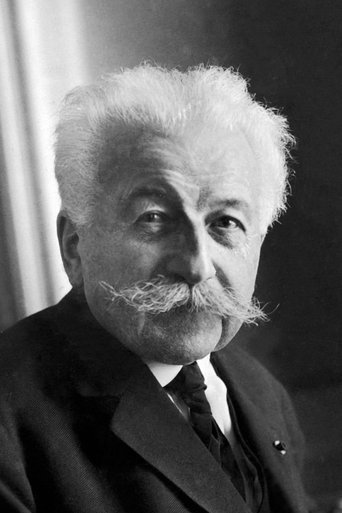
Auguste Lumière
Born October 19, 1862 · Besançon, Doubs, France
Died April 10, 1954 · aged 91
Auguste Lumière (1862–1954) was a French engineer, industrialist, biologist, and illusionist. In 1894 and 1895, he and his brother Louis invented an animated photographic camera and projection device, the cinematograph, which met with worldwide success.
Known For
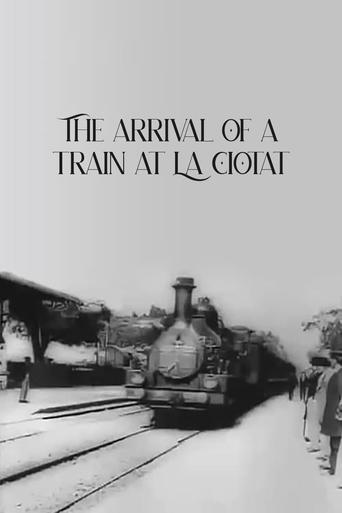 The Arrival of a Train at La Ciotat · 1896
The Arrival of a Train at La Ciotat
★ 7.11896
MovieHistoryDocumentary
A group of people are standing along the platform of a railway station in La Ciotat, waiting for a train. One is seen coming, at some distance, and eventually stops at the platform. Doors of the railway-cars open and attendants help passengers off and on. Popular legend has it that, when this film was shown, the first-night audience fled the café in terror, fearing being run over by the "approaching" train. This legend has since been identified as promotional embellishment, though there is evidence to suggest that people were astounded at the capabilities of the Lumières' cinématographe.
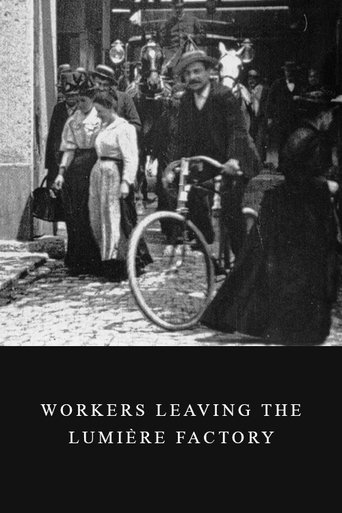 Workers Leaving the Lumière Factory · 1895
Workers Leaving the Lumière Factory
★ 6.71895
MovieHistoryDocumentary
Working men and women leave through the main gate of the Lumière factory in Lyon, France. Filmed on 22 March 1895, it is often referred to as the first real motion picture ever made, although Louis Le Prince's 1888 Roundhay Garden Scene pre-dated it by seven years. Three separate versions of this film exist, which differ from one another in numerous ways. The first version features a carriage drawn by one horse, while in the second version the carriage is drawn by two horses, and there is no carriage at all in the third version. The clothing style is also different between the three versions, demonstrating the different seasons in which each was filmed. This film was made in the 35 mm format with an aspect ratio of 1.33:1, and at a speed of 16 frames per second. At that rate, the 17 meters of film length provided a duration of 46 seconds, holding a total of 800 frames.
 Marché · 1896
Marché
★ 6.31896
MovieDocumentary
Passers-by on a street market in Marseille.
 Strandvägen : panorama · 1897
Strandvägen : panorama
★ 5.01897
MovieDocumentary
 Tigers at the Zoo · 1896
Tigers at the Zoo
★ 4.81896
MovieDocumentary
Teasing tigers with meat.
 Métropolitain · 1896
Métropolitain
1896
MovieDocumentary
 Turcos (défilé) · 1896
Turcos (défilé)
1896
MovieDocumentary
Turcos regiment parade.
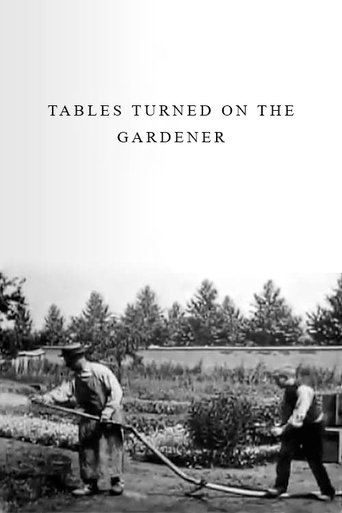 The Sprinkler Sprinkled · 1895
The Sprinkler Sprinkled
★ 6.81895
MovieComedy
A gardener is watering his flowers, when a mischievous boy sneaks up behind his back, and puts a foot on the water hose. The gardener is surprised and looks into the nozzle to find out why the water has stopped coming. The boy then lifts his foot from the hose, whereby the water squirts up in the gardener's face. The gardener chases the boy, grips his ear and slaps him in his buttocks. The boy then runs away and the gardener continues his watering. Three separate versions of this film exist, this is the original, filmed by Louis Lumière.
Filmography
Sort