Pierre Creton

Directing

Pierre Creton

No biography available.

Known For
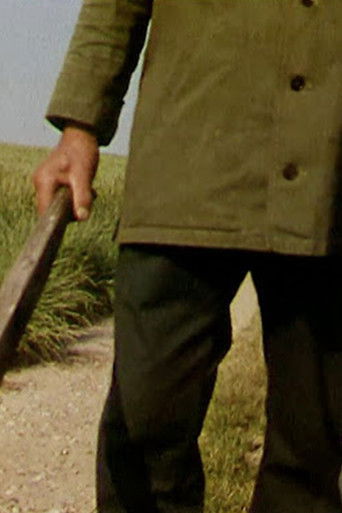
Aline CézanneAline Cézanne · 2010
Aline Cézanne
2010
Movie
“It begins with an exhibition at the French Institute in Munich. We had decided to create an installation together [with Vincent Barré] in the greenhouse of the Seyssel d’Aix palace: a tribute to Paul Cézanne and his final model, the gardener Vallier….We spoke about the project with one of Vincent’s childhood friends, Christine Toffin, who reminded us that she was related to the painter. Her aunt, the painter’s granddaughter, still lived at Bourron-Marlotte. We decided to go and film Aline Cézanne in her retirement home at Bourron-Marlotte….It was during the sound editing that we thought of making a film using the images we had shot for the sound. The framing is minimal – it’s fine as it is, but it was not set up with a film in mind. A year later, we went back to see Aline. Her speech had become more confused and we went off with her to the village to find the houses of her childhood.”
Le VicinalLe Vicinal · 1994
Le Vicinal
7.51994
MovieDocumentary
Inland from the chalk plateau of Pays de Caux, the rituals of smoking hives and honey extraction are documented by an apprentice beekeeper, and a schoolboy watches from his classroom window over fields of rapeseed blown about by a coastal zephyr.
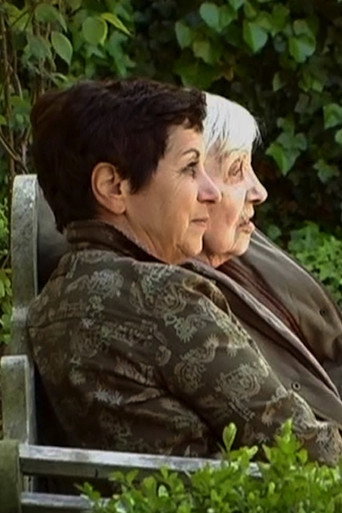
Une saisonUne saison · 2002
Une saison
2002
Movie
“Yves Edouard is someone I hear a lot about. He’s a farmer and cereal grower, an endive producer…. He’s clearly a character out of a novel. One morning, I went to his farm and he hired me, as he needed someone to weed his endive fields….When I went to see him, I imagined constructing something romanesque and aesthetic. I had planned to film the work but this proved impossible. I then met Catherine Pernot, the friend of my friend Sophie Roger. I was enchanted by her way of talking about things, even the most ordinary ones. I described the work on the endive farm so that she could turn it into her own story. I recorded her and reworked her words to create a text that she then had to learn and act out in front of the camera. Next, I filmed an interview between Yves and myself. The film is thus composed of two sequence shots: Catherine, then Yves. As if they had slipped into their characters’ skin, she tells the story, he answers the questions.”
A Beautiful SummerA Beautiful Summer · 2019
A Beautiful Summer
5.22019
MovieDrama
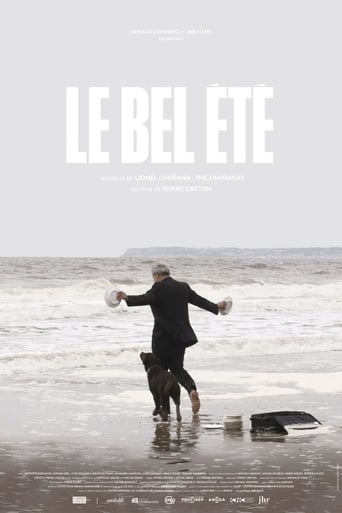
African immigrants start working on a farm in Normandy and hope to open their own restaurant someday.
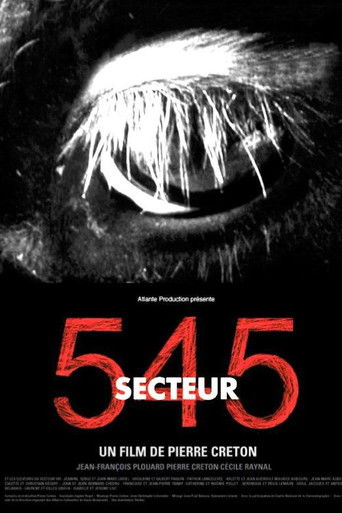
Secteur 545Secteur 545 · 2004
Secteur 545
9.02004
MovieDocumentary
Dairy controller in the "Secteur 545", Pierre Creton does the portrait of a rural existence devoid of picturesque reduction
Imposed LandscapeImposed Landscape · 2006
Imposed Landscape
2006
MovieDocumentary
Beyond the visit of Yvetot Agricultural High School, a walk through a landscape that is both familiar and remarkable.
ManiquervilleManiquerville · 2010
Maniquerville
2010
MovieDramaDocumentary
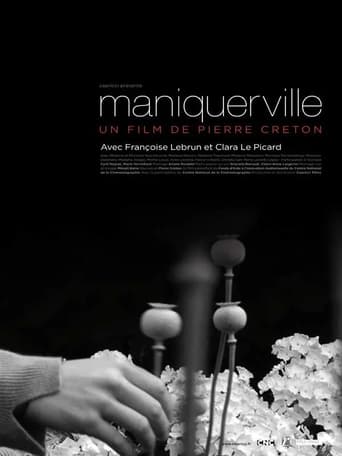
The comedienne Françoise Lebrun regularly comes to the Maniquerville gerontology center to read Proust to the residents. It is an opportunity for them to discuss together the memory of lost time. A strong bond develops between Françoise and Clara, the center’s host.
Ça a recommencé, l’émerveillementÇa a recommencé, l’émerveillement · 2020
Ça a recommencé, l’émerveillement
2020
MovieDocumentary

Filmography

Sort
Aline CézanneAline Cézanne · 2010
Aline Cézanne
2010
Movie
“It begins with an exhibition at the French Institute in Munich. We had decided to create an installation together [with Vincent Barré] in the greenhouse of the Seyssel d’Aix palace: a tribute to Paul Cézanne and his final model, the gardener Vallier….We spoke about the project with one of Vincent’s childhood friends, Christine Toffin, who reminded us that she was related to the painter. Her aunt, the painter’s granddaughter, still lived at Bourron-Marlotte. We decided to go and film Aline Cézanne in her retirement home at Bourron-Marlotte….It was during the sound editing that we thought of making a film using the images we had shot for the sound. The framing is minimal – it’s fine as it is, but it was not set up with a film in mind. A year later, we went back to see Aline. Her speech had become more confused and we went off with her to the village to find the houses of her childhood.”
Director

Une saisonUne saison · 2002
Une saison
2002
Movie
“Yves Edouard is someone I hear a lot about. He’s a farmer and cereal grower, an endive producer…. He’s clearly a character out of a novel. One morning, I went to his farm and he hired me, as he needed someone to weed his endive fields….When I went to see him, I imagined constructing something romanesque and aesthetic. I had planned to film the work but this proved impossible. I then met Catherine Pernot, the friend of my friend Sophie Roger. I was enchanted by her way of talking about things, even the most ordinary ones. I described the work on the endive farm so that she could turn it into her own story. I recorded her and reworked her words to create a text that she then had to learn and act out in front of the camera. Next, I filmed an interview between Yves and myself. The film is thus composed of two sequence shots: Catherine, then Yves. As if they had slipped into their characters’ skin, she tells the story, he answers the questions.”

Director

Côté jardinCôté jardin · 2011
Côté jardin
2011
Movie
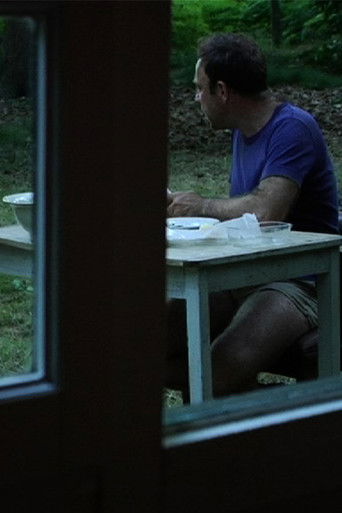
Pierre Creton placed his camera opposite the small black table that had always stood in the middle of the lawn facing the front of the house. He filmed himself gardening – potting plants, preparing cuttings. Cat, dog, donkey, hens are moving about, playing, resting around the table, the goat is prancing on the table top, the whole menagerie is living its life, crossing the frame freely. On these images of perfect insouciance, he edited the sound of a radio news report about the Fukushima disaster. The date is March 2011: here, the garden, the end of winter and the pleasure of plunging one’s hand into the earth, touching the plants, to prepare for spring’s arrival; over there, death, sky and sea contaminated for many years, untouchable. The garden is not at odds with the disaster provided it heeds its echo, albeit unwillingly. The garden table is also the altar where domestic rituals are performed to ward off the horror.
Director

Le paysage pour témoin. Rencontre avec Georges-Arthur GoldschmidtLe paysage pour témoin. Rencontre avec Georges-Arthur Goldschmidt · 2010
Le paysage pour témoin. Rencontre avec Georges-Arthur Goldschmidt
2010
Movie
“When FACIM (Foundation for international cultural activities in mountain regions) called me to propose making a film about Georges-Arthur Goldschmidt, I didn’t know him as a writer, only a little as a translator. So I immediately read his books, Le Recours and Le Poing dans la bouche, published by Verdier, which moved me deeply….I didn’t write a script. The commission was to film Georges-Arthur Goldschmidt in the places he arrived at in France during the war, in Megève, and his relationship to the region, which is very present in his books. I filmed him from day to day over four days. On returning to the places of his childhood exile, he met the families who had helped him survive, people his own age who were children at the time, whose memories were reconstituted together.”

Director

Deng Guo Yuan, in the gardenDeng Guo Yuan, in the garden · 2010
Deng Guo Yuan, in the garden
2010
Movie
During a trip to China with Vincent to meet people in art schools and universities, I discovered the work of Deng Guo Yan, the director of the Tianjin school of contemporary art. A painting style that seemed to me to be a mix of traditional Chinese painting, Claude Monet and Cy Twombly, and which I liked. The black and white of his large ink brush paintings on paper, almost the size of a mural, made it possible for me to jump from black and white to colour in this film, as I had done in the Recueil but with other connotations: with excerpts from Jean Renoir in Aline Cézanne, photos of Le Havre destroyed in Papa, Maman, Perret et moi, and infrared images taken by Georges-Arthur Goldschmidt in Le Paysage pour témoin”.

Director

Papa, maman, Perret et moi. Un appartement pour témoinPapa, maman, Perret et moi. Un appartement pour témoin · 2010
Papa, maman, Perret et moi. Un appartement pour témoin
2010
Movie
“This was, a priori, a more familiar commission, as I had lived in Le Havre – it’s actually the only town I know a little. And I’ve always liked the architecture of Auguste Perret…Annette Haudiquet, a curator at the Malraux museum, asked me to come to Le Havre. She had planned visits to different sites. We began with the Perret show-apartment, accompanied by the guides Elisabeth Chauvin and Pierre Gencey. We had lunch, I went to their home – they also live in a Perret apartment, arranged identically to the show-apartment. And I imagined the two of them with their son Vincent, as characters “acting” as the residents of the show-apartment. With this first idea, I accepted the commission: staging them as residents of the apartment when, in reality, they are the guides, between two realities, two epochs: the apartment that they live in and the one they show to people”.

Director

La Vie après la mortLa Vie après la mort · 2002
La Vie après la mort
2002
Movie
“I met Jean Lambert one year after my arrival in Bénouville, in 1992...Before we met, I used to see his house, his farm, and wondered who could be living in such a mess, amidst such neglect. I had prowled around a lot before approaching him, for months. The day I decided to go and see him on the pretext of buying milk, I cycled from Bénouville with my empty milk bottles. On the way, the police stopped me to ask where I was going. What a coincidence! Jean Lambert gave me the milk, pointing out that there were other farms closer to where I lived. The most difficult step had been taken…I went back to have dinner with him once a week. I’d arrive around 7pm and leave around two or three in the morning, always on my bike, often drunk…Later, I suggested that we make a film. He found the idea amusing, even though he mistrusted cinema. ‘You’re wasting your time, poetry is the only good thing. He died in April, the year of the eclipse….I finished the film I’d begun with him, without him"

Director