J
Acting
John Nesbitt
Born August 23, 1910 · Victoria, British Columbia, Canada
Died August 10, 1960 · aged 49
John Nesbitt was an actor, announcer, narrator, producer, and screenwriter. He is best remembered as having been the producer/narrator of MGM's "John Nesbitt's Passing Parade" short films series.
Known For
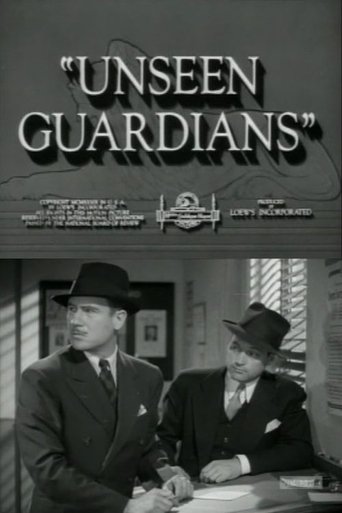 Unseen Guardians · 1939
Unseen Guardians
★ 6.51939
MovieDocumentaryDrama
The "unseen guardians" of the title are the Postal Inspection Service, which investigates mail order racketeering; the Underwriters' Laboratories, which are shown testing electrical equipment, fire extinguishers, and large floor safes; and those who run orphanages, who assure that the children in their care are placed in proper adoptive homes.
 Don't You Believe It · 1943
Don't You Believe It
★ 6.31943
MovieDocumentaryHistory
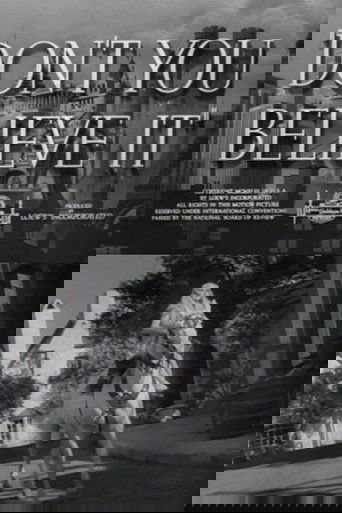
This Passing Parade entry looks at several historical "truths" that just aren't so: Steve Brodie never jumped off the Brooklyn Bridge; Mrs. O'Leary's cow did not start the great Chicago fire; Nero didn't fiddle while Rome burned; and Lady Godiva never rode naked through the streets of Coventry.
 The Ship That Died · 1938
The Ship That Died
★ 5.91938
MovieDrama
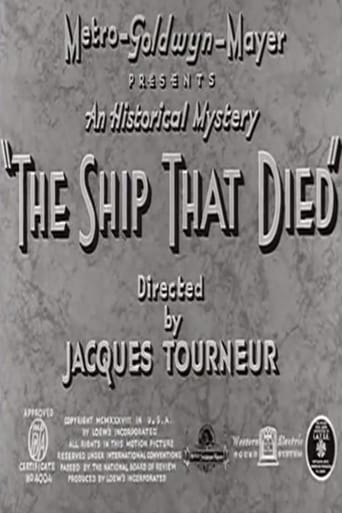
This MGM An Historical Mystery short traces the final voyage of the Mary Celeste, a ship discovered at sea, in December 1872, devoid - for no discernible reason - of crew, passengers and captain. At "the famed nautical court of Gibraltar", investigators propose three hypotheses.
 Yankee Doodle Goes to Town · 1939
Yankee Doodle Goes to Town
★ 8.01939
MovieHistoryDrama
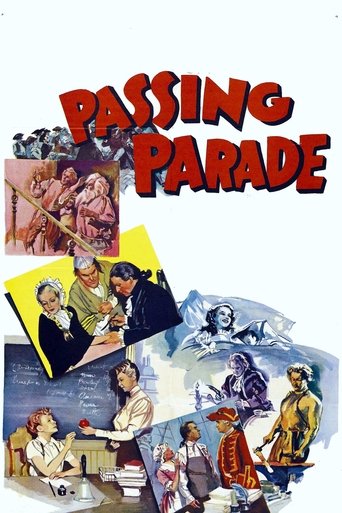
Made just before America would be forced into the Second World War, this short subject is a brief dramatized history of American democracy. It targets a perceived threat to democracy from board room and soapbox fascists who advocated a government based upon contemporaneous European models.
 A Really Important Person · 1947
A Really Important Person
★ 7.51947
MovieDrama
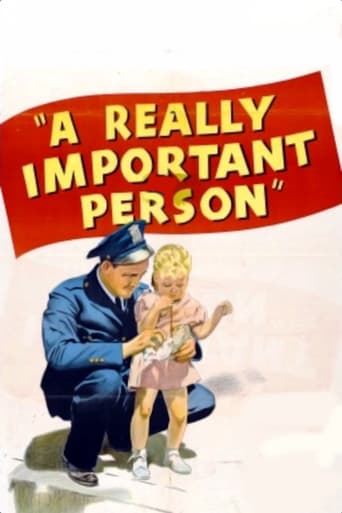
A policeman's son searches for a suitable subject for an essay about an important person.
Mr. Whitney Had a Notion · 1949Mr. Whitney Had a Notion
★ 6.21949
MovieHistory
Historical short showing how Eli Whitney (best known for the invention of the cotton gin) played a significant role in the introduction of mass production techniques to the USA in the late 18th century.
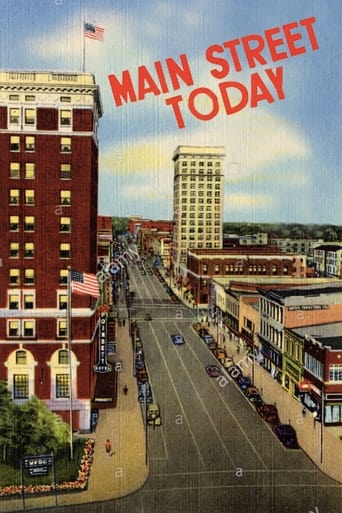 Main Street Today · 1944
Main Street Today
★ 6.31944
MovieWarHistory
This patriotic short film promotes America's war effort at home. The story looks at a fictional small town's main street, seeing where additional workforce, for increased production of materials needed by the military, might come from.
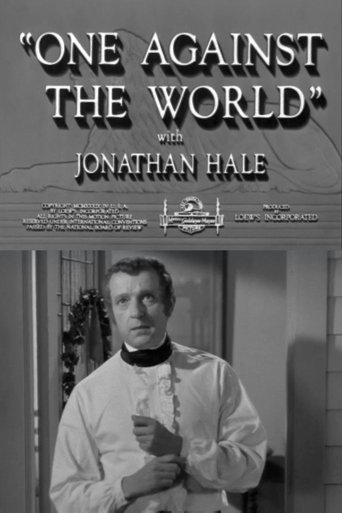 One Against the World · 1939
One Against the World
★ 8.01939
MovieHistory
This short film presents the story of Dr. Ephraim McDowell, who came under scrutiny for his pioneering of surgical practices.
Filmography
Sort
 The Great Morgan · 1945
The Great Morgan
★ 6.01945
MovieComedy
Frank Morgan is hired to put together a movie using odds and ends from the MGM vaults. He does so by splicing together a string of completely unrelated short subjects and musical numbers, interspersed with a repeated loop of a scene from some melodrama. (Contains in their entirety the shorts, "Musical Masterpieces," "Our Old Car," and "Badminton," as well as clips from other projects)
Narrator in 'Our Old Car' (voice) (archive footage) (uncredited)