Directing
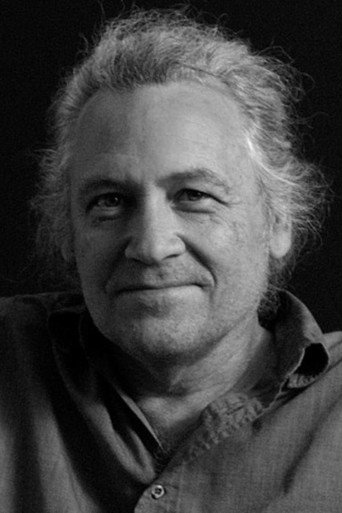
Gary Hill
Born April 4, 1951 (age 75)
Gary Hill (b. 1951, Santa Monica, CA) has worked with a broad range of media – including sculpture, sound, video, installation and performance – since the early 1970’s, producing a large body of single-channel videos, mixed-media installations, and performance work. His longtime work with intermedia continues to explore an array of issues ranging from the physicality of language, synesthesia …
Known For
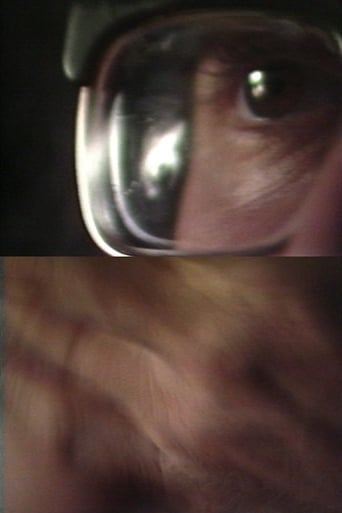 Tale Enclosure · 1985
Tale Enclosure
★ 8.01985
Movie
Returning to the primal source of language, Hill explores the physical and subconscious origins of speech. In a continuous shot of a rhythmic, linguistically inspired chant-performance by George Quasha and George Stein, the camera wanders from mouth to face to hands to figure in an open-ended visual search. The performers use the body as an acoustic instrument of sound and abstract utterances.
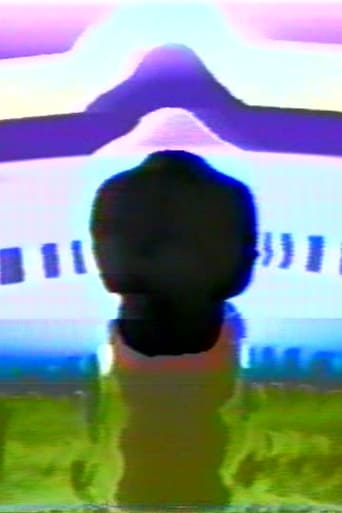 Earth Pulse · 1975
Earth Pulse
1975
Movie
A humanoid form strikes its body while making primal guttural sounds. At times the form is “stopped” and “started” using the pause of a reel-to-reel video player—a frozen line of noise (an asynchronous frame) cuts through the image reinforcing the sense of physicality. The sounding form is eventually set in an electronically generated landscape with temple-like forms of undulating feedback. Further processing of the voice and additional rhythmic electronic sounds are suggestive of ritual.
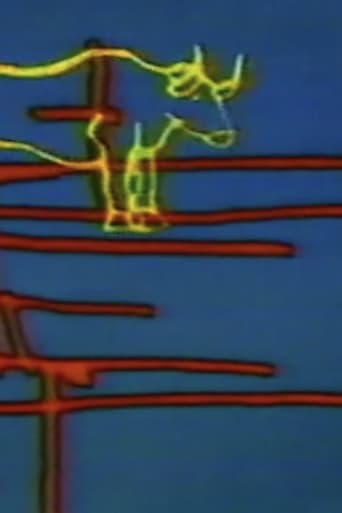 Picture Story · 1979
Picture Story
1979
Movie
“A structural work (with humor) that uses indeterminacy to forge an abstract landscape upon which the ‘vision’ of an ox appears. A sequence of words—hierarchically ordered from the utilitarian (functions and processes of the tools being used to make the piece) to the more abstract and conceptual, ‘content,’ ‘concept,’ and ‘vision’—become the building blocks of a linguistic picture story.”
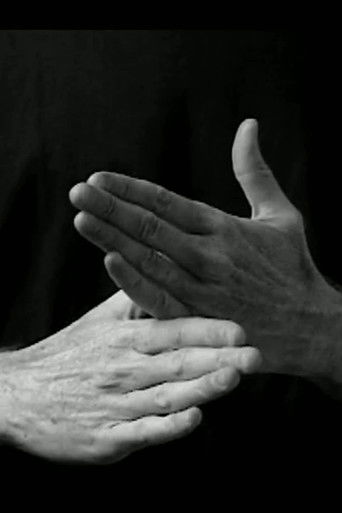 Goats & Sheep · 2001
Goats & Sheep
2001
Movie
Goats and Sheep uses the source material of the installation Withershins, 1995, consisting of two simultaneous views of a person signing: the hands and arms are framed in one, and the back of the head and top of the shoulders in the other. This latter view catches the hands when they refer to the head during signing. For Goats and Sheep, Hill changed the color image into black-and-white, re-recorded his own voice and “re-synchronized” it to the original signing. The stereo field is used to double the voice with about a second of delay added to the sound. This doubling mirrors the hands and numerous references and repetitions heard in the text.
 Soundings · 1979
Soundings
1979
Movie
Two color video cameras, two microphones, Dave Jones prototype modules (input amplifiers, variable soft/hard keyers, output amplifier, analog-to-digital converter, bit switch, digital-to-analog converter), assorted speaker cones, enclosed speaker, sand, large spike nails, lighter fluid, lighter, amplifier, wire, and water.
 Commentary · 1980
Commentary
1980
Movie
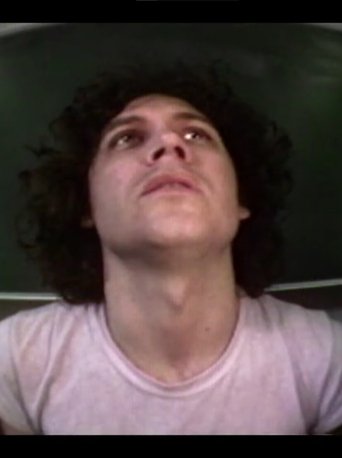
“Made just before Around & About, this work is something of a ‘manifesto in jest’ against television…. I’m a sit-in viewer looking slightly up at the screen making simple gestures into the camera. The mood is ambiguous as I seem to be watching a mirror, covering my face, reaching out to the camera, obstructing my head with a harsh (interrogator’s) lamp, and maybe more. The image, distorted through a fisheye lens, gives the impression of a concave monitor, as if the whole act were seen through a peephole or pinhole camera. In some sense I ‘play’ both sides of the screen—performer and viewer attempting to ‘connect’ either way. As ‘commentary’ it’s two-way, making it also a commentary on commentary.”
 Pacifier
Pacifier
Movie
 Mirror Road · 1976
Mirror Road
1976
Movie
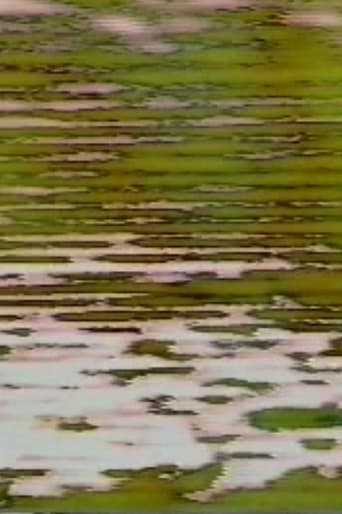
In Mirror Road, Hill uses the camera and image processing devices to explore the malleability of electronic colors and image density. Amorphous structures move across the monitor like drifting clouds, changing color and direction. From time to time structures of fantastic color landscapes move past one another in the lower and upper halves of the picture (the rearview mirror takes up the upper half of the frame), only to be recombined into an amorphous unity.
Filmography
Sort
PacifierPacifier
Movie
Director