Writing
Keum-dong Choi
Born July 3, 1916 · Hampyeong, Jeollanam-do, South Korea
Died June 5, 1995 · aged 78
Choi Keum-dong (July 3, 1916 - June 5, 1995) was a South-Korean writer.
Known For
 A Drifting Story · 1960
A Drifting Story
★ 6.51960
MovieRomanceDrama
This melodrama follows the trials and tribulations of a single mother who dares to love. Hyun Hee (Mun Jeong Suk) makes a living running a coffee house. She has to support her illegitimate daughter and mother, and bear the scorn of those who look down on her. Hyun Hee falls in love with a married writer (Kim Jin Kyu), while another customer (Choi Mu Ryong) holds a torch for her. The romantic triangles that unfold lead to tragic consequences.
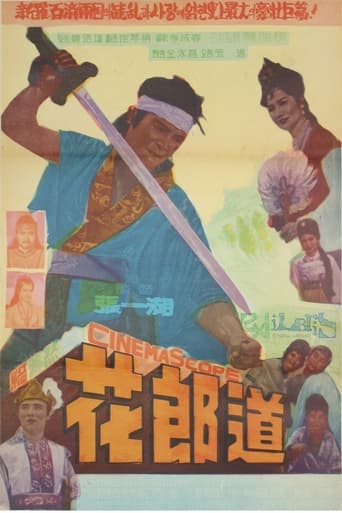 The Way of Hwarang · 1962
The Way of Hwarang
★ 6.81962
MovieHistoryDrama
His parents captured by the Baekje armies, prince Eo-jin infiltrates the enemy castle alone to seek revenge. His plot is ruined when he falls in love with a princess there and is forced to choose between betraying his parents and nation or the woman he loves.
 Great Monk Wonhyo · 1962
Great Monk Wonhyo
★ 10.01962
MovieHistoryRomance
After losing his best friend in a fierce battle against Baekje in the first year of Queen Jindeok's reign, Hwarang Won-hyo questions life and death and becomes a monk. Despite being courted by countless women, from Queen Jindeok to Princess Yoseok, Sammo, and Asaga, Won-hyo resists all temptations. Until one day, when he is moved by Princess Yoseok's desperate prayers, he wanders the streets, feeling guilty for his disloyal behavior.
 Soil · 1960
Soil
★ 6.51960
MovieDramaRomance
Heo Seung, who states that he was “born from soil, will live in soil, and die in soil”, becomes a lawyer in Seoul. However when villagers in his hometown are imprisoned for protesting against Japanese oppression, he decides to return to his village and rediscovers the true way to help his country.
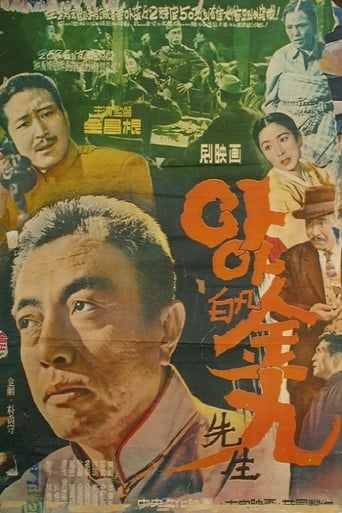 Ah! Baekbeom Kim Ku · 1960
Ah! Baekbeom Kim Ku
★ 4.01960
MovieDramaHistory
Kim Chang-su, who participated in the Donghak Movement, escapes to Manchuria after being chased by the Japanese army, finally making his way home. Angered by the assassination of Empress Myeong-seong, he murders a Japanese lieutenant and is sent to jail. He escapes from prison turns his focus on the democratic movement by teaching civilians and organizing Sinminheo (a democratic organization), even changing his name to 'Kim Gu.' After he is imprisoned again, he gets out on parole and goes to China, where he participates in establishing a provisional government from which he can direct the anti-Japanese struggle. Kim Gu goes on to play a part in Yun Bong-gil's deeds in Shanghai, the events at Hongkou Park, the encounter with Jiang Jish, and the establishment of the Korean National Army, and leads the struggle for Korea's independence with warm fraternal love and clear national spirit. When Korea is liberated in August 15, 1945, he returns back to his native land.
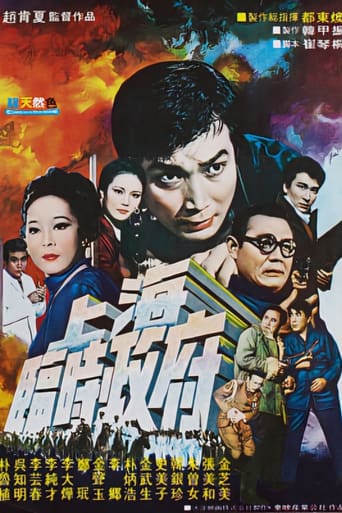 Temporary Government in Shanghai · 1969
Temporary Government in Shanghai
★ 7.51969
MovieHistory
The story deals with the life of Kim Gu, who dedicated his life for the good of his country and people.
 There is No Tragedy · 1959
There is No Tragedy
1959
MovieRomanceDrama
 Soil · 1967
Soil
★ 7.01967
MovieDramaRomance