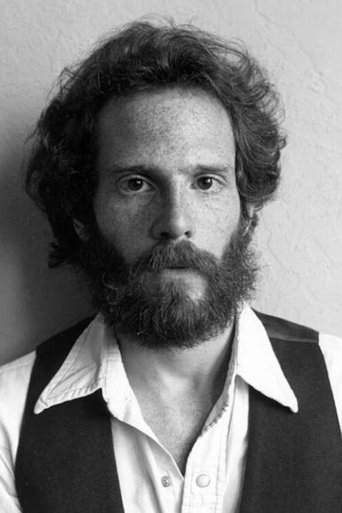
Owen Land

Directing

Owen Land

Born January 1, 1944 · New Haven, Connecticut, USA

Died June 8, 2011 · aged 67

George Landow (1944 – June 8, 2011), also known as Owen Land, was a painter, writer, playwright, photographer, and experimental filmmaker. Shortly after the release of his film On the Marriage Broker Joke... (1977), Landow rearranged his name to Owen Land, an anagram of "Landow N.E." He has also worked under pen names Orphan Morphan and Apollo Jize. According to film historian Mark Webber, Land m…

Known For

Fluxfilm Anthology 1962-1970Fluxfilm Anthology 1962-1970 · 2010
Fluxfilm Anthology 1962-1970
2010
MovieDocumentaryFantasy
Feature-length compilation program presenting 37 out of 41 original fluxfilms produced and directed in the 1960s by Fluxus artists, including George Maciunas, Nam June Paik, Yoko Ono, Robert Watts, Paul Sharits, et al.
Dialogues, or A Waist Is a Terrible Thing to MindDialogues, or A Waist Is a Terrible Thing to Mind · 2009
Dialogues, or A Waist Is a Terrible Thing to Mind
2009
MovieDocumentary
Dialogues is Land's last film: A chaotic, self-reflexive experimental narrative about many, many things-- namely Land himself. A caustic, anything-goes attitude permeates the late work.
Grand Opera: An Historical RomanceGrand Opera: An Historical Romance · 1979
Grand Opera: An Historical Romance
★ 7.51979
MovieDocumentary
Grand Opera marks a stock-taking of Benning's work and his life, presenting a personal and artistic autobiography woven together with a series of events dealing with the historical development of the number pi, Benning's travels, and homages to Michael Snow, Hollis Frampton, George Landow (Owen Land), and Yvonne Rainer.
Bardo FolliesBardo Follies · 1967
Bardo Follies
★ 5.11967
Movie
A shot of a Southern Belle waving to a group of tourists on a pleasure boat ride is looped, multiplied and then melted, creating psychedelic abstract images. “A paraphrasing of certain sections of the Tibetan Book of the Dead in motion picture terms.” - Harvard Film Archive. Originally ran 45 minutes, then was edited down to 30, then 20 minutes. Final version was simply entitled "Diploteratology" and runs 7 minutes, and is the most commonly shown version.
In the Land of OwenIn the Land of Owen · 2009
In the Land of Owen
2009
MovieDocumentary
A short documentary about notorious filmmaker Owen Land (aka George Landow) and his most recent film Dialogues (2009). Interviews with cast and crew, plus never-before-seen footage from the movie.
On the Marriage Broker Joke as Cited by Owen Land...in the Film 'On the Marriage Broker Joke as Cited by Sigmund Freud in Wit and Its Relation to the Unconscious, or Can the Avant-Garde Artist Be Wholed?'On the Marriage Broker Joke as Cited by Owen Land...in the Film 'On the Marriage Broker Joke as Cited by Sigmund Freud in Wit and Its Relation to the Unconscious, or Can the Avant-Garde Artist Be Wholed?' · 2009
On the Marriage Broker Joke as Cited by Owen Land...in the Film 'On the Marriage Broker Joke as Cited by Sigmund Freud in Wit and Its Relation to the Unconscious, or Can the Avant-Garde Artist Be Wholed?'
★ 10.02009
Movie
The Land Camera Collective presents a (nearly) shot-by-shot remake of the Owen Land 1977 classic experimental film 'On The Marriage Broker Joke as Cited by Sigmund Freud in Wit and Its Relation to the Unconscious, or Can the Avant-Garde Artist be Wholed?'
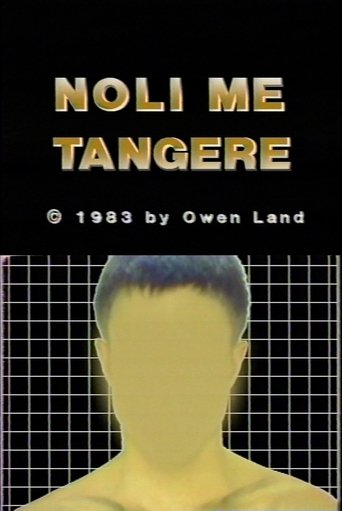
Noli me tangereNoli me tangere · 1983
Noli me tangere
1983
Movie
“The idea behind it is: Feminists claim that men objectify women’s bodies. So this was a revenge or a punishment for men who did that during their lifetimes, by being subjected to objectification by women in the after death state"
On the Marriage Broker Joke as Cited by Sigmund Freud in Wit and Its Relation to the Unconscious, or Can the Avant-Garde Artist Be Wholed?On the Marriage Broker Joke as Cited by Sigmund Freud in Wit and Its Relation to the Unconscious, or Can the Avant-Garde Artist Be Wholed? · 1977
On the Marriage Broker Joke as Cited by Sigmund Freud in Wit and Its Relation to the Unconscious, or Can the Avant-Garde Artist Be Wholed?
★ 5.11977
MovieDocumentary
“Freud established that jokes were structurally akin to dreams in their use of condensation, displacement, representation by opposites, punning and ‘nonsense’. All of these strategies are much in evidence in (Land’s) marvelously duplicitous ON THE MARRIAGE BROKER JOKE… [...] so clever and original a filmmaker as to make most others – not to mention his critics – seem flat-footed by comparison. ON THE MARRIAGE BROKER JOKE harks back to Bunuel’s early work. Not only is it structured like a dream and filled with sexual imagery, but like Un Chien Andalou, it smacks of being an insider’s joke played upon the avant-garde. Where Bunuel used the insights of psychoanalysis to satirize Christianity, Land– with an almost equal perversity – reverses the process and uses Christianity to send up Freud.” – J. Hoberman, American Film

Filmography

Sort
On the Marriage Broker Joke as Cited by Sigmund Freud in Wit and Its Relation to the Unconscious, or Can the Avant-Garde Artist Be Wholed?On the Marriage Broker Joke as Cited by Sigmund Freud in Wit and Its Relation to the Unconscious, or Can the Avant-Garde Artist Be Wholed? · 1977
On the Marriage Broker Joke as Cited by Sigmund Freud in Wit and Its Relation to the Unconscious, or Can the Avant-Garde Artist Be Wholed?
★ 5.11977
MovieDocumentary
“Freud established that jokes were structurally akin to dreams in their use of condensation, displacement, representation by opposites, punning and ‘nonsense’. All of these strategies are much in evidence in (Land’s) marvelously duplicitous ON THE MARRIAGE BROKER JOKE… [...] so clever and original a filmmaker as to make most others – not to mention his critics – seem flat-footed by comparison. ON THE MARRIAGE BROKER JOKE harks back to Bunuel’s early work. Not only is it structured like a dream and filled with sexual imagery, but like Un Chien Andalou, it smacks of being an insider’s joke played upon the avant-garde. Where Bunuel used the insights of psychoanalysis to satirize Christianity, Land– with an almost equal perversity – reverses the process and uses Christianity to send up Freud.” – J. Hoberman, American Film

Director

Film in Which There Appear Edge Lettering, Sprocket Holes, Dirt Particles, Etc.Film in Which There Appear Edge Lettering, Sprocket Holes, Dirt Particles, Etc. · 1966
Film in Which There Appear Edge Lettering, Sprocket Holes, Dirt Particles, Etc.
★ 4.51966
MovieDocumentary
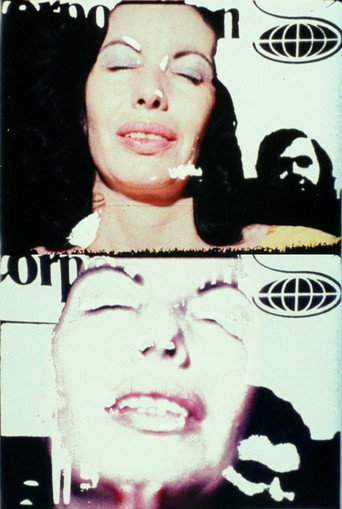
Film in Which There Appear... is a six-minute loop of the double-printed image of a "China girl" or "Shirley card", her image off-center, making visible the sprocket holes and edge lettering on the film. According to Land, within the loop, "no development in the dramatic or musical sense" occurs. Fred Camper described Film in Which There Appear... as "a kind of Duchampian found object, a [...] film that focuses attention on the medium and the viewer." There also exists a 20-minute "widescreen version" involving two prints of the film projected side-by-side, with the left print flipped horizontally so that the "China girl" forms an almost complete face in the center.

Director

Excerpts from a Work in Progress (Undesirables)Excerpts from a Work in Progress (Undesirables) · 1999
Excerpts from a Work in Progress (Undesirables)
1999
Movie
A rough-cut of selected scenes, edited as a sampler to be used in fundraising towards completion of the film "Undesirables". “The idea started with a casual comment made by Stan Brakhage, must have been way back in the early 1970s. It stuck in my mind. Now that I think about it, Brakhage may have meant this as a joke. He said, “Someday Hollywood will probably make a film about us,” ‘us’ meaning the experimental filmmakers “and I wonder which actors will play us?” Think about that first of all: the idea that Hollywood would make a film about experimental filmmakers is totally ridiculous. The fact that one would think about which actor was going to play me at some time in the future, I think that’s very funny. Eventually it germinated in my mind and I thought it was an interesting idea… A film about experimental filmmakers, especially in the very formative period, approximately 1968 to 1972.

Director