Directing
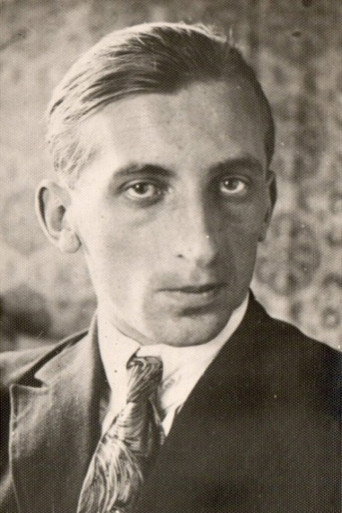
Pāvels Armands
Born April 23, 1902 · Pushkino, Bogorodsk district, Moscow province, Russian Empire
Died August 16, 1964 · aged 62
No biography available.
Known For
 Latviešu strēlnieka stāsts · 1958
Latviešu strēlnieka stāsts
1958
Movie
A story of a Latvian rifleman between two revolutions.
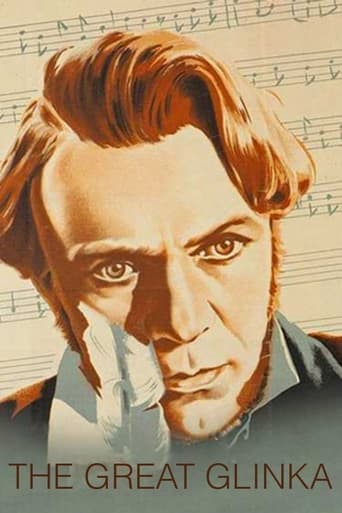 The Great Glinka · 1946
The Great Glinka
★ 6.71946
MovieMusicHistory
About the life of the Russian composer Mikhail Glinka.
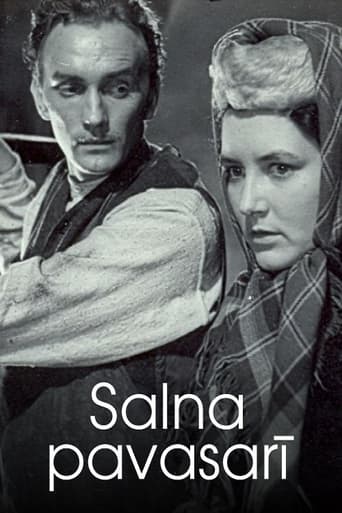 Springtime Frost · 1955
Springtime Frost
★ 5.61955
MovieDrama
The end of nineteenth century. Maidservant Madara is in love with farmhand Andrs, yet she marries a rich and old household owner. As time passes, her heart hardens and things get complicated when Andrs returns to the neighborhood and Madara's husband dies leaving her widowed with a son.
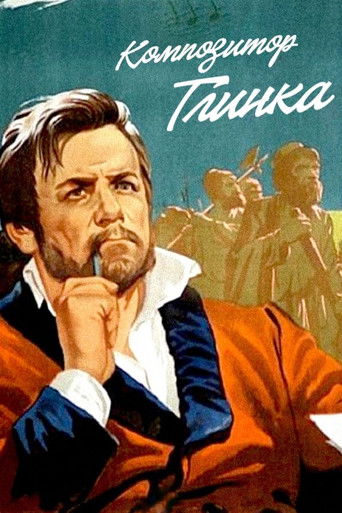 Man of Music · 1952
Man of Music
★ 4.71952
MovieHistoryMusic
The young composer Mikhail Glinka performs his new work at a soiree at earl Vielgorsky's house. However, the public is accustomed to Western music, and reacts coldly to the creation of the composer. This makes him very sad, but soon he decides to go learn the art of music in Italy. After returning from Italy, he is full of desire to write national Russian opera. Vasily Zhukovsky proposes a subject: a feat of Ivan Susanin. Tsar Nicholas I change the name of the opera to A Life for the Tsar and assigns a librettist - Baron Rosen. Acquaintance with the future co-author shocked Glinka: Rosen speaks Russian with a noticeable German accent. The premiere was successful, but Glinka was still not entirely happy with the libretto: "False words were written by Rosen". When Nicholas I learned that Ruslan and Lyudmila was written on Pushkin's subject, he sees it as sedition. The bitter experience of the composer brighten his supporters.
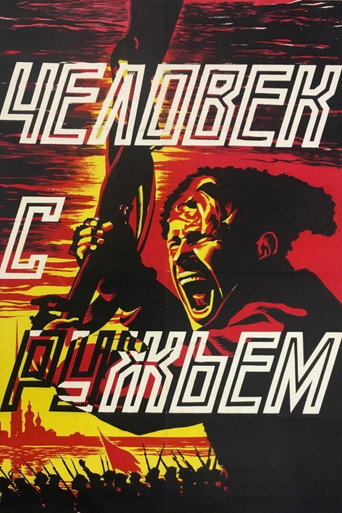 The Man with the Gun · 1938
The Man with the Gun
★ 5.21938
MovieHistory
The story of the Bolshevik revolution through the eyes of a peasant who, as a soldier, gets caught up in the proceedings under the tutelage of Lenin.
 Following the Swan Flock of Clouds · 1957
Following the Swan Flock of Clouds
★ 9.51957
MovieDramaHistory
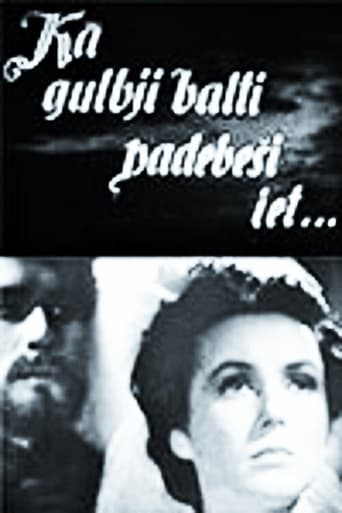
The first film in a duology based on the biography of Latvian revolutionary Jānis Fabricius. Mārtiņš Venta, the son of a forest ranger, enrolls in a Riga gymnasium and becomes an underground activist, while his classmate, Dace, a teacher's daughter, is expelled from the Riga school for singing the revolutionary song Kā gulbji balti padebeši iet. Dace becomes an actress, but Mārtiņš is drafted into the tsar's army. He refuses to participate in the shooting of a workers' demonstration and is sentenced to exile, but before his deportation, Mārtiņš is allowed to marry Dace in prison.
 Moscow – Genoa · 1964
Moscow – Genoa
★ 6.01964
MovieHistory
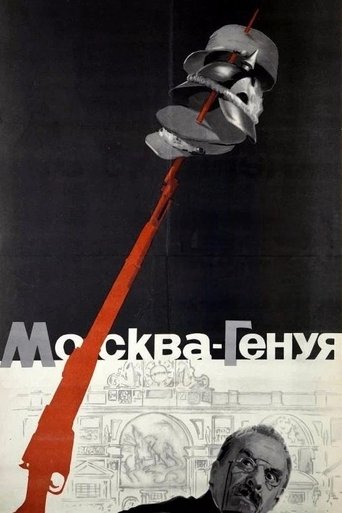
About the first steps of Soviet diplomacy at the international conference in Genoa in 1922.
 Velna ducis · 1961
Velna ducis
★ 9.01961
MovieComedy
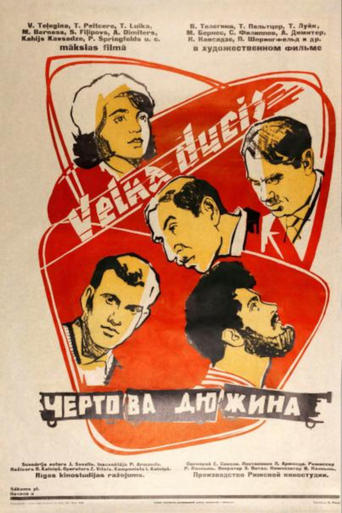
One of the passengers went into labor. The doctor, who had previously talked a lot about humane treatment of people, turned out to be a terrible bitch and refused to participate in the delivery. The conductors and passengers took charge. Even the train drivers took part in this joyful event.
Filmography
Sort
The Great Glinka · 1946The Great Glinka
★ 6.71946
MovieMusicHistory
About the life of the Russian composer Mikhail Glinka.
Assistant Director