Directing
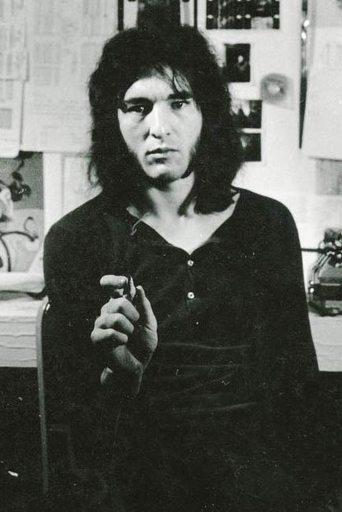
Paul Sharits
Born February 7, 1943 · Denver, Colorado, USA
Died July 8, 1993 · aged 50
Trained as a graphic artist and a painter, Paul Sharits became an avant-garde filmmaker noted for manipulating the film stock itself to create a variety of fascinating, abstract light and colorplays when projected on the screen. Fans hail the effects hallucinogenic, while his detractors find them garish. Sharits is also known for establishing experimental film groups at prominent universities, inc…
Known For
 Cinématon · 1978
Cinématon
★ 4.91978
MovieDocumentary
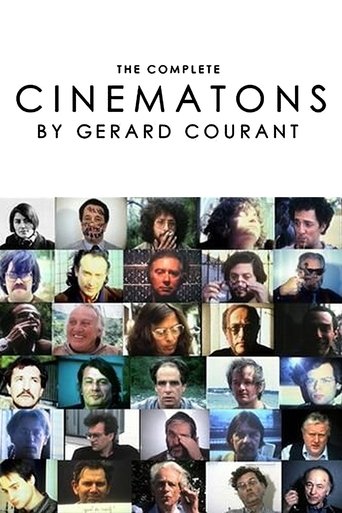
Cinématon is a 156-hour long experimental film by French director Gérard Courant. It was the longest film ever released until 2011. Composed over 36 years from 1978 until 2006, it consists of a series of over 2,821 silent vignettes (cinématons), each 3 minutes and 25 seconds long, of various celebrities, artists, journalists and friends of the director, each doing whatever they want for the allotted time. Subjects of the film include directors Barbet Schroeder, Nagisa Oshima, Volker Schlöndorff, Ken Loach, Benjamin Cuq, Youssef Chahine, Wim Wenders, Joseph Losey, Jean-Luc Godard, Samuel Fuller and Terry Gilliam, chess grandmaster Joël Lautier, and actors Roberto Benigni, Stéphane Audran, Julie Delpy and Lesley Chatterley. Gilliam is featured eating a 100-franc note, while Fuller smokes a cigar. Courant's favourite subject was a 7-month-old baby. The film was screened in its then-entirety in Avignon in November 2009 and was screened in Redondo Beach, CA on April 9, 2010.
 Fluxfilm Anthology 1962-1970 · 2010
Fluxfilm Anthology 1962-1970
2010
MovieDocumentaryFantasy
Feature-length compilation program presenting 37 out of 41 original fluxfilms produced and directed in the 1960s by Fluxus artists, including George Maciunas, Nam June Paik, Yoko Ono, Robert Watts, Paul Sharits, et al.
 Home Movies 1971-81 · 1985
Home Movies 1971-81
1985
MovieDocumentary
Home movies shot on Super 8mm by W+B Hein over 10 years.
 Axiomatic Granularity · 1973
Axiomatic Granularity
1973
Movie
"There is a paradox in such artistically special (and significant) films as Sharits' very real and reflexively beautiful AXIOMATIC GRANULARITY. It is that in becoming so accessible and authentic through its refusal to be anything but itself - emulsion grain seen in color and movement - the film for most viewers is likely to be impenetrable ... the film begins to evoke a quiet flow of thought. That thought, however, is repeatedly returned to the light perceived on the screen as the film calls attention to itself through the random appearances of scratches, becoming simply and pleasantly what it is, refreshingly nothing more." - Anthony Bannon, Buffalo Evening News
 3rd Degree · 1982
3rd Degree
1982
Movie
Three-screen film. On the first screen, close-ups of an agitated match in front of a young woman's fearful face. On the soundtrack: matches, warnings of a rattlesnake, the phrase: "Listen, I will not speak." The ribbon runs at variable speeds, sometimes blurring, sometimes slowing down, to stop, on which the image / celluloid begins to fry and to burn, then leaves, runs, stops again, leaves again ... On the second screen we see the first rephotographed; here the "burns" are both fixed or new (a burn in the second degree). On the third screen, we see the second screen rephotographed. The subject of the film is the fragility of the film, as medium, as well as the vulnerability of man. Both the film and the figure resist threats / intimidation / mutilations.
 Inferential Current · 1971
Inferential Current
1971
Movie
A mapping of an image of the linear passage of '16mm film frames' and 'emulsion scratches' onto actual 16mm film strip (the unperceived film 'print')/the aural word 'miscellaneous' is extended to a length of 8 minutes by serial fragmentation, looping, staggering and overlaying/a variational but non-developmental strand thru time.
 Wintercourse · 1962
Wintercourse
★ 7.41962
MovieDocumentary
Discovered in summer of 1985, of a set of “haiku-imagistic films” I did before coming to my characteristic style, as in Ray Gun Virus; I thought I’d destroyed all these pre-pure films, in about 1969-1970, the time of my separation from my first marriage. The film concerns my marriage, which lasted seven years; it was shot during its first year, when I was a painting student at the University of Denver. It is full of apprehensions, in a montage style which counterposes “opposites”: sexuality and religion; seasonal opposites; hopefulness undercut by fears of eventual separation (the image of a statue of two women, arm in arm, reading a book). I find it visually and kinetically interesting, after all these years. (Paul Sharits) —Canyon Cinema
 Episodic Generation · 1978
Episodic Generation
1978
Movie
The visual "degeneration" of the image ... through successive rephotography is paralleled by the compression of verbal information to the point of its loss of legibility; yet, both the "degenerated" sound and image are perceptually engaging, even in the most advanced stages of "degeneration". It is obvious why the film has its title, because of the strategies of its coming into being, but, paradoxically, at the level of effect, its dynamics arise from its "Episodic Degeneration".