Image Con Text: One
1983 · 43 min
"Leggett's early experiment was with film, though his exploration of video started in the '70s with CCTV and performance ... and re-contextualising the video image as film, to questioning the electronic technology and its 'ambiguities'. Leggett has moved fluidly between shifting moving-image technologies, film, video and digital, and engages the audience directly with the associated and variable discourses." - J.Hatfield.
Directed by Mike Leggett
Your Rating
More from Mike LeggettSee all →
 24 Hours · 1985
24 Hours
★ 4.01985
Movie
The film was commissioned by South West Arts and Watershed as a community project celebrating the longest day of the year, 21st June in Bristol, UK, 1985. The project was shot on Super 8mm film, edited on video and played later on a screen as part of a photographic exhibition at Watershed Media Centre.
 Sheet · 1970
Sheet
1970
Movie
A white linen sheet appears and disappears within a range of different rural and urban locations.
 Film Lane · 1975
Film Lane
1975
Movie
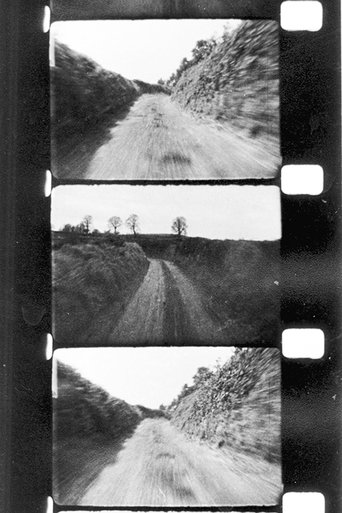
Film is shot from a moving vehicle; from its roof pointing forward, from its rear pointing backwards. This occurs on two occasions; the summer of 1973 and the winter of 1974. The camera runs at either 24 fps or 12 fps The film is assembled according to pre-determined factors; (i) the 12 frame / half second bias as observed in Sheepman section; (ii) a double binary - alternating apparent movement away from and toward the surface of the screen, (a function relying on the perception of successive frames); (iii) combinations of one or other of these. The primary function of the 12 frame opaque film is, as in the Sheepman section, not so much as markers of time but as a constant factor comparative to those frames they surround.
 Sheepwoman · 1975
Sheepwoman
1975
Movie
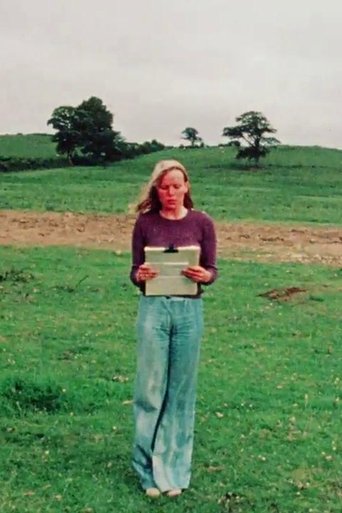
Sheepwoman is the final part in Sheepman & The Sheared, a seven-part film made within the workshop and theoretical context of the London Film-Makers’ Co-operative, and more particularly of structural/material film. In the series, Leggett delicately negotiates a dialectic between the creation of images and stripping the images of their illusionism. The film takes Landscape as Object in front of the filmmaker and the medium of film; specific conditions to do with both Nature and human activity with Nature are recorded with the camera, but the camera itself is also subject to the observation and reaction of the filmmaker. In Sheepwoman, the camera image – of a woman reading a text on shearing – is the subject, which is examined in conjunction with synchronous/non-synchronous sound and written word image.
 Friday Fried · 1980
Friday Fried
1980
Movie
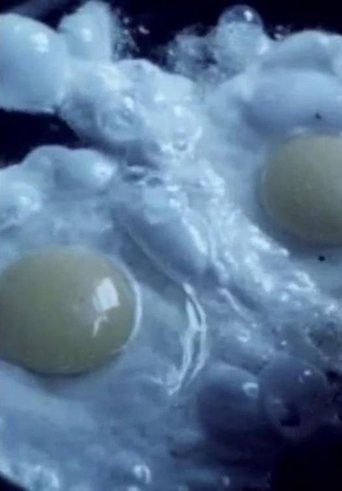
Friday Fried mixes sound images in a strictly procedural manner based upon a relationship with the picture track which itself is structured around a sequence of 16 slide images. Four voices narrate a series of descriptions which refer to the visual detail in the picture whilst also cross-narrating with one another. During the construction of the soundtrack 12 different sources were combined without alteration to balance, tone etc. throughout the film’s 15 minute duration.
 Vistasound · 1982
Vistasound
1982
Movie
A film that raises questions about the associations between song lyrics and particular places.
 Laugh · 1973
Laugh
1973
Movie
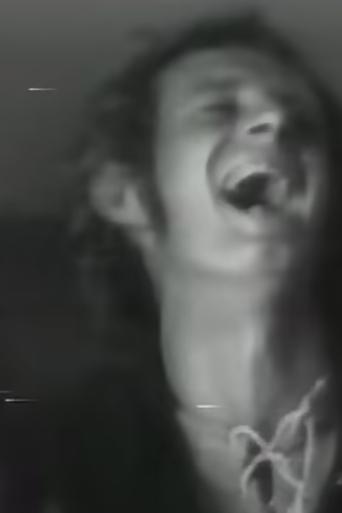
"Duncan Morris is asked to laugh as long as he is able...." Another early videotape made when I was exploring the creative possibilities and affordances of the Sony Portapak, recently introduced into Britain. As an artist and filmmaker, the new medium encouraged spontaneity of execution (for little cost compared to film). The ability to see the results immediately afterwards propelled concepts and ideas towards a completed outcome.
 Tender Kisses · 1972
Tender Kisses
1972
Movie
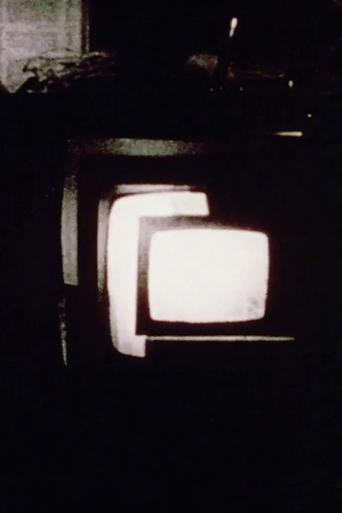
The film starts with an extreme close-up of television static. Through a series of carefully controlled processes, the abstract nature of the image (which is concerned with pattern, colour and time), is juxtapositioned with the formal images of domestic room interiors and exteriors. With this work, Leggett questions the legibility of the image, examining the illusion produced by the two great illusionists – television and cinema – and the extent to which these can be manipulated and do manipulate.
 Red + Green + Blue · 1976
Red + Green + Blue
1976
Movie
In this structural-materialist film, colour is generated by landscape: from the sky, the grass and berries.
 The Heart Cycle · 1973
The Heart Cycle
1973
Movie
Work on The Heart Cycle commenced as a series of experiments with a roll of 16mm ‘found footage’ film and a newly acquired CCTV system (sited at the college of art in which I worked). A film projector and several studio cameras connected through a simple vision mixer to monitors and a video tape deck, recorded a series of procedures and adjustments made to the system during experiments and ‘rehearsals’. The new media of analogue video delivered motion pictures that displayed in ‘real time’, the state of a system in synthesis. These peaked as a final performance, the extent unedited, 'single-take' recording of The Heart Cycle.
 The Body on Three Floors · 1984
The Body on Three Floors
1984
MovieDocumentary
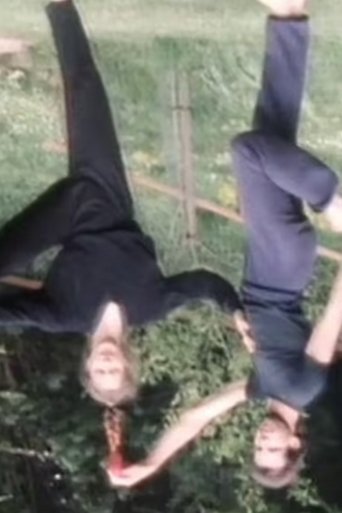
THE BODY ON THREE FLOORS was a collaborative project that emerged from a dance class, between a dozen people with different professional art form and science skills and featuring the pianist, Keith Tippett. A project by filmmaker Mike Leggett and produced with the technical and financial assistance of a regional arts board and a regional television station in Britain. The program approach utilises the method of essay, and the essay of imagination, working across television genres in a manner intended to be both serious and entertaining.
 Bosun's Chair · 1983
Bosun's Chair
1983
Movie
A soundscape of the comings and goings in a home precedes a description by a young boy of a bosun's chair, a device suspended on ropes for crossing stretches of water. A film in three scenes captured on Betamax video shot in 1983, the material of the image floats and ripples on the screen. Distributed by LUX, London.
 Shepherd’s Bush · 1971
Shepherd’s Bush
1971
Movie
Shepherd’s Bush was a revelation. It was both true film notion and demonstrated an ingenious association with the film-process. It is the procedure and conclusion of a piece of film logic using a brilliantly simple device; the manipulation of the light source in the Film Co-op printer such that a series of transformations are effected on a loop of film material. From the start Mike Leggett adopts a relational perspective according to which it is neither the elements or the emergent whole but the relations between the elements (transformations) that become primary through the use of logical procedure.
More Like This
Couldn't load this row right now.