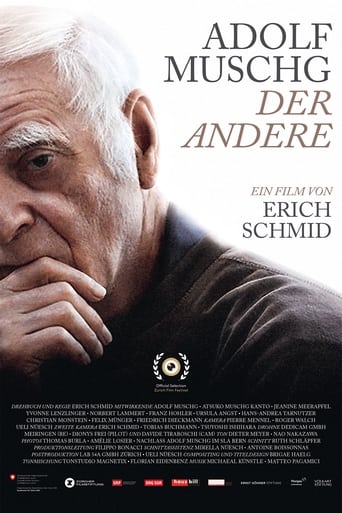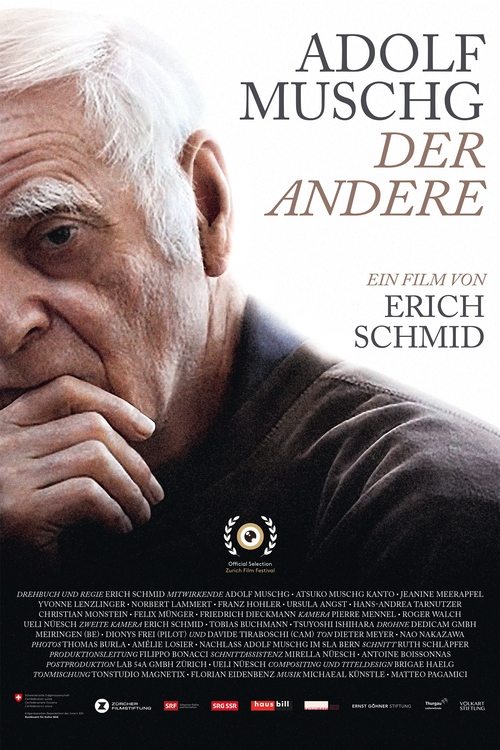
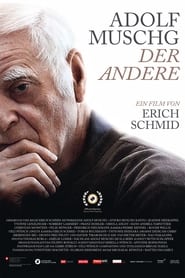
Adolf Muschg – The Other

Adolf Muschg – The Other

2021 · 86 min · Documentary

In his exploration of the cultural dynamic between East and West, Adolf Muschg, the most significant Swiss writer since Frisch and Dürrenmatt, searched for the other in himself in order to understand otherness.

Directed by Erich Schmid · Written by Erich Schmid

Your Rating

Cast

Make it a double feature

3h together

Adolf Muschg – The Other

Max Bill: The Master's Vision

Both from Erich Schmid.

More from Erich SchmidSee all →
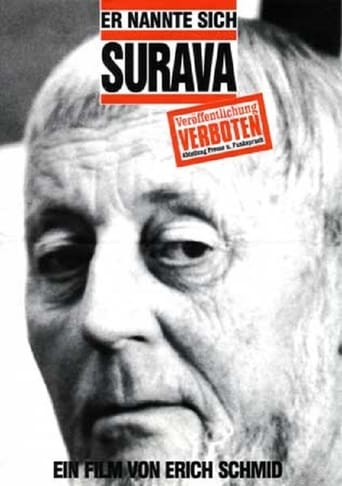
He Called Himself SuravaHe Called Himself Surava · 1995
He Called Himself Surava
★ 9.01995
MovieDocumentary
Hans Werner Hirsch a.k.a. Surava was a journalist. He wrote about the deportation of French Jews, and the Swiss government chased him because the Swiss government was Nazi-friendly. The Swiss intelligence service (Bundespolizei) knew him as a "communist Jew". In fact, he worked for a left newspaper, but he wasn't a Jew. Surava took his courage to write about the "censored" inhumanity in Europe.
Max Bill: The Master's VisionMax Bill: The Master's Vision · 2008
Max Bill: The Master's Vision
★ 6.02008
MovieDocumentary
The film about Max Bill (1908-1994) moves between the dynamic fields of art, aesthetics and politics. Max Bill was probably the most important swiss artist of the 20th century and the most famous student to come out of the legendary Bauhaus in Dessau. He was an ardent anti-fascist and all his avant-garde work as an artist, sculptor, architect and typographer showed a social responsibility and environmental awareness right through his life. His views have become incredibly topical.
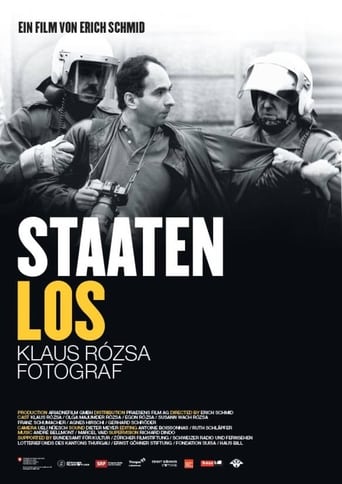
Staatenlos - Klaus Rózsa, FotografStaatenlos - Klaus Rózsa, Fotograf · 2016
Staatenlos - Klaus Rózsa, Fotograf
2016
MovieDocumentary
Klaus Rozsa, a well-known and politically active photographer, lived in Zurich for decades as a stateless individual. All of his applications for naturalisation were refused on political grounds. In 1956 he fled Hungary, growing up in Switzerland with a Jewish father who had survived Auschwitz and Dachau. Due to the extreme proximity of such a fate, the camera led him repeatedly to places where injustice was done. It was this particular quality of his camerawork that proved fateful for him.

More Like This

Couldn't load this row right now.
Rate this film

Your ratings make Midnight smarter