Run after the Wind
Kazeotte
1985 · 42 min
Camera turns on, the film runs and the wind occurs. A work that follows the wind, chases the image, and goes far to the image of Africa. A movie that talks about the fact that the wind carries words. The music was borrowed from an African folk music album.
Directed by Shirōyasu Suzuki
Your Rating
Make it a double feature
1h 57m together
Both from Shirōyasu Suzuki.
More from Shirōyasu SuzukiSee all →
 Dream Island Girl · 1974
Dream Island Girl
★ 6.51974
MovieDramaTV Movie
A boy rescues a girl who has collapsed in a river, from their exchanges and memories a tale of loneliness and meaningful connection gradually unfolds.
 I went to Kinasa during the summer vacation · 1975
I went to Kinasa during the summer vacation
★ 6.01975
Movie
In the summer of 1975 I went to a farmhouse in KINASA Village - Nagano with my best friend Toda's family. Summer vacation sketches with a sense of intimacy. The main focus is on talking about the hearts of urban people who are attracted to nature, such as the color of flowers, the beauty of sunlight through the forest, and the fire of the colors. Music borrowed from Western album.
 A Dandelion, Rosaceae · 1990
A Dandelion, Rosaceae
★ 6.01990
Movie
Using stop-motion animation, what Koguchi called 無理矢理アニメ (forced animation), twin sisters Lulu and Lala go through enchanting bodily transformations. The film is a playful and disorienting exploration of sexuality, gender ambiguity, and the chaos of desire, made in the shadow of the AIDS crisis.
 15 Days · 1980
15 Days
★ 5.01980
Movie
Forcing himself to confront his own 16mm camera each day for over two weeks, Suzuki Shiroyasu initially seems to regret his own idea and indulges in very recalcitrant behaviour. Not until halfway through the project does he address the camera more candidly and start to question his own identity, as well as his relationships with his own milieu and other social structures.
 My home / House of Light · 2026
My home / House of Light
2026
Movie
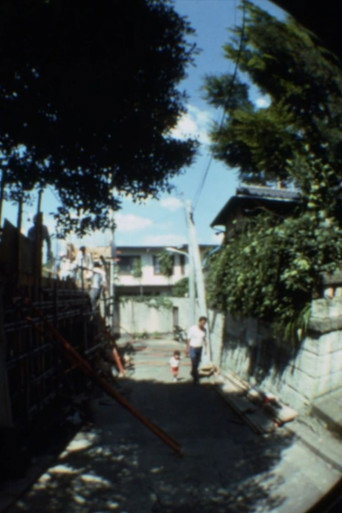
The Kazuo Shinohara–designed "House on a Curved Road" was the home of my father, Shirouyasu Suzuki. After my father and mother passed away and the rooms were cleared, only light moves within my memories. By capturing this wavering light, the work is an attempt to grasp how the foundation of private expression exists through changes in the external world.
 EKO Series · 1963
EKO Series
1963
Movie
Shirouyasu Suzuki's first short films shot on 8mm.
 EBIZUKA in my own field · 2001
EBIZUKA in my own field
2001
MovieDocumentary
In April 2000, I started photographing Koichi Ebitsuka's works. Mr. Ebitsuka was a teacher at Tama Art University, and he happened to be appointed concurrently to the second department of art, where I work, and we became close. He was born in 1951, so he is 16 years younger than me. I wanted to think about and experience the "contemporary art" that I hadn't been to. And he, being selfish, visited his atelier and was shown around his works on an island in the Seto Inland Sea. For me, the year 2000 was a year of Ebitsuka-san's sculptures.
 Cut violently · 1984
Cut violently
1984
Movie
This work was made as a "myth" with the poet Nejime Shoichi as the main character. Nejime Shoichi, who aims to be a reading poet, rides a train to visit senior poet Iwao Abe and asks for the secret of reading. Nejime Shoichi is good at being "naked".
 Impressions of a Sunset · 1975
Impressions of a Sunset
1975
MovieDocumentary
A diary film composed by images where the director, after buying a CineKodak 16 (a pre-war 16mm camera) at a second hand camera shop, starts filming his wife, his newborn baby and his workplace.
 Looking for the idea of the tale · 2000
Looking for the idea of the tale
2000
Movie
A woman is talking on her cell phone. A man's hand reaches out to her and tells her to snap the phone. The woman says, "Shut up and hit the man. The woman hits the man, saying, "You're always talking on the phone like that, living off the support of others. I'm on my own. The way you live is the problem. The man says. In fact, the man tries to have an affair and gets dumped. I thought the story would go like this, but it didn't go at all. This film was made based on a film shot in a seminar for fourth-year students at Tama Art University. The actors were students who participated in the seminar. They wanted to make a film about a story, so I asked each student to tell a story, which I transcribed, made into a scenario, and filmed them acting and talking. Rather than creating a "story," the work was composed of everyday scenes, with the idea of a "story" in mind. I have just begun to think about stories that make time. (Suzuki Shiroyasu).
 HIROMI - Pulling hairs · 1981
HIROMI - Pulling hairs
1981
Movie
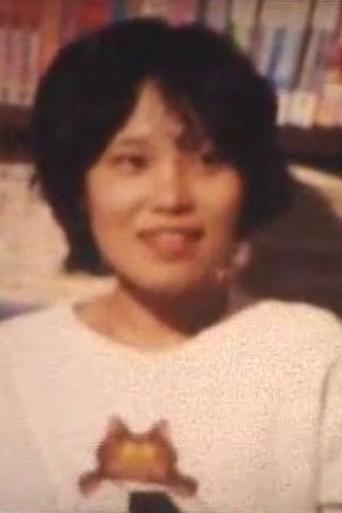
The year before, I had made a film about the poet Tsutomu Shotsu, and I wanted to make a film about Hiromi Ito, a young female poet on the rise. As I was talking with her, she told me that she loves to pull out hair, and when I asked her about it, her story touched on the sense of life. I decided to film her talking about it. She said that when she pulls out her own hair, she gets excited because she is aware of both herself pulling out and herself being pulled out. Skin is a problem, she said. As I was filming, I was surprised to find that her story had become a great theory of the body. For the introduction, I borrowed a song by Hikashu. Produced in 1981. The artist was 46 years old. (Suzuki Shiroyasu).
 Imitating Gōzō · 1982
Imitating Gōzō
1982
Movie
An 8mm film in which Suzuki overlays improvised speech on the images, imitating the poetry of Gōzō Yoshimasu.
 Passing By Landscapes · 1976
Passing By Landscapes
1976
Movie
While working for NHK as a 16mm film cameraman, Suzuki traveled to various parts of the country, particularly for shooting on location for rural programs and youth programs. In between filming shows he captured the scenery from a completely personal perspective, starting to think about the meaning of the landscapes he encountered.
 Metaphorical Hands · 1990
Metaphorical Hands
1990
Movie
Each person lives a different life, but the hand seemed to be a metaphor for that person's life. In other words, I thought that the life of the person would be determined by what he had. I pick up a fountain pen and stuff the film by hand. This tells my life. I made such a thought into a work.
 The core of family · 1991
The core of family
1991
Movie
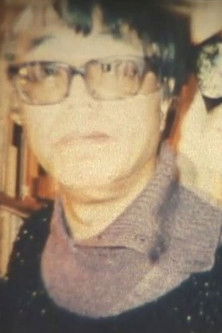
In this piece, I described the way of life of the poet Kenji Fukuma and his wife. I read and liked Mr Fukuma's poetry collection, "Country Life," and we began to correspond. Mr. Fukuma has doubts about modern urban life and is searching for a better place to live. I heard that he was interested in tai chi, a traditional Chinese martial art, and had begun to practice it, so I decided to photograph him and his wife as they naturally communicated with each other. Produced in 1991. The artist is 56 years old. (Suzuki Shiroyasu).
 Au mode oblique · 1988
Au mode oblique
1988
Movie
I went out of the room and chose two poets as "objects". One is Harumi Kawaguchi, who worked for a trading company at the time and was a dealer for buying and selling yen and dollars. The other is Toshiharu Kishi, who raises and lives dairy cows deep in the mountains of Yamagata. I sketched their lives and had them read their own poems.
More Like This
Couldn't load this row right now.