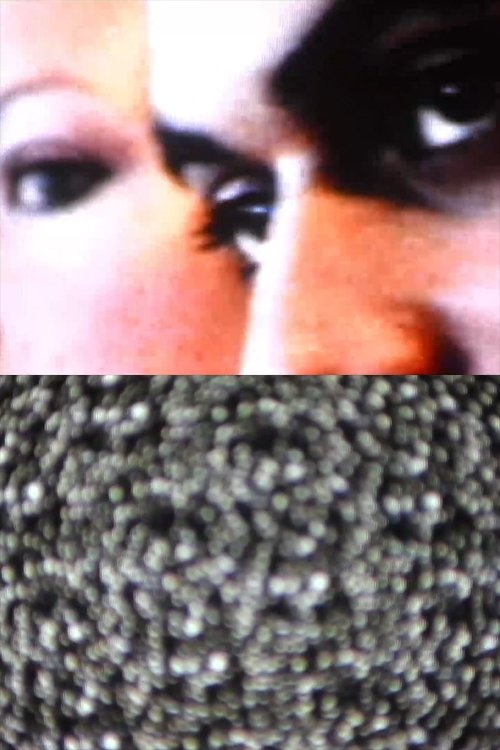
V5 (Zip Zap)
2018 · 6 min
V5 (Zip-Zap) progresses via a tight, interweaving montage of rapid sequences, which were filmed directly from a CRT TV screen.
Directed by Christian Lebrat
Your Rating
More from Christian LebratSee all →
 Cinématon · 1978
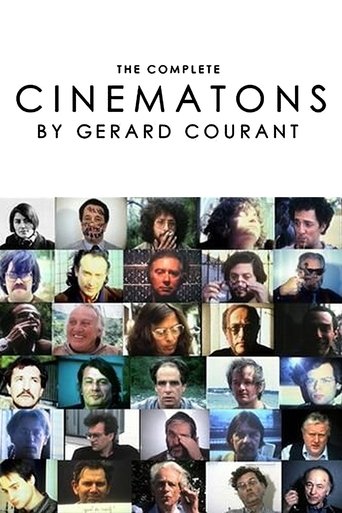
Cinématon
★ 4.91978
MovieDocumentary
Cinématon is a 156-hour long experimental film by French director Gérard Courant. It was the longest film ever released until 2011. Composed over 36 years from 1978 until 2006, it consists of a series of over 2,821 silent vignettes (cinématons), each 3 minutes and 25 seconds long, of various celebrities, artists, journalists and friends of the director, each doing whatever they want for the allotted time. Subjects of the film include directors Barbet Schroeder, Nagisa Oshima, Volker Schlöndorff, Ken Loach, Benjamin Cuq, Youssef Chahine, Wim Wenders, Joseph Losey, Jean-Luc Godard, Samuel Fuller and Terry Gilliam, chess grandmaster Joël Lautier, and actors Roberto Benigni, Stéphane Audran, Julie Delpy and Lesley Chatterley. Gilliam is featured eating a 100-franc note, while Fuller smokes a cigar. Courant's favourite subject was a 7-month-old baby. The film was screened in its then-entirety in Avignon in November 2009 and was screened in Redondo Beach, CA on April 9, 2010.
 Portraits / Mirrors · 1984
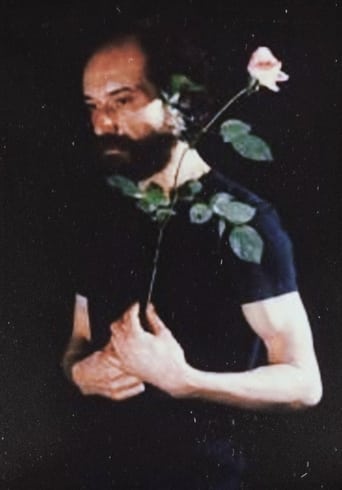
Portraits / Mirrors
1984
Movie
A single-screen version of the Portraits / Mirrors multi-projection. Featuring portraits of: Aloual, Gaël Badaud, Raphaël Bassan, Yann Beauvais, Jean-Michel Bouhours, Gérard Courant, Berndt Deprez, Bertrand Gadenne, Mythia Kolésar, Christian Lebrat, Stéphane Marti, Pascal Martin, Michel Nedjar, Dominique Noguez, Vivian Ostrovsky, Bernard Roué, Martine Rousset, Alain Sayag, Unglee, and Catherine Zbinden.
 Organisation I · 1978
Organisation I
1978
Movie
First works with pure color. The slits are organized into vertical Yellow-Red-Blue strips which move laterally across the screen according to a pre-calculated order.
 Networks · 1979
Networks
1979
Movie
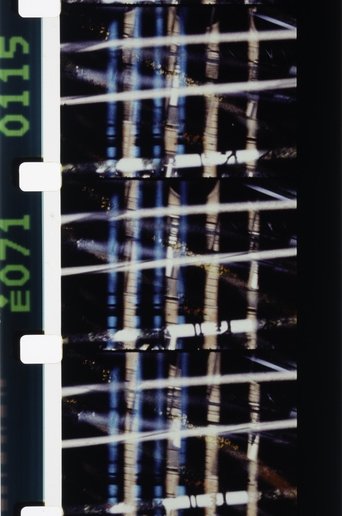
The densest film of the divided-frame group is the aptly titled 1978 Networks, which includes as many as 20 exposures of the same roll of film. Here only one slit was used, but Lebrat combines within one image many narrow strips taken at diverse Paris locations, sometimes seen through colored filters. The enclosed, even claustrophobic space of the strips contrasts with Lebrat’s superimposition of them and with the movement within the strips and by the strips within the frame... (Fred Camper)
 Trama · 1980
Trama
1980
Movie
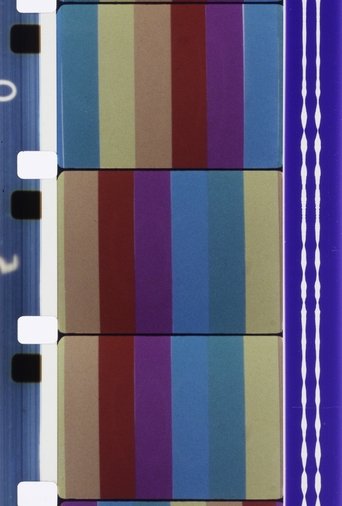
"In Trama, Lebrat divides a surface vertically to be filmed in six equal segments of color (yellow, red, blue, green, violet, orange). The composition stays exactly the same all the way through the film. The filmmaker puts a band on the side of every two or three frames. Constructed step-by-step, using ten bands, the optical mixture of color induces strange pulsating effects." Raphaël Bassan
 Vibrations · 2014
Vibrations
2014
Movie
9 key moving image works created by filmmaker Christian Lebrat over a ten-year period (1976-1985). Each film focus on an aspect of his experimentation with the use of color in cinema.
 Holon · 1982
Holon
1982
Movie
"Christian Lebrat said he thought of Monet, who painted with the series Water Lilies colors ‘at the edge of the visible;’ those of Holon indeed display colors so intense, so enraged with energy that they release in a pure way the performative, exclamative character, the character of act which, in a more or less underground way, informs every image." Nicole Brenez
 Vernazza-Études · 1981
Vernazza-Études
1981
Movie
 V1 (Tourbillons) · 2007
V1 (Tourbillons)
2007
Movie
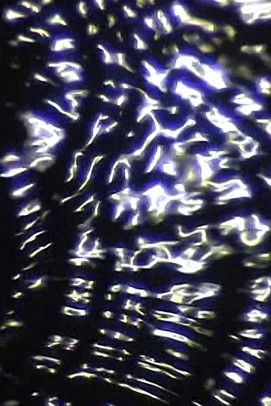
Filmed at night, with no manipulation. The hypnotic effect of the image, composed of abstracts motifs, in dialogue with the enigmatic sound track, ponctuated by micro-sound events.
 Le Moteur de l'Action (A.M.D) · 1985
Le Moteur de l'Action (A.M.D)
1985
Movie
"I found that soundtrack abandonned on a shelf in an editing room. It had been hanging about there for a few weeks before I decided to listen to it. There you are, carefully cellotaped in the correct order of the editing rushes, claps, cuts and wrong frames of a film I don’t know anything about. That soudtrack immediatly appealed to me. Its discontinuary and fragmentary aspect, nevertheles made sense, was a sort of transcription in the world of sounds of what had been so for visual in my other films. Moreover, its contents made of sentences or scenes only just introduced or repeated, of questions about identity and the body, the coming in and out of the characters, scenes of seduction and violence, all that mixture permanently interrupted by the unknown director that give his orders : "Ready ! Motor ! Action !" in short, all this gave the film a mysterious and imaginary atmosphere."
Christian Lebrat (Dedicated to Marcel Duchamp)
 Self-portrait with the Device · 1982
Self-portrait with the Device
1982
Movie
"In the 1990 text on his film Autoportrait au dispositif (1981), Lebrat wrote that all his films are in fact self-portraits, including those that are abstract colour films, and the Rothko's painting are the most beautiful examples of self-portraiture in twentieth century art. lebrat notes that the impetus behind self-portraiture comes out of his desire to create another image of his body, which does not necessarily have to be its representation but can suggest another satte of being, for example the infinite and transcendent state aims at overcoming the problem of corps morcelé and mortal flesh." Izabella Pruska-Oldenhof
 Flux Re Flux · 1981
Flux Re Flux
1981
Movie
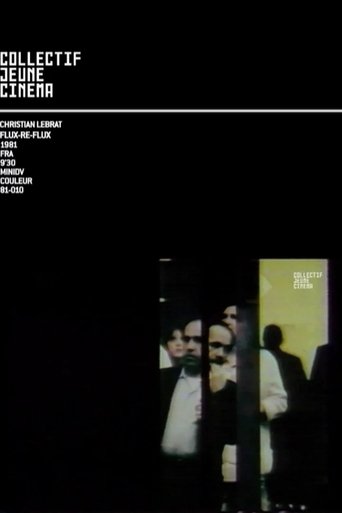
"A city, its crowds; crowds processed on film then transferred to video. I used a technique particular to video to manipulate a vertical section of the image sideways, changing both its shape and color density. Each operation was repeated a number of times, in a series of consecutive incrustations. The final image was achieved in a few hours, entirely by hand (or, more precisely, by hands), like an impromptu musical improvisation. The rhythm, the flux of the city confronted with video's scanning composition and compression." (Christian Lebrat)
 Film numéro deux · 1976
Film numéro deux
1976
Movie
For the films in which Lebrat divided the screen he placed a piece of paper with one or more slits in it in front of the lens, allowing only a narrow strip of imagery to register. He then exposed the film multiple times, layering images. The initial effect is confusion—it’s often hard to identify from these moving slits what we’re seeing. But soon the eyes acclimate, and when one does recognize fragments of a nude woman (Lebrat’s wife) in a landscape in Film Number Two (1976), she has the quality of an apparition. Shown in a different way than thousands of years of nudes have led us to expect, this woman is charged with a vital, surprising erotic energy. (Fred Camper)
 Couleurs délicieuses sur fond bleu · 1977
Couleurs délicieuses sur fond bleu
1977
Movie
Anamorphoses of television images combined with fragments from Jerome Bosch’s Garden of Delights painting.
 Liminal Minimal (I & II) · 1978
Liminal Minimal (I & II)
1978
Movie
To come back to abstraction, I have a feeling that colour varies in my work between two aspects: the colour-object that comes from the sensation of an object, in this case the film strip, and the opening. This colour-object permits the transporting of objects into space, to explore the space of the screen in the theatre; this is what allowed me to develop Liminal Minimal (1977) by enlarging the space of projection with two projectors and, taking into account that the vertical strips evolve on a black background comparable to the darkness of the theatre, I was able explore the whole space of the projection with the coloured strip
More Like This
Couldn't load this row right now.