More from Pierre RovereSee all →
 Red Light · 1975
Red Light
1975
Movie
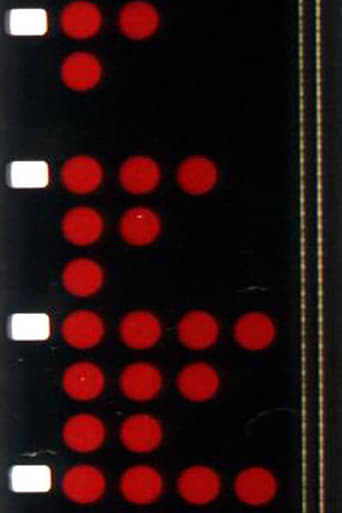
Like BLACK & LIGHT, this film is also made without a camera. The image is perforated directly by a computer into two opaque 16mm strips. But this time, an additional step has been taken at the printing stage: the two strips (printed in A&B rolls) are each filtered with a different color.
 Fusion · 1979
Fusion
1979
Movie
Fusion is a single sequence even if it is composed of several hundred elements, a single continuity, even if it is multiple.
 inTO · 1984
inTO
1984
Movie
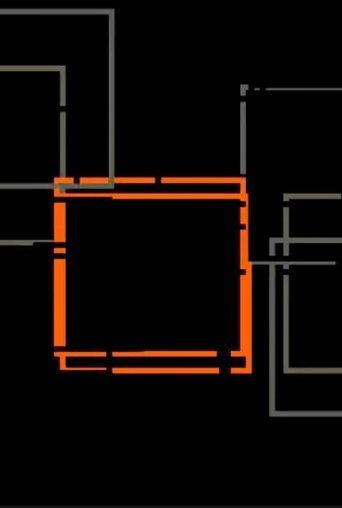
A squared multiplication. Made with Telidon, a Canadian videotex system that was in use in the 1980s. Although its primary function was to transmit textual and illustrative information, this system has been used by a number of Canadian artists as a creative tool to make graphic or video work. These films possess the rudimentary and primitive charm of the beginnings of the digital image era.
 Iris · 1976
Iris
1976
Movie
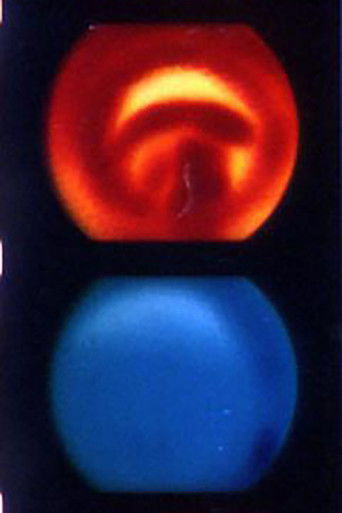
The base sequence of Iris is a constructed cycle of coloured events followed by its copy chromatically inverted though a non compliant lab process. This sequence is then again copied-inverted, and so forth, each new sequence generating in turn the next one. Through this process, each subsequent generation complicates and enriches picture. The result is quite impressive. The sound, produced on a frequency synthesizer (oscillators and filters), punctuates the invert-copy sequences.
 Spirale · 1984
Spirale
1984
MovieAnimation
In the 1980s, the Canadian Telidon videotex system was not only used for the transmission of text and image information in telecommunications, but also became the medium of choice for many artists. The short film Spirale is one of the “Telidon” works of early Canadian digital cinema. It uses the tool's vector graphics to create dizzying compositions in an op-art style.
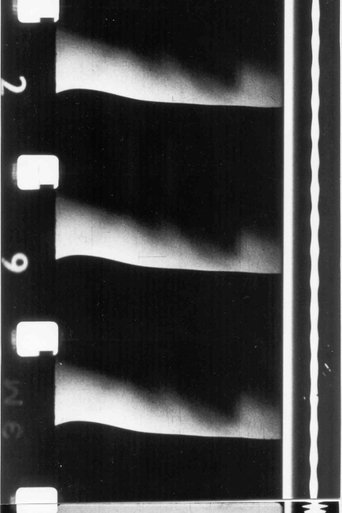 Présence · 1974
Présence
1974
Movie
 Zebras · 1978
Zebras
1978
Movie
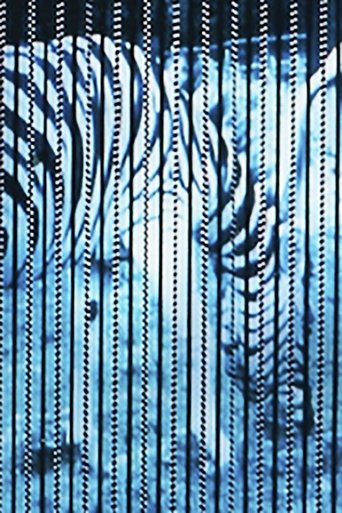
Three zebras, their graphics and their environment generate the frames of this film, which, once projected, is neither a presentation of the zebras, nor a continuity of movement, but a succession of isolated effects which seem random, even though they are generated by a fully structured photographic picture. The zebras are not the film (they are not seen in the projected film), but they are the structure of the film, that is to say its score (the succession of frames).
 Time Zone · 1981
Time Zone
1981
Movie
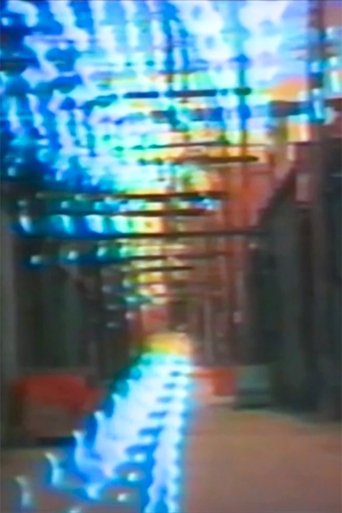
TIME ZONE is a tapestry of colliding and interfering sounds, photographs and clips, for the most part recorded on the Alaska and TransCanada Highways between the Rockies and the Pacific. From one time zone to another, it explores the relations and combinative impact of time, space, form and content.
 Remous · 1974
Remous
1974
Movie
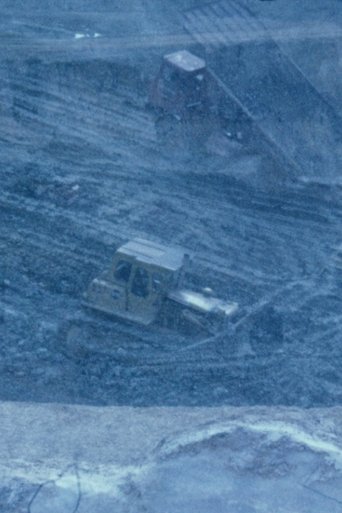
Corpulent, proud and devastating machines... here, mountains are moved.
 Forward · 1978
Forward
1978
Movie
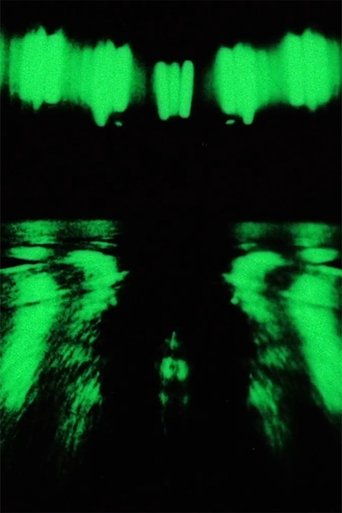
The filmed image is liberated from the shackles of representation of an external reality, becoming autonomous and spatial; the sound drifts and is regenerated by its asyncronous but nevertheless intimate relation to the image. Here, the sound is not reduced to the secondary role of accompanying the image. It constitutes the sensory experience just as much as does the image. Fast motion, slow motion, superimposition, reflection, colorization, filtering and synthetic composition: a combination of effects that produces a long audiovisual perspective within just one sequence.
 4 Œuvres "Télidon" · 1984
4 Œuvres "Télidon"
1984
Movie
Made with Telidon, a Canadian videotex system that was in use in the 1980s. Although its primary function was to transmit textual and illustrative information, this system has been used by a number of Canadian artists as a creative tool to make graphic or video work. These films possess the rudimentary and primitive charm of the beginnings of the digital image era. [arcSea, spirale, inTO, TO]
 Black and Light · 1974
Black and Light
1974
Movie
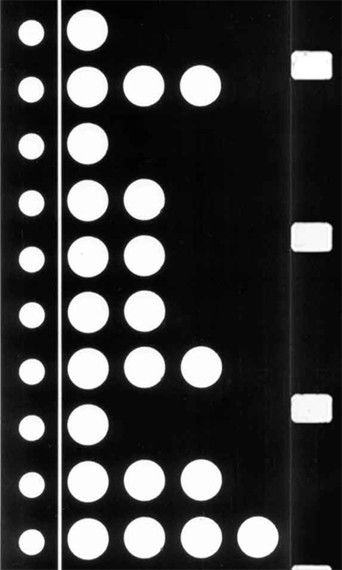
This film was directly produced on a diverted computer without the involvement of any film equipment. Originally, this film was not in black and white, but in absolute black and full light. Indeed, initially, the screenings were only made with originals in which absolute black was achieved through the use of a totally opaque tape, while absolute white was generated by computer perforation (thus allowing all the light to pass through without the slightest opacity of film material).
This film is not the transcription of a movement, but a succession of constructed composite facts which the projection device translates for the eye into impression of movements. It does not refer to any external reality, but is meant to be its own reality.
More Like This
Couldn't load this row right now.