Gvido Zvaigzne

Gvido Zvaigzne

2011 · 42 min · Documentary

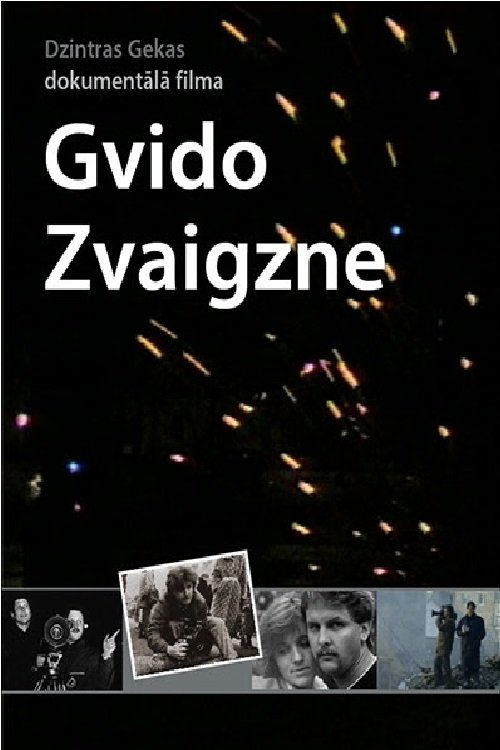
In January 2011, Latvia commemorated the 20th anniversary of the tragic events that occurred in January 1991. Film producer Andris Slapiņš was killed, and cameraman Gvido Zvaigzne was fatally injured on the night of January 20th and died in hospital two weeks later. He was a young man whose talent had not yet fully flourished. His story, however, contains elements that make it not only possible to demonstrate his personal tragedy, but also the problematic existence of a young and creative person during an era when everything was crumbling around him. Destiny kept Gvido Zvaigzne from finishing his route, but the events and values of his life represent a model of his generation’s efforts.

Directed by Dzintra Geka-Vaska · Written by Agris Redovičs

Your Rating

More from Dzintra Geka-VaskaSee all →

Juris Jurjāns. Seven Days of Painting, Talking, SilenceJuris Jurjāns. Seven Days of Painting, Talking, Silence · 2024
Juris Jurjāns. Seven Days of Painting, Talking, Silence
6.02024
MovieDocumentary
In the documentary, director Dzintra Geka has created an engaging portrait of Latvian painter Juris Jurjāns. The film delves into his world, embodying a visually rich narrative of freedom in art, life energy, and virtuosity. As always, Juris Jurjāns chooses beauty as the leading theme of his artist and refuses to conform to the rules dictated by old age. He continues to indulge in fine drinks, puffs cigars, and paints. Every day he travels to his studio, where he finds solace in his canvases.
Signe un...Signe un... · 2003
Signe un...
2003
MovieDocumentary
Portrait of Signe Baumane. About creative people, obsession and fixation with their work, huge egos without which nothing gets done, but alongside them are others whose lives are willingly or unwillingly subordinated... The train of alienation is picking up speed, and it seems that it is impossible to jump off without painful injuries.
Where Did The Fathers Go?Where Did The Fathers Go? · 2014
Where Did The Fathers Go?
2014
MovieDocumentary
The children who were sent to Siberia in 1941 have not seen their fathers – in their memories they recollect: “My father was arrested, he was sent to Vyatlag camp. He died there in March, 1942. He was not convicted. Father was tried in the autumn of 1942, when he was already dead, Moscow Troika verdict: 10 years in prison and confiscation of property...”The railcar moves along overgrown rails. For 70 years, the twelve participants of the journey have wanted to go to the places from where their fathers did not return. Among the harsh nature the tension on their faces shows.
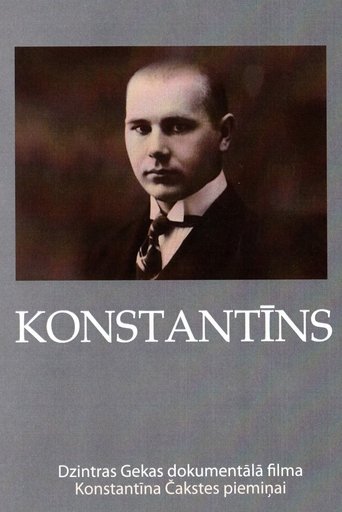
KonstantīnsKonstantīns · 2011
Konstantīns
2011
MovieDocumentary
A documentary about Latvian freedom fighter Konstantīns Čakste who was the son of the first Latvian president and who perished in 1945.
Ilmārs BlumbergsIlmārs Blumbergs · 2019
Ilmārs Blumbergs
2019
MovieDocumentary
The story of the secret of self-creativity, the loneliness of the soul, the meridians of con-sciousness and the scope of man. Ilmārs Blumbergs (1943-2016) is a concept in life than can be classically proven if we analyze his work in set design, poster art, painting and multimedia work. The personality of Blumbergs, however is a shifting and intangible material which ensures superior value, wonderfulness and intimacy to all that he created. Those who analyze his art and world perceptions, recognize the work as seeming to come from antiquity, but it can never be catalogued or recorded in bookkeeping. How fortunate that it also cannot be consumed.
The SixtiesThe Sixties · 2013
The Sixties
2013
MovieDocumentary
The 1960s brought hope for the huge Soviet empire - a hope that the regime will become more humane. The optimism and youthful energy of the decade became the prevailing mood. Renewal of life vibrated in Latvia. The newly built Riga Film Studio was a strong impulse to the development of national cinematic art. A new generation full of energy came into the Latvian film industry; they created a style of documentary cinema that we now call Riga poetic documentary cinema (or Riga style).
The Fathers Over ThereThe Fathers Over There · 2016
The Fathers Over There
2016
MovieDocumentary
Andris Caune, Ojārs Grensbergs, Imants Grāvītis and Jānis Zemtautis spent many years in the Gulag camps. They survived. In 1954, a riot broke out in Jezkazan, Kazakhstan. The men’s camp and women’s camp joined together and held on for 40 days. Then came the tanks that killed more than 1,000 of them. Austra Vērpe met her future husband there. They were lucky to stay alive. The dream of the musician Zigfrīds Muktupāvels was to find the grave of his paternal uncle in far-off Kazakhstan. He was named after his uncle, who never came home. Zigfrīds and a cousin headed off into the steppes to look for a monument reading “Zigfrīds Muktupāvels.” The next round of deportations occurred in 1949, and whole families were sent to Siberia. Fathers were tried in court, a great many ended up in punitive camps in Vorkuta and Inta. Skaidrīte Jostmane and Māris Landers travelled to Vorkuta to find their father’s gravesite.
The Children of SiberiaThe Children of Siberia · 2001
The Children of Siberia
2001
MovieDocumentary
On June 14, 1941, more than 15,000 Latvian inhabitants, including approximately 4,000 children of Latvian, Jewish, Polish and Russian ethnicity were deported to Siberia. During this period of deportation by the Soviet invaders, the men were separated from their families and sent to the Gulag. Some were sentenced to the highest punishment, death, and the rest were kept in labor camps. The women and children were sent to the remote Krasnoyarsk and Tomsk districts. The first two years were the most difficult and many perished from the harsh conditions. Today some 400 of those deported children still live in Latvia and Siberia. This documentary describes the fate of these children.
Agapitova and the RescuedAgapitova and the Rescued · 2009
Agapitova and the Rescued
2009
MovieDocumentary
This is a film about the return of an individual to the Far North, and to the past. Agapitova, Igarka – the vast lands of Siberia, to which Ilmārs Knaģis and 4,000 other children from Latvia were deported in 1941. In the autumn of 1942, 700 mothers and children of different nationalities were sent to the death island of Agapitova. Only 60 survived, among them six Latvian children – Biruta Kazaka, Pāvels Kliesbergs, Venta Grāvīte, Ilmārs Grāvītis, Pēteris Bērziņš and Valentīna Voiciša. The question remains: Why did this happen? And why is no one to blame?
Train Station Latvians 1937Train Station Latvians 1937 · 2011
Train Station Latvians 1937
2011
MovieDocumentary
Latvians have left their land for all corners of the earth over the last centuries – either driven out for disobeying the powers at large, or due to wars and revolutions, or with visions of a better life. And not always to an easier life. But there was only one place where an anti-Latvian campaign was waged, where every Latvian was treated as a spy, a traitor, and the enemy, and therefore deserved to be tortured and shot. This was during the 1937 repression in Russia, where the horror and pathologies, made Latvians into betrayers and murderers of their own kind.
John Dored's IslandJohn Dored's Island · 2007
John Dored's Island
2007
MovieDocumentary
John Dored was the first Latvian cinematographer to train with the famous Pathé, actively film on the front lines of WWI, and the only foreigner who filmed Lenin’s funeral, illegally. After emigrating to the U.S.A. he worked as a correspondent for Paramount News for 25 years and continued reporting from war zones. The film is based on the correspondence and journals of Dored and his wife Elizabeth – a portrait of a stellar career and of fate, love, life and death.
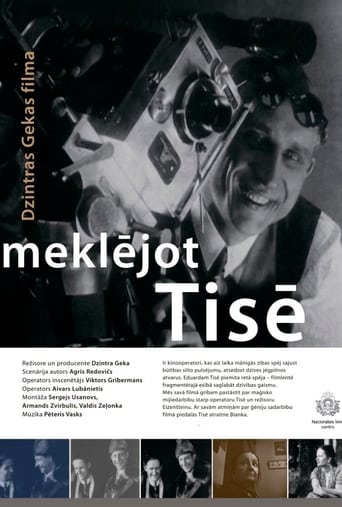
Seeking TisseSeeking Tisse · 2017
Seeking Tisse
2017
MovieDocumentary
The story of the world-renowned Liepāja-born cinematographer Eduard Tisse, whose wife was convinced it was he who created all the famous films of Sergei Eisenstein. The creators of the film develop the story and cross the lines drawn by biography, trying to understand the magic interaction between a cinematographer and a director, between the cinematographer and the object in front of his camera.
Remember Siberia IRemember Siberia I · 2010
Remember Siberia I
2010
MovieDocumentary
An emotional, figurative and historical study of the memories of people who were deported to Siberia as children on June 14, 1941. The suffering of these victims is presented in contrast to the beautiful landscapes of Siberia. On June 14, 2009, the film crew, some of the deported children who survived and returned to Latvia, and their children, go on a pilgrimage to Siberia to install memorial plaques in memory of the mothers and children who were deported between 1941 and 1949.
Kurts FridrihsonsKurts Fridrihsons · 2018
Kurts Fridrihsons
2018
MovieDocumentary
The significance of Kurts Fridrihsons reaches beyond the importance of his art, because during the Soviet period there were not many personalities refusing to comply with the regime while at the same time being outstanding artists. The charm and lightness that Fridrihsons preserved from pre-war civilized Europe and the free, lost Latvia was a harsh contrast to the realities of Soviet life. He was a model and inspiration for many people whose spiritual world refused to accept the existing system. The greater the distance between Fridrihsons’ lifetime and the present day, the more diversely and clearly we see the aloof and exceptional power of his personality. Unlike thousands of people who excuse themselves today for collaborating with the system with phrases like “Such were the times!”, justifying their non-resistance and compliance and their role as little bolts in the system, Fridrihsons – the loner and the example for a different option – is existentially important.
Katra diena simtgadē. Gadalaiki.Katra diena simtgadē. Gadalaiki. · 2019
Katra diena simtgadē. Gadalaiki.
2019
MovieDocumentary
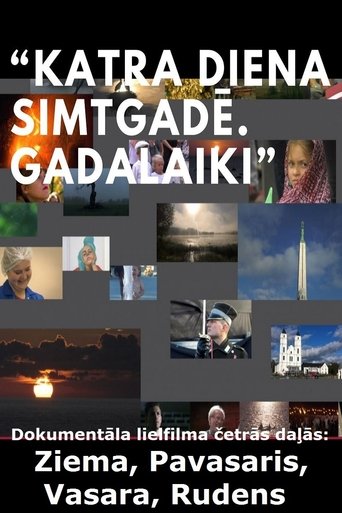
The film is a reflection of the Latvian people in the year of the country's centenary – viewers will easily recognize themselves and their personal stories in its scenes. Starting on New Year's Eve, January 1, when the first centenary baby, little Jete, arrives in the world to the sound of fireworks, and ending with piano music playing over a snow-covered and sunlit panorama of Latvia, the film captures the lives of hundreds of people. In addition, by filming each of the 365 days, sometimes with several cameras, and observing the processes of nature, in the countryside and in urban environments, in the lives of individuals, families and society, the cameramen have vividly captured the different facets of this story through the lens of the camera: the beautiful, the bitter, the grand, the meaningless, the comical and the absurd.
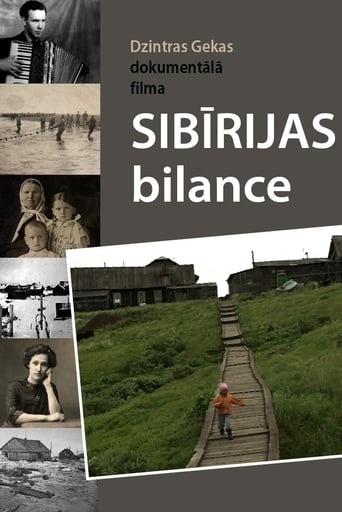
The Balance Sheet of SiberiaThe Balance Sheet of Siberia · 2011
The Balance Sheet of Siberia
2011
MovieDocumentary
The year 2011 marked the 70th anniversary of the deportations of June 14 1941, when 15 425 residents of Latvia (Latvians, Jews, Russians, Poles) were deported to Siberia. Among them there were 3 751 children aged up to 16. During the process men were separated from their families and sent to gulags, where many were sentenced to death, while others were imprisoned in labour camps. The facts of history and dry and few, but many of the victims and their children and grandchildren are still among us. During the summer of 2010, people who were deported to Siberia in 1941 as children joined their own children and a video production crew to travel back to the far North of Russia.

More Like This

Couldn't load this row right now.

Rate this film

Your ratings make Midnight smarter