
I Cimbri
1991 · 120 min · ★ 10.0 · Documentary
Forty kilometers from Verona, at the southernmost tip of the Alps, lies the hamlet of Giazza. Here live the last representatives of a Germanic language and culture originating in the 13th century: the so-called Cimbri. Industrialization and modern means of traffic and communication have almost eradicated this community. These people have thus become a symbol of all that has been lost for good.
Directed by Peter Schreiner · Written by Peter Schreiner
Your Rating
More from Peter SchreinerSee all →
 Totò · 2009
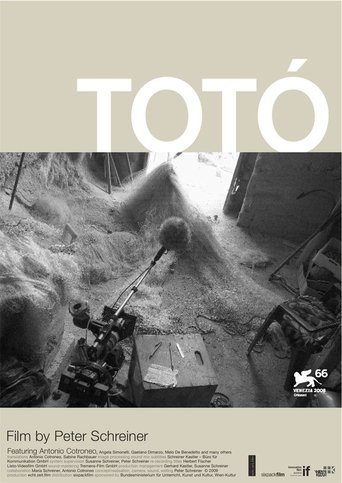
Totò
★ 9.52009
Movie
Antonio Cotroneo, a man in his fifties; in his Calabrian hometown everybody calls him Totó. For many decades he has been living in his chosen exile. Having subsequently married an Austrian woman and fathered four sons, the graduate political scientist earns his money as an usher at Vienna Konzerthaus.
 Blaue Ferne · 1994
Blaue Ferne
★ 9.01994
MovieDocumentary
 Malaria · 1983
Malaria
★ 7.51983
MovieComedy
Photographer Niki List's debut film observes Vienna's bizarre youth scene. Malaria is the name of a small café that serves as a meeting place for a wide variety of people who identify with various social groups. Anything goes in the café. List ironically describes the young people of the so-called No Future Generation, discussing their communication behavior and the emptiness and aimlessness that define this generation. A Viennese New Wave film, Malaria was lauded as a "documentary masterpiece" and awarded the Max Ophüls Prize.
 Kinderfilm · 1985
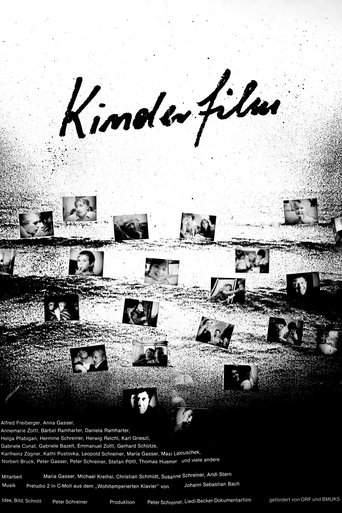
Kinderfilm
★ 7.01985
MovieDocumentary
The sunday ritual at home with parents, an alumni meeting of former school colleagues who once again, and some of them as young mothers and fathers, are confronted with the world of (their) children. Shots of mentally and physically disabled people who are brought to work in a bus early in the morning: people who have remained children.
Many other images about childhood and being a child.
 Grelles Licht · 1982
Grelles Licht
★ 7.01982
MovieDocumentary
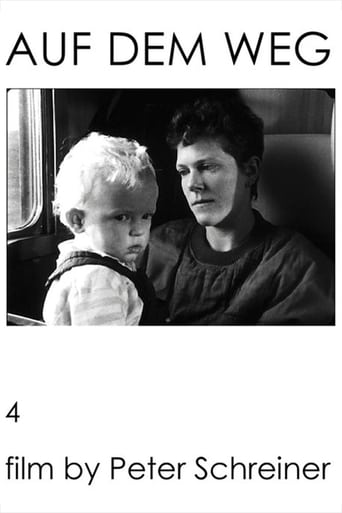 Auf dem Weg · 1990
Auf dem Weg
★ 7.01990
MovieDocumentary
Intimate images of Schreiner's own family and friends' experiences, presenting them as seemingly unconnected scenes that resemble snapshots from a photo album.
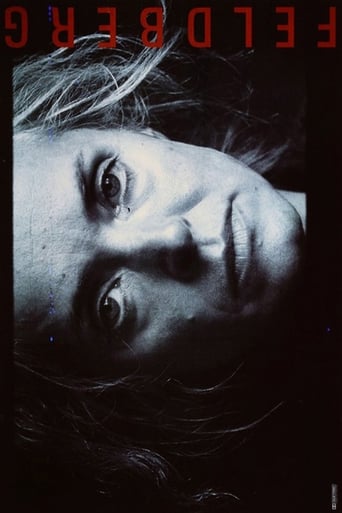 Feldberg · 1990
Feldberg
★ 6.71990
Movie
In this evocative work, we hear and see the interactions of a man and a woman in a pristine forest. We gain a sense of intimacy with them and nature. Suddenly we leave the worries of our scattered lives and begin to remember the primal elements of existence: earth, wind, fire, water, people, and creation. This epiphanic process demands patience and an almost meditative state, but it is so worth the effort – just as a journey a mountain meadow requires some effort in order to find its treasures. We leave the traditions of narrative for a more open approach to cinema. There are suggestions and onsets of a storyline, but almost everything remains a mystery for our encountering. This is a film that will allow you to observe and exist, without anxiety, without demands, and it allows you a rare glimpse into the life of things.
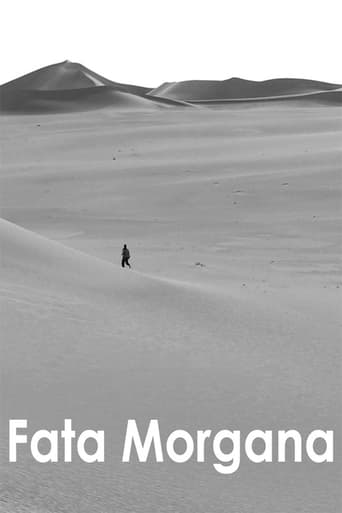 Fata Morgana · 2013
Fata Morgana
★ 5.02013
MovieDocumentary
Following Bellavista and Totó, Peter Schreiner completes his informal trilogy of epic, black-and-white digital-video essay-films with the utterly monumental Fata Morgana. Shot in the Libyan desert and in an abandoned building in Lausitz, Germany, it features a man (Christian Schmidt), a woman (Giuliana Pachner, from Bellavista) - and, glimpsed now and again, a guide (Awad Elkish.) They talk, they fall silent. Winds blow. The sun shines. The camera runs. What gradually takes shape is nothing less than a painstakingly concentrated attempt to understand the human condition through the lens of cinema. A lofty ambition, and one that demands a considerable leap of faith on the part of the audience: this film is sedate, "difficult", challenging, often apparently impenetrable. But anyone who has seen Schreiner's previous films will be aware that he is by any standards a major artist, one that can be trusted to find places that other directors may not even suspect exist.
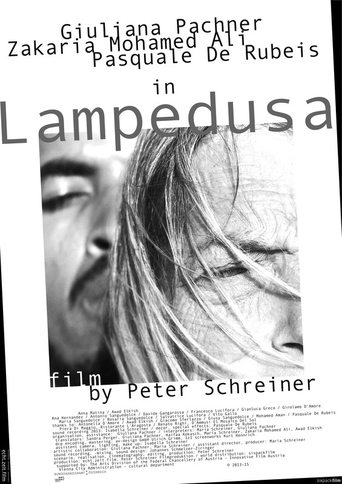 Lampedusa · 2015
Lampedusa
★ 5.02015
Movie
Two strangers cross paths on the Sicilian island of Lampedusa: a former refugee from Africa and a woman who escaped to the island to cope with a personal crisis. Memories, dreams and the present intersect and blend in this contemplative and visually arresting masterpiece by Austrian Peter Schreiner.
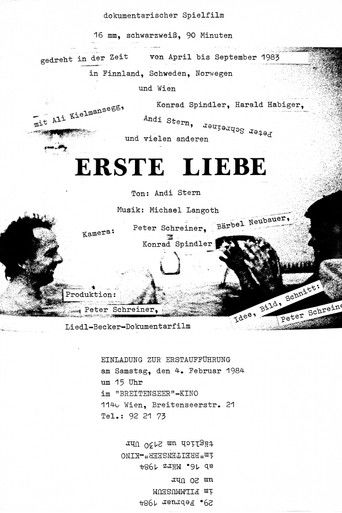 Erste Liebe · 1983
Erste Liebe
1983
MovieDocumentary
A trip to Vienna. Confrontation of the actors with places, people, situations and themselves.
The director's trip across Scandinavia and again numerous confrontations. The montage of both journeys is chronologically carried out, although they are joined to each other: to what extent can experiences be shared and how long can experiences, friendship and relationship between people last?
The film is restless and the camera follows the actors who stand before it and play themselves constantly.
Experimental documentary film.
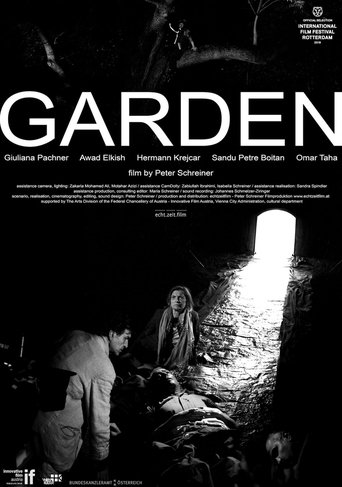 Garden · 2019
Garden
2019
MovieDrama
It seems to be an intermediate world of peace and quiet, the garden and country house where four people look back on testing lives. And forward, to the time they have left. On the one hand, there is regret – on the other, satisfaction. In a way, they are looking forward to the future – but at the same time, a longing for death regularly arises. And who is actually behind the camera? Are we watching actors or real people? Is there really any difference? Garten is full of contradictions – it is not until the credits roll that we realise who these people from very different backgrounds are.
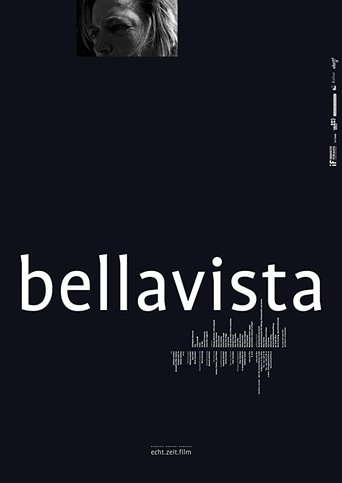 Bellavista · 2006
Bellavista
2006
MovieDocumentary
This portrait of a remarkable woman and her unusual environment seems to have a very profound effect on nearly everyone who sees it. The film further strengthens the reputation of veteran documentarian Schreiner, who's quietly and steadily established himself among Europe's most respected practitioners of non-fiction cinema. But the film is by no means an example of an ‘auteur’ imposing his individual vision upon the world. Instead it's a remarkable example of intense collaboration between artist and subject, one so close that such traditional distinctions and labels seem inappropriate.
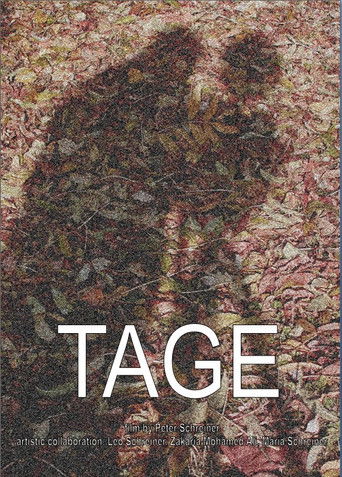 Days · 2023
Days
2023
MovieDocumentary
Tage is not a memoir of Schreiner's battle with his illness – this is merely hinted at, almost obliquely. Schreiner considered his ailing body above all an artistic challenge: What is possible, what can be developed from the set of options and perspectives such a state of being offers? Curiously enough, Tage turned into a variation of his last finished film, Garten (2019): a chamber piece shot almost exclusively in his house, featuring himself and his beloved wife Maria as well as some friends. It is also a return to a cinema of intimacy that he'd last essayed with Kinderfilm (1985). With all of that, Schreiner strove for and reached yet another level of artistic freedom with Tage, for none of his works to date are as light-footed in their movement: pure stream-of-conscious in a diaristic framework – a film as open as Schreiner's restlessly searching soul and endlessly curious heart.
More Like This
Couldn't load this row right now.