Attention, Focus, and Motion

Attention, Focus, and Motion

1975 · 26 min

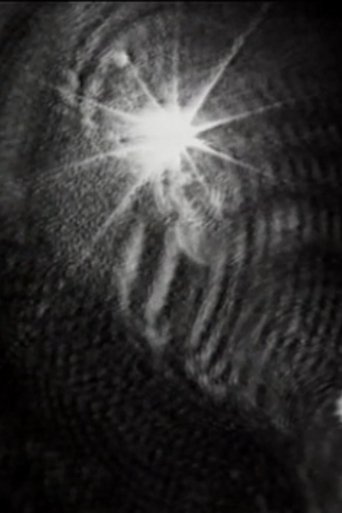
Attention, Focus, and Motion is one of Lucier's earliest black and white experiments with video technology and natural phenomena. Introducing themes that resonate throughout her work, Lucier investigates the intersection of landscape, motion and vision.

Directed by Mary Lucier

Your Rating

More from Mary LucierSee all →

Fire WritingFire Writing · 1975
Fire Writing
1975
Movie
Performance with three lasers, live camera, and three monitors.
AmphibianAmphibian · 1985
Amphibian
1985
Movie
Amphibian was a collaborative video/dance performance by Lucier and choreographer Elizabeth Streb. In this unique fusion of dance and video, Streb performed on a raked platform between two large screens showing different sets of video images. Streb portrays a mythological creature in the process of evolution, moving from water to earth to sky — an amphibious entity in a struggle to defy gravity. Lucier's intuitive landscapes integrate with Streb's athletic choreography to create an abstract yet visceral performance space.
In the blink of an eye...(amphibian dreams)..."If I could fly I would fly"In the blink of an eye...(amphibian dreams)..."If I could fly I would fly" · 1987
In the blink of an eye...(amphibian dreams)..."If I could fly I would fly"
1987
Movie
Collaborating with choreographer Elizabeth Streb, Lucier constructs a suite of dances in which the human figure is abstracted and isolated within a natural landscape. Structured in three segments, the work suggests the evolution of a mythical being moving from a black void to a natural landscape, and then into an aerial world. Fragmenting and isolating the physical body in space, or in relation to simple elements of landscape, Lucier evokes themes of confinement, the struggle to defy gravity, and a metaphorical desire for transcendence.
Bird's EyeBird's Eye · 1978
Bird's Eye
1978
Movie
A precursor to Lucier's later works, in which light is used as metaphor, Bird's Eye is an evocative formalist exercise in which Lucier explores light in relation to the material properties of video. Aiming a laser directly at the camera's eye, she burned the vidicon tube. Changing the focal length of the lens and moving the laser, she records the optical effect of the camera's light perception and absorption. The resulting configurations, accompanied by Alvin Lucier's electronic score Bird and Person Dyning, become an abstract calligraphy of light. Lucier's technology-based, visual records of refraction and reticulation refer to the Impressionists' empirical observations of changes in light over a measured period of time.
Ohio at GivernyOhio at Giverny · 1983
Ohio at Giverny
1983
Movie
Praised by The New York Times as a "stunning paean to Monet," Ohio at Giverny is the title of Lucier's highly acclaimed two-channel, seven-monitor installation. Writes Lucier, "This work is an investigation of light in landscape and its function as an agent of memory, both personal and mythic. It deals with the convergence of disparate entities — geographies, epochs, sensibilities: with transitions from one state of being to another, and how within the frame of imagination and collective memory these 'dissolves' take place. "Nostalgic images from Lucier's native Ohio — the pastoral countryside and a Victorian home — are fluidly juxtaposed and correlated with the lush beauty of Impressionist painter Claude Monet's gardens in Giverny, France.

More Like This

Couldn't load this row right now.
Rate this film

Your ratings make Midnight smarter