Sad Sack
1991 · 14 min
An encounter of myths. Is the world more resembling a flat, grammophone record or a child on the back of Atlas?
Directed by Caspar Stracke
Your Rating
More from Caspar StrackeSee all →
 Burnout · 2003
Burnout
★ 8.02003
Movie
A metropolis awash in electrical overdrive crashes in the heat of summer and sends a Bronxite into the clutches of a waterworld further north. It is there that we witness the cooling fogs and diving mammals of maritime yore and sail free in winds of a nautical nature. A nature that fills the summer sky with twinkling tidbits and the tummy with protein rich denizens of Neptune’s soup. A tour of the towering turrets of tomorrow land and the spatial splendor of yesterday’s yearnings captured on both chemical and electrical media.
 Zuse Strip · 2003
Zuse Strip
2003
Movie
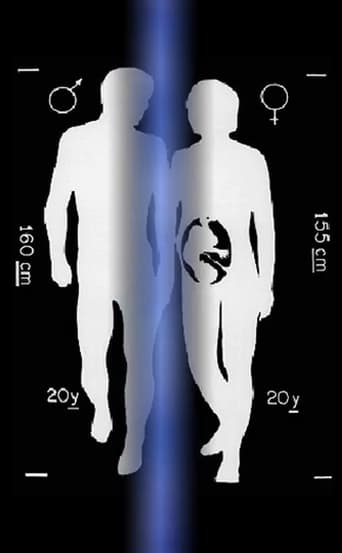
A piece of movie film has survived the forthcoming Ice Age and is discovered by Venusian scientists--5000 years from now... This work is a correspondence of two information fragments of different origins and times that met by accident. Cinema transforms into a three-dimensional landscape--utilizing data that is based on an archaeological misinterpretation. Zuse Strip is named after Konrad Zuse’s first digital computer. It used discarded 35mm movie film from the German UFA as a medium to read and write 8-bit binary code data with a hole-punch system. The work was inspired by Lev Manovich's text “Cinema by Numbers”, as well as “The Deciphering of Linear B" by linguist/archaeologist John Chadwick.
 time/ OUT OF JOINT · 2015
time/ OUT OF JOINT
2015
MovieDocumentary
With research that spans the work of philosophers Gilles Deleuze and Martin Heidegger to modern mythologies in which time reversal plays a crucial role — such as failed time machines, speed of light travel, and occult practices involving speech — Stracke combines science and philosophy in an attempt to defy death through cinema and the notion of time reversal.
 Circle's Short Circuit · 1998
Circle's Short Circuit
1998
MovieFantasy
Circle's Short Circuit is an experimental feature-length work with neither a beginning nor an end—the film can be viewed from any random point. It moves through a circle of five interlocking episodes that describe the phenomenon of interruption in contemporary communication through various forms and modes, investigating causes, consequences, and side-effects. Genres shift along the episodic path of this circle, moving from documentary to essay, through collage, simulated live-coverage, and silent film. As the phenomenon of interruption is seen to be a pervasive part of these genres, the film attends to the act of watching moving images. At the center of the film is a documentary segment on the origin of the biggest upheaval in communication history: the invention of the telephone, initiated by the "man who contracted space," Alexander Graham Bell.
More Like This
Couldn't load this row right now.