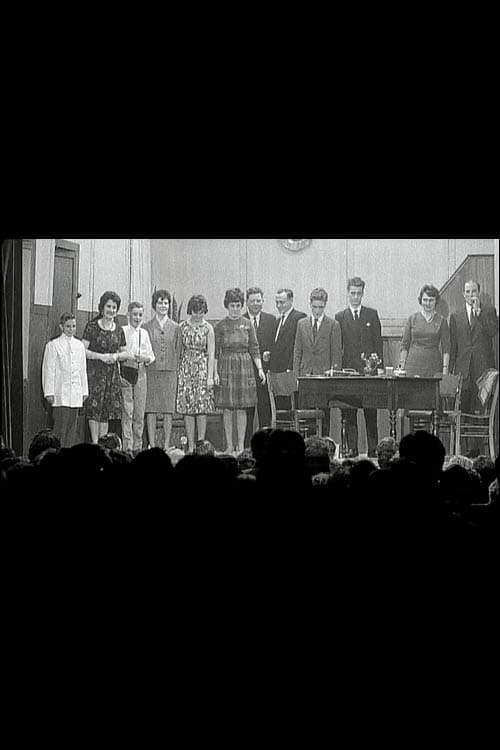
Les amis du plaisir
1961 · 27 min · ★ 10.0 · Documentary
Ethno-fiction: a sociological portrait of a small Belgian village, Moulbaix, through the passion for amateur theater.
Directed by Luc de Heusch
Your Rating
Make it a double feature
28m together
A close match in mood and era.
More from Luc de HeuschSee all →
 Perséphone · 1951
Perséphone
★ 10.01951
MovieDrama
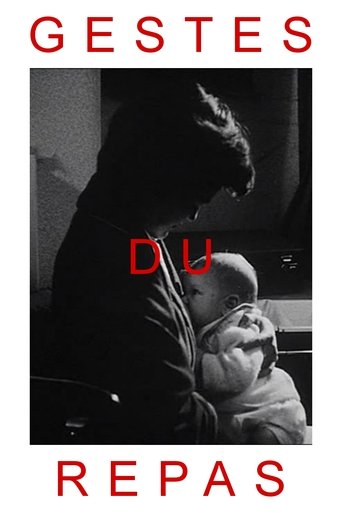 Gestes du repas · 1958
Gestes du repas
★ 10.01958
MovieDocumentary
This ethnographic film sends us the image of the man who eats, a stark look at Belgium. We spend about one-eighth of our days eating. Luc de Heusch films these repetitive gestures that seem trivial, yet reveal so much of a particular culture and a civilization. From morning to night, from the market installation to dinner, from the daily and fast meal to the feast, the ethnologist is interested in all social classes. Originally, an attempt of cinematographic ethnography, neutral and distant, intended to define the Belgians by the way they eat. In fact, Luc de Heusch films his contemporaries as if they were Papuans.
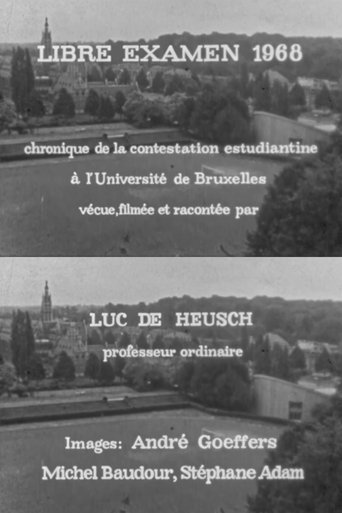 Libre examen 1968 · 1968
Libre examen 1968
★ 9.01968
Movie
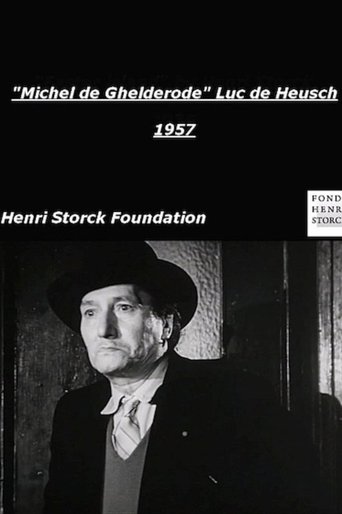 Michel de Ghelderode · 1957
Michel de Ghelderode
★ 8.51957
Movie
After Perséphone, his first film which he describes as “an experimental, mythological poem” and shoots under the pseudonym Luc Zangrie, he makes a portrait of playwright Michel de Ghelderode together with his friend Jean Raine. It introduces us to the world of a creator obsessed with and fascinated by death. If biographic references are present, they are only there in order to place the writer in the right setting: nostalgia for Bruges and Flanders, solitary wanders through a backward-looking, legendary Brussels. Ghelderode’s gravelly voice is the leitmotiv of the film, which focuses on rehearsals of his plays at the Théâtre de Poche and with the puppets of the Théâtre Royal de Toone. We accompany him into his study, a place of dreams and fantasy, full of baroque objects that define his world.
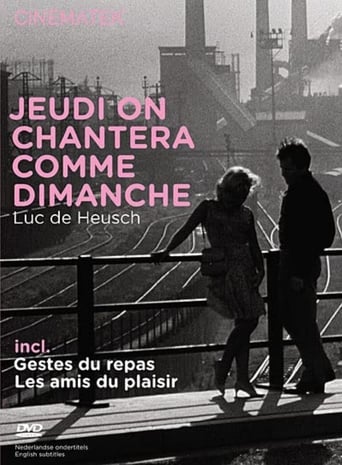 Thursday We Shall Sing Like Sunday · 1967
Thursday We Shall Sing Like Sunday
★ 7.81967
MovieRomanceComedy
A bitter-sweet story of a young sales assistant and a truck driver trapped between their dreams and the economic depression.
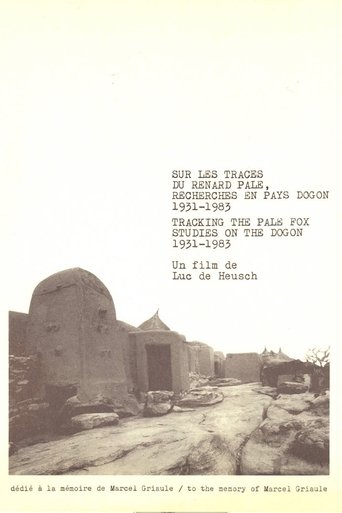 In the Footsteps of the Pale Fox · 1984
In the Footsteps of the Pale Fox
★ 7.01984
MovieDocumentary
The filmmakers find the Abruzzo National Park to be the most suitable place in Europe to film the wild fox, one of the most elusive and fearful animals in the forest, with its proverbial cunning that allows it to escape all the traps set by man. For five months, the documentary filmmaker and his assistants live in these forests, observing the landscape and its inhabitants: deer, bears, wolves, wild boars, and roe deer. They manage to gain the trust of a female fox, accompanying her, waiting for her, losing her, and finding her again.
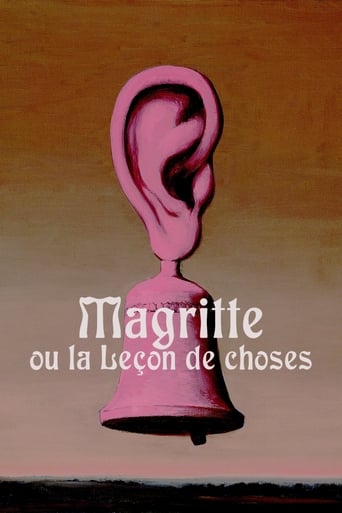 Magritte or the Object Lesson · 1960
Magritte or the Object Lesson
★ 5.81960
MovieDocumentary
The surrealist painter René Magritte questions the objective reality and emphasizes the arbitrariness of the relationship between an object, its image and its name: the evocation of mystery consists of images of familiar things gathered or transformed in such a way that they no longer conform to our ideas, whether naive or wise.
 Dotremont-les-logogrammes · 1972
Dotremont-les-logogrammes
1972
Movie
The Belgian poet Christian Dotremont, organiser of the COBRA movement, invents a graphic writing system
More Like This
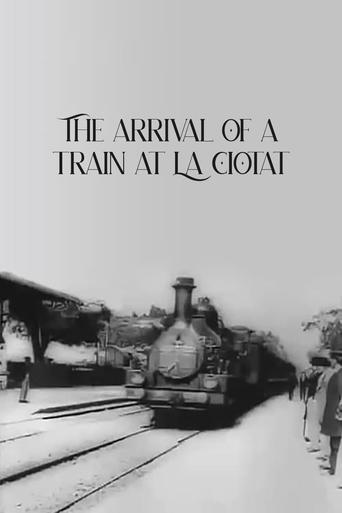 The Arrival of a Train at La Ciotat · 1896
The Arrival of a Train at La Ciotat
★ 7.11896
MovieHistoryDocumentary
A group of people are standing along the platform of a railway station in La Ciotat, waiting for a train. One is seen coming, at some distance, and eventually stops at the platform. Doors of the railway-cars open and attendants help passengers off and on. Popular legend has it that, when this film was shown, the first-night audience fled the café in terror, fearing being run over by the "approaching" train. This legend has since been identified as promotional embellishment, though there is evidence to suggest that people were astounded at the capabilities of the Lumières' cinématographe.
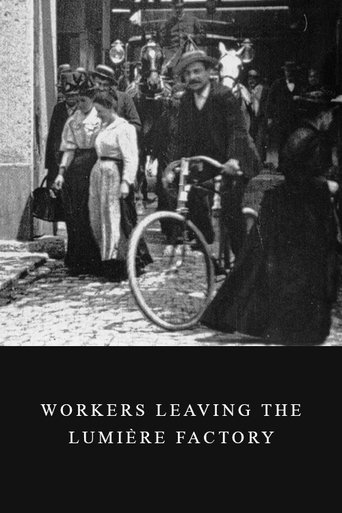 Workers Leaving the Lumière Factory · 1895
Workers Leaving the Lumière Factory
★ 6.71895
MovieHistoryDocumentary
Working men and women leave through the main gate of the Lumière factory in Lyon, France. Filmed on 22 March 1895, it is often referred to as the first real motion picture ever made, although Louis Le Prince's 1888 Roundhay Garden Scene pre-dated it by seven years. Three separate versions of this film exist, which differ from one another in numerous ways. The first version features a carriage drawn by one horse, while in the second version the carriage is drawn by two horses, and there is no carriage at all in the third version. The clothing style is also different between the three versions, demonstrating the different seasons in which each was filmed. This film was made in the 35 mm format with an aspect ratio of 1.33:1, and at a speed of 16 frames per second. At that rate, the 17 meters of film length provided a duration of 46 seconds, holding a total of 800 frames.