Tradition Is the Handing on of Fire and Not the Worship of Ashes

Tradition Is the Handing on of Fire and Not the Worship of Ashes

1999 · 1 min · ★ 9.0

The pictures are burning. A house is in flames for exactly one minute. Cinema under attack: An anonymous fragment from the early days of film is turned into a reflection on reproduction and reality as well as on destruction which takes place on two levels through Gustav Deutsch’s reworking of the material.

Directed by Gustav Deutsch

Your Rating

Make it a double feature

1h 31m together

Tradition Is the Handing on of Fire and Not the Worship of Ashes
Film Is. 7-12

Both from Gustav Deutsch.

More from Gustav DeutschSee all →
Film Is. (1-12)Film Is. (1-12) · 2004
Film Is. (1-12)
8.52004
MovieDocumentary
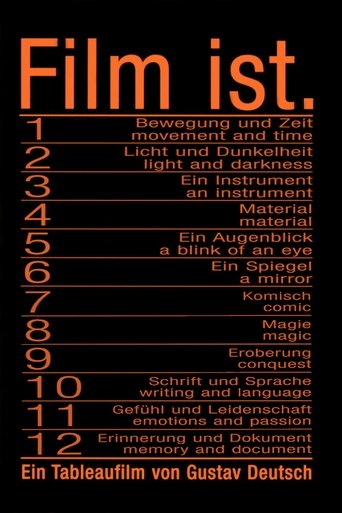
A condensed omnibus of all twelve chapters of Film ist. by Gustav Deutsch. Chapters 1-6 consists almost exclusively, of sequences from existing scientific films, while chapters 7-12 is a collection of moving pictures from the first thirty years of a medium which was then still silent.
Film Is. 1-6Film Is. 1-6 · 1998
Film Is. 1-6
7.11998
MovieDocumentary
Film ist. 1-6 is an avant-garde collage from Gustav Deutsch, using found footage from various scientific films to explore the properties, impact and nature of film.
Film Is. a Girl & a GunFilm Is. a Girl & a Gun · 2009
Film Is. a Girl & a Gun
6.72009
MovieDocumentary
Fragments of several (mostly) silent films are shown. They're guided by quotes from, among others, Plato and Sappho and a soundtrack.
World Mirror CinemaWorld Mirror Cinema · 2005
World Mirror Cinema
6.32005
MovieDocumentary
In Gustav Deutsch's most recent found footage work the masses "absorb" (Walter Benjamin), the artwork. Three historical camera pans across the streets and squares of Vienna, Surabaya, and Porto provide a starting point for reflection on the relationship of everyday stories and cinematic machinery.
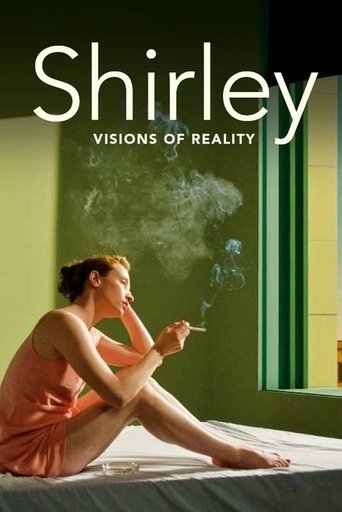
Shirley: Visions of RealityShirley: Visions of Reality · 2013
Shirley: Visions of Reality
6.12013
MovieDrama
A series of snapshots from the life of a fictional actress named Shirley serves to weave together thirteen paintings by Edward Hopper (e.g. "Office at Night", "Western Motel", "Usherette", "A Woman in the Sun") into a fascinating synthesis of painting and film, personal and political history. Each station in Shirley’s professional and private life from the 1930s to 1960s is precisely dated: It is always August 28/29 of the year in question, as the locations vary from Paris to New York to Cape Cod.
20 Little Films20 Little Films · 2012
20 Little Films
6.02012
MovieDocumentary
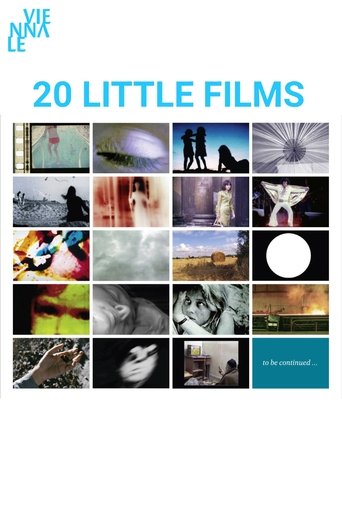
Since 1995, the Viennale has invited renowned directors to create short, one-minute films as personal contributions to the festival. Ranging from home movies to political essays, musical sketches to abstract studies, these “little films” form a unique anthology of cinematic moments. 20 Little Films collects a selection of these works, premiering together for the Viennale’s 50th anniversary at the Locarno Film Festival.
Film Is. 7-12Film Is. 7-12 · 2002
Film Is. 7-12
6.02002
MovieDocumentary
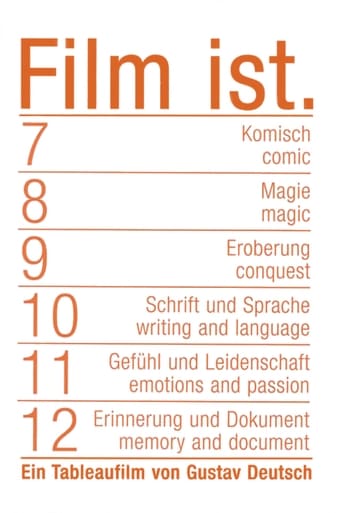
The second half of Gustav Deutsch's experimental Film ist. series, constructing new narratives and moods out of existing footage, mostly from early silent era films.
The Mozart MinuteThe Mozart Minute · 2006
The Mozart Minute
5.02006
MovieDocumentaryMusic
Twenty-eight well-known filmmakers living and working in Austria were invited by WIENER MOZARTJAHR 2006, to produce associative miniatures on Mozart. Requirement: they had to be one-minute artistic short films. The directors come from a whole range of different backgrounds, ranging from animated, experimental and short film to documentaries and feature films. The result is a multi-facetted sampler of diverse formal and contextual positions with regard to Mozart’s person and his influence on today’s society, art and culture. The contributions run the gamut from experimental-conceptual statements through socio-critical and documentary observations to pithy short feature films.
60 Seconds of Solitude in Year Zero60 Seconds of Solitude in Year Zero · 2011
60 Seconds of Solitude in Year Zero
4.22011
MovieDramaComedy
An anthology of one-minute films created by 51 international filmmakers on the theme of the death of cinema. Intended as an ode to 35mm, the film was screened one time only on a purpose-built 20x12 meter public cinema screen in the Port of Tallinn, Estonia, on 22 December 2011. A special projector was constructed for the event which allowed the actual filmstrip to be burnt at the same time as the film was shown.
Pocket Cinema - The CataloguePocket Cinema - The Catalogue · 1996
Pocket Cinema - The Catalogue
4.01996
Movie
100 film loops for 100 film-viewers. Each loop deals with one basic aspect of repetition in life and film. The essential characteristics of each aspect become evident by endless repetition in the loop. "With the Pocket Cinema project I want to trace the repetitions in life and film as an attempt at the essential elements of film - motion and time.
How We Live - Messages to the FamilyHow We Live - Messages to the Family · 2017
How We Live - Messages to the Family
2017
MovieDocumentary
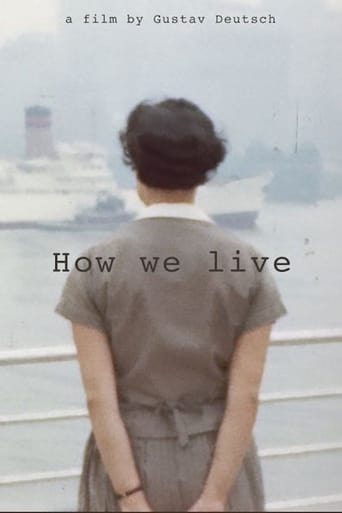
Tradition and modernity, contrasting ways of life: the master of archival footage has assembled an impressive collection. His serene narration takes us inside the private lives of migrant families in different eras, from the beginnings of film to the present day. This new film from one of the great avant-garde directors is also a powerful tribute to a neglected genre.
Adria - Holiday films 1954-68 (The School of Seeing I)Adria - Holiday films 1954-68 (The School of Seeing I) · 1990
Adria - Holiday films 1954-68 (The School of Seeing I)
1990
Movie
ADRIA is an artistic analysis of film as a medium and of its meaning as SCHOOL OF SEEING. The subjects of this analysis are the beginnings of the Austrian hobby and amateur film creation, restricted to holiday movies from the Adriatic Sea. The footage was analyzed according to set focal points (image detail, camera movement, etc.) then dissected according to serial aspects (tracking shots, pans, etc.) and edited into new sequences (descriptions, reactions, etc.) These sequences are liberated from their individual isolation and unified in a sequence that reflects the general situation. This general situation reflects upon two aspects. One is the first active involvement with film as a medium - in front of and behind the camera - and the other aspect highlights social contexts such as the first holiday abroad and organizing one’s leisure time.Therefore the private depiction of an individual situation becomes a document of a general situation.

More Like This

Olympia Part One: Festival of the NationsOlympia Part One: Festival of the Nations · 1938
Olympia Part One: Festival of the Nations
6.91938
MovieDocumentary
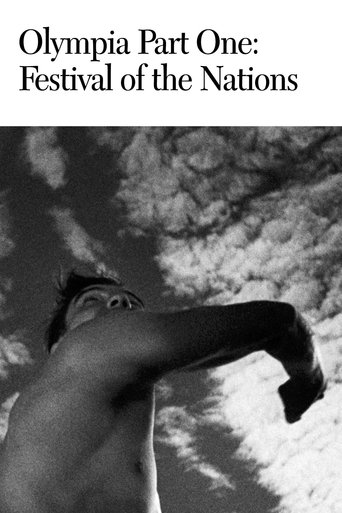
Starting with a long and lyrical overture, evoking the origins of the Olympic Games in ancient Greece, Riefenstahl covers twenty-one athletic events in the first half of this two-part love letter to the human body and spirit, culminating with the marathon, where Jesse Owens became the first track and field athlete to win four gold medals in a single Olympics.
Olympia Part Two: Festival of BeautyOlympia Part Two: Festival of Beauty · 1938
Olympia Part Two: Festival of Beauty
6.71938
MovieDocumentary
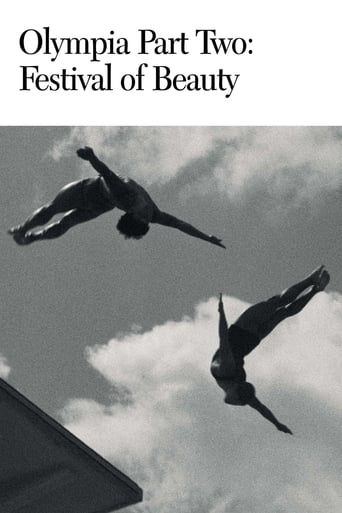
Part two of Leni Riefenstahl's monumental examination of the 1938 Olympic Games, the cameras leave the main stadium and venture into the many halls and fields deployed for such sports as fencing, polo, cycling, and the modern pentathlon, which was won by American Glenn Morris.
Sans SoleilSans Soleil · 1983
Sans Soleil
7.51983
MovieDocumentary
A woman narrates the thoughts of a world traveler, meditations on time and memory expressed in words and images from places as far-flung as Japan, Guinea-Bissau, Iceland, and San Francisco.
Berlin: Symphony of a Great CityBerlin: Symphony of a Great City · 1927
Berlin: Symphony of a Great City
7.51927
MovieDocumentary
A day in the city of Berlin, which experienced an industrial boom in the 1920s, and still provides an insight into the living and working conditions at that time. Germany had just recovered a little from the worst consequences of the First World War, the great economic crisis was still a few years away and Hitler was not yet an issue at the time.
PowaqqatsiPowaqqatsi · 1988
Powaqqatsi
7.21988
MovieDocumentary
An exploration of technologically developing nations and the effect the transition to Western-style modernization has had on them.

Rate this film

Your ratings make Midnight smarter