More from Juan DowneySee all →
 Four Stars · 1967
Four Stars
★ 4.71967
Movie
Photographed entirely in color, Four Stars was projected in its complete length of nearly 25 hours (allowing for projection overlap of the 35-minute reels) only once, at the Film-Makers' Cinematheque in New York City. The imagery in the film is dense, wearying and beautiful, but ultimately hard to decipher, for, in contrast to his earlier, and more famous film Chelsea Girls, made in 1966, Warhol insisted that two reels be screened simultaneously on top of each other on a single screen, rather than side-by-side. The film's title is a pun on the rating system used by critics to rank films, with "four stars" being the highest rating. From Wikipedia.
 The Loves of Ondine · 1968
The Loves of Ondine
★ 3.71968
Movie
Ondine is a gay man attempting to re-adjust his sexuality via various encounters with different women. After trying his luck with three women, Ondine becomes a background character in a sequence in which a group of Latin American men, calling themselves The Bananas, engage in a food fight. Ondine then engages in a wrestling match with Joe Dallesandro, who is married to Brigid Berlin.
 Maids of Honor · 1975
Maids of Honor
1975
Movie
Las Meninas is a brilliant essay on illusionism, mirrors and perception in art, life and video, articulated by Downey as a subjective interpretation of Velasquez's eponymous Baroque masterpiece. Through a theatrical reenactment of the painting's pictorial tableau and a re-articulation of its complex perspectival structure, Downey brings to life the spatial dynamics, illustrating the psychological tension of the relationship between viewer and subject. Placing Las Meninas in a historical context, Downey relates the painting's thematics to Spain's economic and political systems of the late 17th century.
 Satellitenis · 1984
Satellitenis
1984
MovieDocumentary
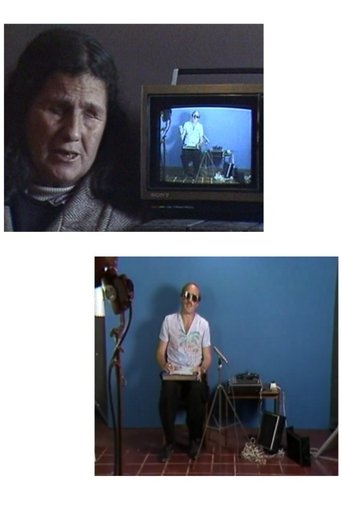
Exchange of nine video letters sent between New York and Santiago since 1982. Fragments that employ associations and reiterations to examine the influence of experience on the creative act.
 Fresh Air · 1972
Fresh Air
1972
Movie
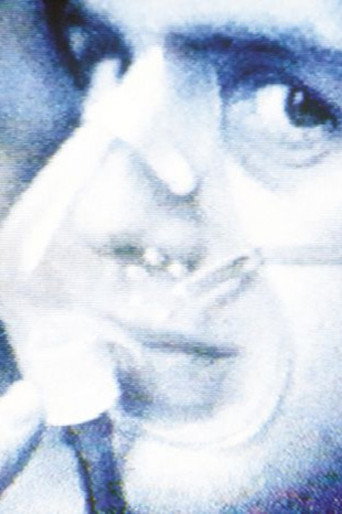
Featuring a vehicle equipped with tanks of oxygen, Fresh Air was an interactive performance that allowed people on the streets of New York to breathe clean air free of charge. This guerilla act, done under the pseudonym George Smudge, was a comment on the declining air quality in 1970s New York.
 The Laughing Alligator · 1979
The Laughing Alligator
1979
MovieDocumentary
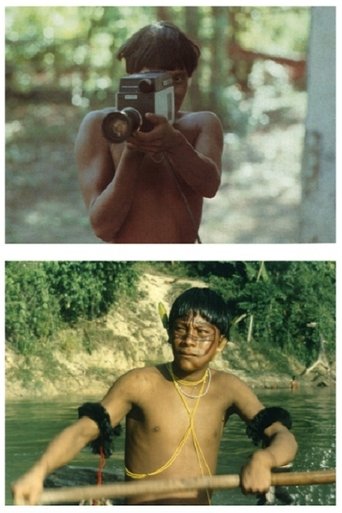
Merging the subjective and the objective, the autobiographical and the anthropological, The Laughing Alligator is a highly personal observation of an indigenous South American culture. Recorded while he and his family were living among the Yanomami of Venezuela, this compelling work distills Downey's search for his own cultural identity and heritage through the encounter between the Western family and the so-called "primitive" tribe. Challenging the anthropological view of the Yanomami as violent cannibals, Downey focuses on the tribe's myths, rituals and ceremonies, documenting funerary rites in which tribal members eat the pulverized ashes of their dead to insure their immortality. Subverting conventional modes of ethnographic documentary, Downey participates as an active presence, "shooting" with his video camera as a means of creating an interactive dialogue between artist and subject and addressing his own "yearning for a purer existence."
 Video Trans Americas · 1976
Video Trans Americas
1976
Movie
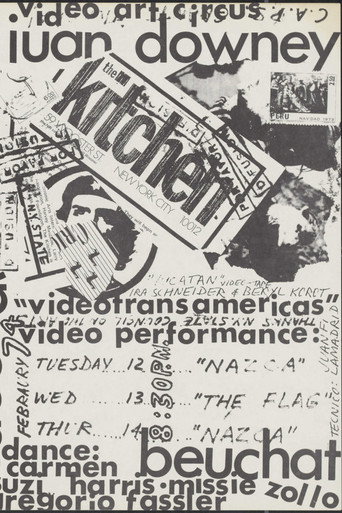
Video Trans Americas comprises footage from Mexico, Guatemala, Peru, Bolivia, and Chile, where Downey documented native cultures. He challenged the power dynamics of traditional ethnographic documentary by sharing his recordings with his subjects, whom he considered to be his collaborators, involving them in the production process and questioning his own position as an outsider. - MOMA
More Like This
Couldn't load this row right now.
