
Continental Drift
2005 · 15 min
A land and sea-scape film drawn from rich sources of imagery: the constantly changing mood of the sea to the distinctly different shorelines of Kent and the Pas de Calais – twenty-one miles of water that define both the “island race” and English hostility towards a wider integration within Europe.
Directed by William Raban
Your Rating
Where to Watch
Rent or Buy

More from William RabanSee all →
 Sundial · 1992
Sundial
★ 5.01992
Movie
William Raban's Sundial (1992), shot in the same location as his film Island Race, combines strongly formal procedures with an equally emphatic political message, which is conveyed through careful juxtaposition of objects in the field of view.
 MM · 2004
MM
★ 4.52004
Movie
Documentary about architectural structures in the UK.
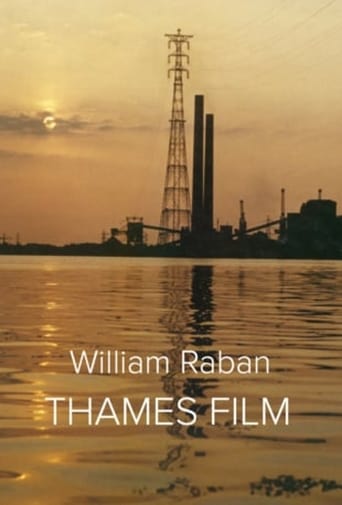 Thames Film · 1986
Thames Film
1986
MovieDocumentary
Experimental documentary following the flow of the Thames out of London to the sea.
 Home Movies 1971-81 · 1985
Home Movies 1971-81
1985
MovieDocumentary
Home movies shot on Super 8mm by W+B Hein over 10 years.
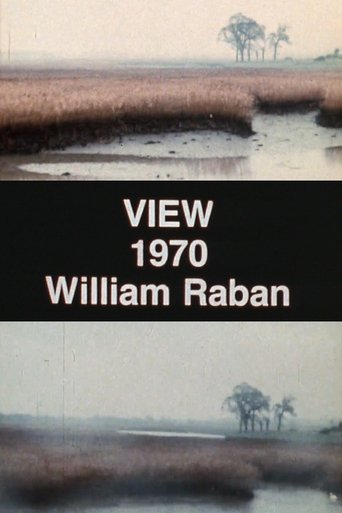 View · 1970
View
1970
Movie
"The film alternates from recording in time-lapse (one frame every ten seconds) to running through the camera at 24 f.p.s. (regular speed). The film was made in a continuous heavy rainstorm, and the front element of the Angenieux lens accumulated drops of rain on its surface until the view became obscured. The bursts of film at normal speed occur just after the lens had been wiped dry to reveal the trees, marsh grass, and watersedge in clear sharp focus beyond" William Raban
 Civil Disobedience · 2004
Civil Disobedience
2004
Movie
A rapid time-lapse journey from the London Houses of Parliament to the English Channel near the port of Dover is offset by David Cunningham’s musical score composed from fragments of Margaret Thatcher’s Belgrano speech.
 Wave Formations · 1977
Wave Formations
1977
Movie
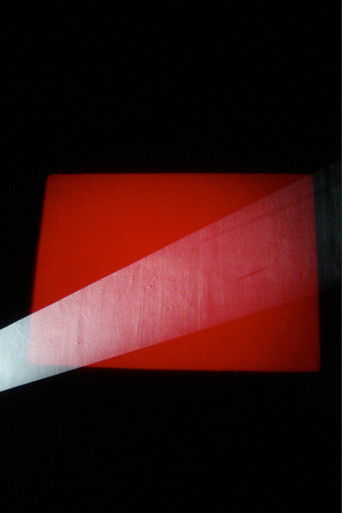
Part One: Variation in Density a)The picture on each of the five screens is identical, seven second fades from black, through clear, to black again. The same fade is printed onto the optical sound track to synchronise with the picture. b)Then follow fades from light to dark. c)And from dark to light. Part Two: Intermittency Relative patterns of occlusion and exposure occupy 2 screens. Each exposure fires a stroboscopic flash of colour: yellow for one screen; blue for the other, filling the centre of both screens with colour, haloed with after-image complementaries. W.R.
 Surface Tension · 1976
Surface Tension
1976
Movie
"This experiment determines what happens when a negative is superimposed upon its own positive image. The center of the picture forms the optical soundtrack on both left and right screens so that what you see finds its aural equivalent in sound." - Anthology Film Archives
 Laki Haze · 2020
Laki Haze
2020
Movie
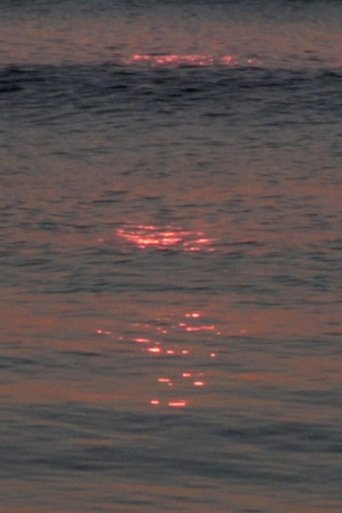
Following the eruption of the Lakakigar volcano, Iceland in 1783, a sulphurous haze shrouded vaste swathes of the northern hemisphere, causing widespread crop failures, consequent famine and disease across Europe, parts of America, North Africa, and India. It is estimated to have killed millions of people. Using first-hand accounts from Iceland and from across Europe, Raban’s film connects this event with the current global political and ecological crisis. It continues recent film investigations into the use of the long single take and revisits Raban’s preoccupations with landscape film from the early 1970s.
 Island Race · 1996
Island Race
1996
Movie
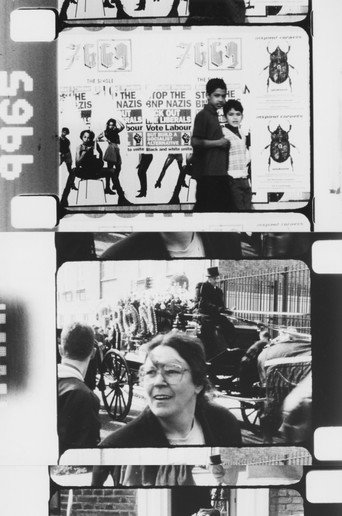
"ISLAND RACE contrasts everyday events with actions of right wing extremists, counter anti-racist demonstrations, the funeral of a gangland leader, and the jingoistic street parties celebrating Victory in Europe Day. Using only picture and sound, with no added commentary, Raban gives viewers the space to draw their own conclusions about the film’s portrayal of English national identity in the late 1990s." - Anthology Film Archives
 Footsteps · 1974
Footsteps
1974
Movie
Footsteps is in the manner of a game re-enacted, the game in making was between the camera and actor,the actor and cameraman, and one hundred feet of film. The film became expanded into positive and negative to change balances within it; black for perspective, then black to shadow the screen and make paradoxes with the idea of acting, and the act of seeing the screen. The music sets a mood then turns a space, remembers the positive then silences the flatness of the negative.
 Autumn Scenes · 1978
Autumn Scenes
1978
Movie
“The film is in three parts, each one exploring the fragmentary experience of perception by resorting to various forms of temporal and spatial dislocation. ‘Concrete Fall’ and ‘Fergus Walking’ are both filmed from a moving viewpoint, and the camera motion is ‘converted’ through simple editing and printing procedures to register subtle depths in space, the layering between foreground and infinity. In ‘Packeted Passages’ I filmed with two synchronized cameras and fused the two views in the printing stage into one disintegrated screen space.” – William Raban
 Fergus Walking · 1978
Fergus Walking
1978
Movie
Directed by William Raban.
 Breath · 1974
Breath
1974
Movie
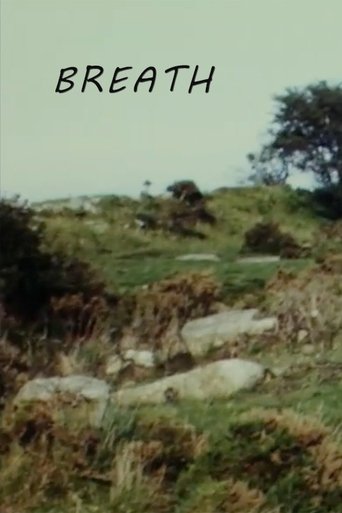
Shot in a remote part of Dartmoor, Breath is structured around a precise score. Three people are each given a camera loaded with 100ft of Kodachrome film and instructed to walk away from a tape recorder that has been placed within the landscape. The camera operators’ breath and whistling become a measure for the duration of the shots as they film their journey.
 Diagonal · 1973
Diagonal
1973
Movie
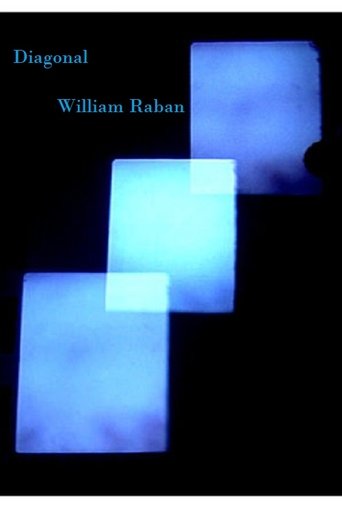
Three screen piece. "I was looking for a pure image, an image which was intrinsic to the medium of film. This film is not an abstract film; the subject is the projector gate, the plane where the film frame is arrested in the projected light beam, and the frame whose edges contain and divide the projected illusion from the blacked-out present of the movie theatre. W.R."
 Firestation · 2000
Firestation
2000
Movie
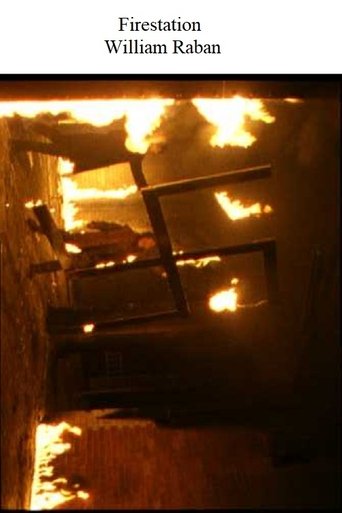
This film documents the transformation of a derelict fire station into studio and living spaces for artists. The opening of the restored building is celebrated in performances and installations by its new occupants. In common with Raban’s films that reflect upon different aspects of the changing face of London’s East End, this tightly structured film-poem confronts the present with the past: the building’s war-time role is recalled in archival images, and by women who served in it as Auxiliary Fire Service officers.
More Like This
Couldn't load this row right now.
