Picture in Your Mind

Picture in Your Mind

1948 · 16 min · Animation

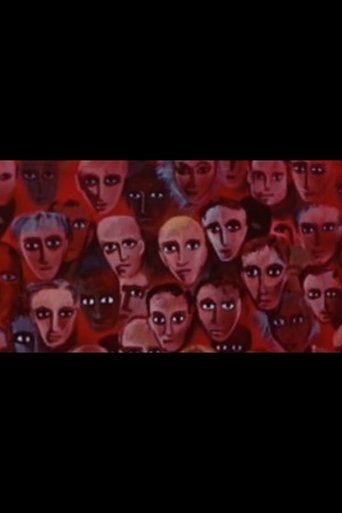
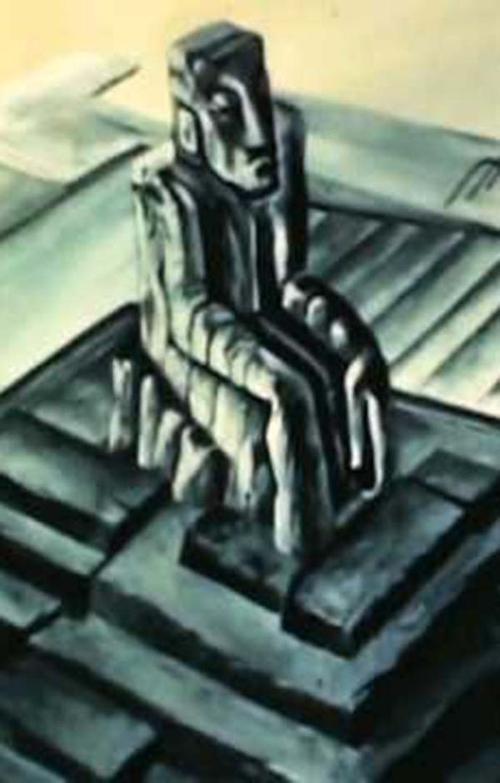
Sent by the U.S. government as a participant in the Marshall Plan with a specific mission to assist the French in re-gearing their animation studios, Stapp discovered a Europe much-decimated by war, but in further danger of annihilation by nuclear weapons. Returning to the U.S., he produced this alarming-yet-hopeful film, replete with its lonely, Tanguy-inspired landscapes peopled with static figures casting long shadows across charcoal-colored plains. While taking the risk of leaning a bit toward didacticism, Stapp managed to urgently convey the thought that world destruction was not necessarily inevitable, provided that people embrace, rather than reject their cultural and racial differences. ‘Picture’ is a unique document resulting from the sometimes dreamy, sometimes nightmarish vision of the artist in a war-torn land, with the spectre of death hovering ever-so-slightly ahead.

Directed by Philip Stapp · Written by Philip Stapp

Your Rating

Cast

Make it a double feature

1h 29m together
Picture in Your Mind
Animal Farm

Both from Philip Stapp.

More from Philip StappSee all →

To Your HealthTo Your Health · 1956
To Your Health
★ 7.31956
MovieAnimation
An animated short outlining the problems with alcohol consumption.
From Generation to GenerationFrom Generation to Generation · 1959
From Generation to Generation
★ 7.31959
MovieDocumentaryAnimation
This film illustrates the basic facts of human reproduction shown through the lives of a young farm couple with one child.
Animal FarmAnimal Farm · 1954
Animal Farm
★ 7.11954
MovieAnimationDrama
Animals on a farm lead a revolution against the farmers to put their destiny in their own hands. However this revolution eats their own children and they cannot avoid corruption.
WaterWater · 1961
Water
1961
Movie
Uses animated and live-action sequences to provide a factual analysis of the looming water shortage in industrialized countries, and the ecological hazards implied for the world as the problem reaches a crisis stage.
SymmetrySymmetry · 1966
Symmetry
1966
MovieAnimation
"Stapp was one of the greatest animators working in the 1950-1975 era, using stylized, often pointillist abstract imagery, in a floating world sometimes surrealist, at other times reminiscent of Japanese "ukiyo-e" illustration. His spectacular 'Symmetry' is his greatest film, a fantasy of dancing images breaking apart, spinning, and converging." -Academic Film Archive of North America
Boundary LinesBoundary Lines · 1947
Boundary Lines
1947
Movie
This outstanding cartoon successfully combines a social message with unique color animation, provocative commentary and a distinguished musical score.
It's the Greatest Little CityIt's the Greatest Little City · 1970
It's the Greatest Little City
1970
MovieAnimation
This funny animated short, a cynical look at the excesses of commercialism in city and town planning, was produced at Ohio State University.
First Americans (Part II): Some Indians of the SouthlandsFirst Americans (Part II): Some Indians of the Southlands · 1976
First Americans (Part II): Some Indians of the Southlands
1976
Movie
Stapp's pointillist style here has matured since the first of the series, done in 1969. Here, he also makes extensive use of parallel images converging and diverging on the multi-plane camera.
Homage à François Couperin (Butterflies)Homage à François Couperin (Butterflies) · 1978
Homage à François Couperin (Butterflies)
1978
MovieAnimation
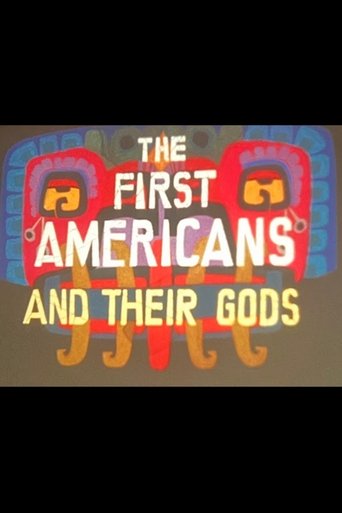
A three-minute fantasy of butterflies and dragonflies cavorting amongst the pussywillows, Japanese-inspired animation accompanied by two variations on keyboard works by the Baroque composer.
First Americans (Part I): And Their GodsFirst Americans (Part I): And Their Gods · 1969
First Americans (Part I): And Their Gods
1969
Movie
Colorful animation, based on pre-Columbian Indian designs, surveys the religious beliefs and practices of the Indians of Central America before the arrival of Columbus. Utilizing pointillist, abstract, and multiplanar split-image figures, Stapp describes Mayan and Aztec cultures, unfolding in codex-like form, accompanied by ethno-concrète music by Thomas Wagner & Arthur Burrows.

More Like This

Couldn't load this row right now.
Rate this film

Your ratings make Midnight smarter