Newsreel 62 - Family and Worker

Newsreel 62 - Family and Worker

2015 · 12 min · Documentary

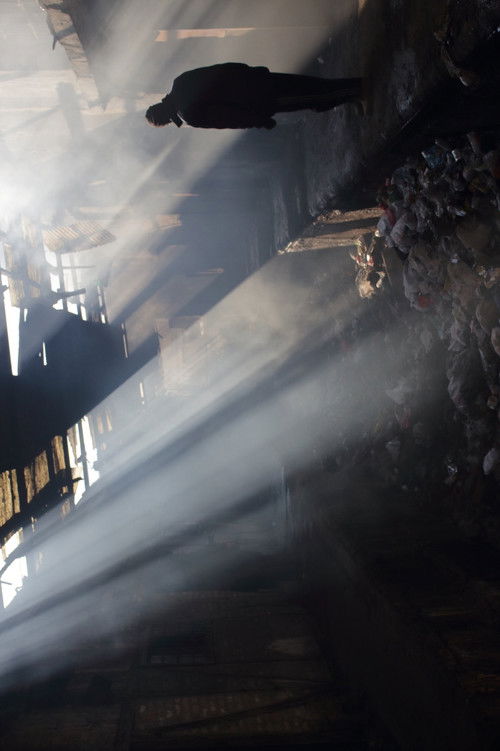
Newsreel 62 reflects on the participation of two Syrian artists in a 1966 Yugoslavian art show celebrating the Universal Declaration of Human Rights, showcasing the relative ease with which objects (as opposed to people) can pass across borders.

Directed by Nika Autor

Your Rating

More from Nika AutorSee all →

Newsreel 63 – The Train of ShadowsNewsreel 63 – The Train of Shadows · 2017
Newsreel 63 – The Train of Shadows
7.02017
MovieDocumentary
How to relate the first Lumière film about a train to dangerous scenes shot on a smartphone by contemporary refugees hidden between iron wheels? The maker is part of an activist movement striving to revive the independent, critical newsreel efforts of the 1960s and 1970s.
Newsreel 242 - Sunny RailwaysNewsreel 242 - Sunny Railways · 2023
Newsreel 242 - Sunny Railways
2023
MovieDocumentary
In Yugoslavia in 1947, 211,000 of the country's young people, joined by 5,735 from abroad, worked with great enthusiasm building the 242 kilometer railroad between Sarajevo and Samac. A newsreel from the period shows them toiling away with spades, pickaxes and shovels to complete the job in just seven months. Newsreel 242-Sunny Railways is both a tribute to these idealistic young people and an elegy for the loss of hope for a better world. "The visions of the future suffocated in the rivers of blood and mass graves," we hear in voice-over, referring to the bloody breakup of Yugoslavia and to a broader context. The railroad, laid over the rubble of the Second World War, damaged during the Bosnian War, and neglected in the new millennium now looks like the ruins of some ancient civilization. This documentary essay argues that the story of the railroad harbors enduring ideas for a world beyond capitalism, and that we must rediscover the values of times past.
Solidarity...Solidarity... · 2011
Solidarity...
2011
MovieDocumentary
The film is a reshoot of the film Solidarity done by Joyce Wieland in the year 1973. It is a representation of the struggle of the workers in Ljubljana.
PostcardsPostcards · 2010
Postcards
2010
MovieAnimationDocumentary
"Postcards" is the first part of the film diptych „Postcards and Report on the situation of asylum seekers in Republic of Slovenia, January 2008 – August 2009“. The footage comes from the archive of Radio-Television Slovenia. It represents an archival collection documenting media reporting on migrants in the period 2001-2008. I was interested in analysing the representation of migrants in public. I wanted to show how images in themselves, through the way they are produced (montaged), effect the criminalization and victimization of the represented group.
Newsreel 670 – Red ForestsNewsreel 670 – Red Forests · 2022
Newsreel 670 – Red Forests
2022
MovieDocumentary
Red Forests is a rethinking of the erection of the razor wire on the EU borders. It considers and reflects how the razor wire plays a role of a tool of governance and power. Additionally, the film is rethinking the forests along the EU borders – as geographical, natural as well as political spaces – that bear history of clandestine refuge as well as of clandestine solidarity practices.
Newsreel 4517 – Across the Water into FreedomNewsreel 4517 – Across the Water into Freedom · 2022
Newsreel 4517 – Across the Water into Freedom
2022
MovieDocumentary
The film presents a portrait of Zied Abdellaoui who – seeking a better life – came to Austria through the Balkan route. He walked 4517km, experienced 26 illegal push-backs, several violent abuses and now resides without documents in Austria.
Newsreel 2021 – Here I Have PictureNewsreel 2021 – Here I Have Picture · 2022
Newsreel 2021 – Here I Have Picture
2022
MovieDocumentary
It presents a fragmented glimpse into the life of people on the move hiding in the unofficial camps in the forests on the EU border.
In the Land of the BearsIn the Land of the Bears · 2012
In the Land of the Bears
2012
MovieDocumentary
In 2010 and 2011, the huge Slovenian construction sector, which employed more than 70,000 foreign workers, collapsed, leaving behind it debts, halted construction activities and exploited and unpaid workers. Most employed workers came from the territory of former Yugoslavia, especially Bosnia and Herzegovina. While the government silently watched the exploited, underpaid, unpaid and humiliated workers, the accumulation of wealth on one side led to the accumulation of indignation and resistance on the side of the exploited and those struggling against exploitation. Because the competent state bodies, the mass media and the broader public had failed, the self-organisation of workers was inevitable. They demanded better living conditions, the payment of unpaid salaries and social security contributions, equal opportunities, etc. Armin, Aigul and Esad take us through particular stories and specific areas of work (activism and the construction industry), making them general and universal.

More Like This

Couldn't load this row right now.
Rate this film

Your ratings make Midnight smarter