Dead Day Window Display Note

Dead Day Window Display Note

2015 · 8 min

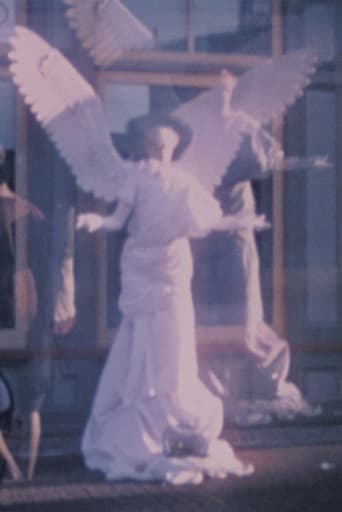
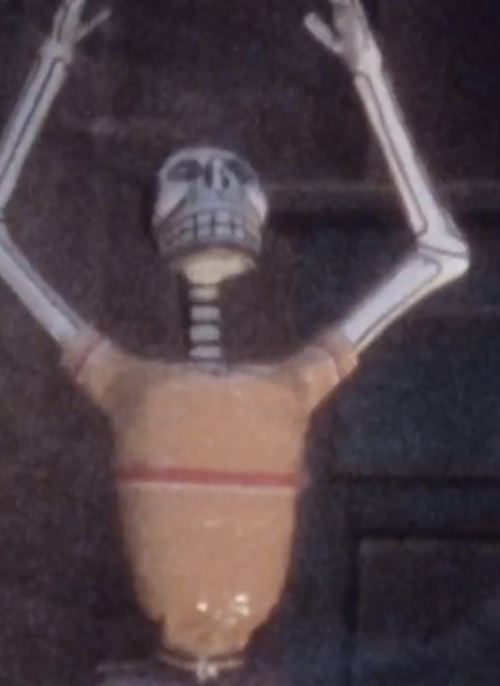
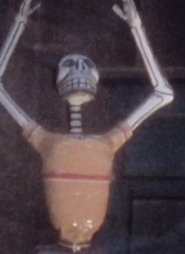
Every fall a store called NOMAD in Cambridge, on Mass Av,e puts up a window display of Mexican Day of the Dead pieces. My birthday is November, 3, so I am hyper aware of the death/resurrection fall celebration --. this is my sidewalk pedestrian note.

Directed by Saul Levine

Your Rating

More from Saul LevineSee all →
Note to PatiNote to Pati · 1969
Note to Pati
8.01969
Movie
Something of an aesthetic convergence between the diaristic autobiographies and quotidian images of Jonas Mekas (as illustrated in his Diaries, Notes and Sketches chronicles) and the hand crafted dissonance and material violence of Stan Brakhage, “Note to Pati” presents a seemingly typical winter scene – the day after a snow storm as a suburban neighborhood digs out from under the accumulation and children make the most of an unexpected day off from school by playing in their winter wonderland. Saul Levine’s images are diffused, faded, and ephemeral, made all the more dissociating by Levine’s disorienting rapid cut editing, restless and twitching camerawork, and destabilized, quick pan sequences – an evocation of a transitory and wide-eyed innocence.
A (possible) trip around the world in super 8A (possible) trip around the world in super 8 · 2021
A (possible) trip around the world in super 8
2021
MovieDocumentary
A brief documentary focused on the history of experimental Super 8mm filmmaking. Prominent figures of the "s8" boom of the 1970s discuss their work and their first encounters with the medium.
UntitledUntitled · 1971
Untitled
1971
Movie
A portrait: of Saul Levine, filmmaker and one-time Italian Ice Vendor./of the film surface & depth/so by the choice of image./ of the inside & outside light in the summer and the shower. –M. K.
Lost NoteLost Note · 1969
Lost Note
1969
Movie
Saul Levine began Lost Note as a love poem to his wife but before he finished the film everything had changed. This film is all that was left – 68/69 was a period of violent transition for many. The film was formally challenging, editing footage with in-camera superimpositions and cutting b&w with color.
Entry NoteEntry Note · 2018
Entry Note
2018
Movie
A small apocalypse prophecy on the threshold of disaster world/home.
CrescentCrescent · 1993
Crescent
1993
Movie
A conversation with Pelle Lowe.
NearsightNearsight · 1978
Nearsight
1978
Movie
"Afternoon idyll with Nancy Frumkin."
Caw NotesCaw Notes · 2018
Caw Notes
2018
Movie
As the crow flies, as the crow cries, as the crow alites CAWS
Note Chicago Reds and BluesNote Chicago Reds and Blues · 1972
Note Chicago Reds and Blues
1972
Movie
Concerned with the relation of a word to what we hear or see in our mind when we see it. How this relates to film and color.
Light Licks: Pardes: Drowned Hat Rescue Media City Motown JumpLight Licks: Pardes: Drowned Hat Rescue Media City Motown Jump · 2014
Light Licks: Pardes: Drowned Hat Rescue Media City Motown Jump
2014
Movie
Light Lick: Az Sent (Amazing Grace)Light Lick: Az Sent (Amazing Grace) · 2000
Light Lick: Az Sent (Amazing Grace)
2000
Movie
Harvard square stroll, talking to myself.
The Big Stick / An Old ReelThe Big Stick / An Old Reel · 1973
The Big Stick / An Old Reel
1973
Movie
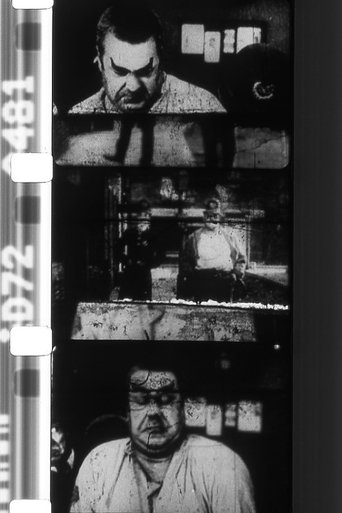
Saul Levine spent six years (from 1967-1973) cutting up and re-editing 8mm prints of two Charlie Chaplin shorts, IN THE PARK and EASY STREET, into a dynamic yet dreamy deconstruction of physical and narrative movement. What begins with Chaplin looping around in circular repetitions between a cop and an ominous vagrant becomes more fractured as the film expands. News footage of police arresting protesters (shot from a television screen on black-and-white 8mm film) is cut into the comedy of cops and criminals (a shot of political reality amidst slapstick fantasy) and images are abstracted by rapid-fire cutting. Even the physical cuts on the celluloid become part of the image as Levine chops through the frames themselves, leaving broad gashes on the screen and fracturing images until they overlap with the next shot and the suggestions of narrative are whirled into a frenzy of motion.
Light Licks: I Saw the Light Praise the DarkLight Licks: I Saw the Light Praise the Dark · 2000
Light Licks: I Saw the Light Praise the Dark
2000
Movie
The first black and white LIGHT LICK.
Melts Into AirMelts Into Air · 2000
Melts Into Air
2000
Movie
ALL THAT'S SOLID (and) MELTS INTO AIR are each separate films shot at an exhibition of the urban landscape artist Tyree Suyton in Cambridge at Harvard. I was struck by the redemptive critical and visionary character of his work which struck me as similar to G.M. Hopkins or Clarence Smith. Coincidentally as I was shooting these films I went to a screening of Charles Burnett and asked him what film he would like to make but couldn't get the money for. He replied, "a feature narrative about Tyree Suyton." So I put together four of the films from Spring 2000 into a four-film work called "4 For Charles Burnett - All That's Solid Melts Into Air". They are: ALL THAT'S SOLID, LIGHT LICK, TOSCANINI'S EUROPEAN SIDEWALK CAFE, and MELTS INTO AIR.
Toscanini's European Sidewalk CafeToscanini's European Sidewalk Cafe · 2000
Toscanini's European Sidewalk Cafe
2000
Movie
Workers and customers at a coffee bar in a winter twilight. S8mm, b&w/si
August Moon and SeaAugust Moon and Sea · 1997
August Moon and Sea
1997
Movie
A portrait of Nancy Golden, a summer evening and Nancy photographing rocks at Singing Beach.

More Like This

Couldn't load this row right now.
Rate this film

Your ratings make Midnight smarter