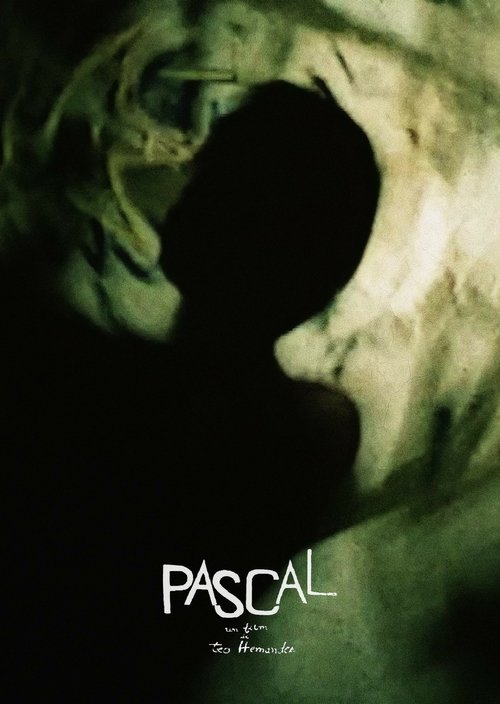
Pascal
1981 · 41 min · Documentary
From the series "Portraits" : Pascal Martin
Directed by Teo Hernández
Your Rating
Cast
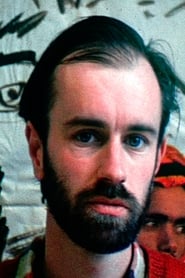 Pascal Martin
 More from Teo HernándezSee all →
 The Sun Also Rises · 1957
The Sun Also Rises
★ 5.81957
MovieDramaRomance
A group of disillusioned American expatriate writers live a dissolute, hedonistic lifestyle in 1920's France and Spain.
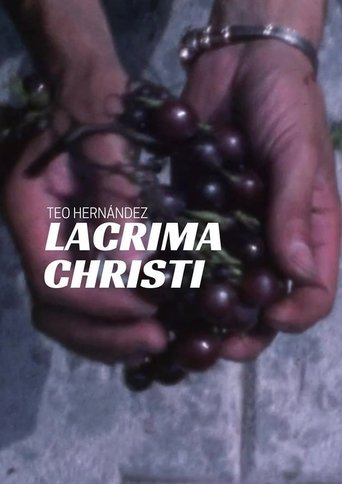 Lacrima Christi · 1980
Lacrima Christi
★ 5.01980
MovieFantasyScience Fiction
Lacrima Christi is the longest of the over 150 films made by the Mexican filmmaker resident in Paris, Teo Hernández. Part three of a tetralogy devoted to Christ’s Passion, Lacrima Christi is an exploration of the transfer between desire and myth that takes as its starting point a series of objects found in the flea market of Belleville.
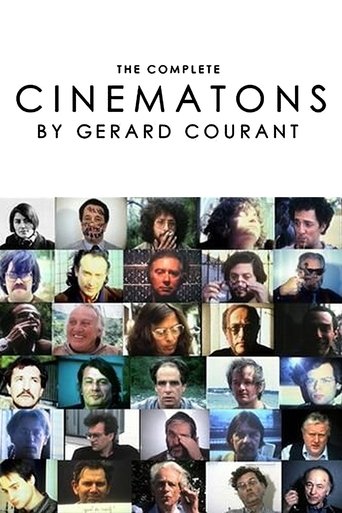 Cinématon · 1978
Cinématon
★ 4.91978
MovieDocumentary
Cinématon is a 156-hour long experimental film by French director Gérard Courant. It was the longest film ever released until 2011. Composed over 36 years from 1978 until 2006, it consists of a series of over 2,821 silent vignettes (cinématons), each 3 minutes and 25 seconds long, of various celebrities, artists, journalists and friends of the director, each doing whatever they want for the allotted time. Subjects of the film include directors Barbet Schroeder, Nagisa Oshima, Volker Schlöndorff, Ken Loach, Benjamin Cuq, Youssef Chahine, Wim Wenders, Joseph Losey, Jean-Luc Godard, Samuel Fuller and Terry Gilliam, chess grandmaster Joël Lautier, and actors Roberto Benigni, Stéphane Audran, Julie Delpy and Lesley Chatterley. Gilliam is featured eating a 100-franc note, while Fuller smokes a cigar. Courant's favourite subject was a 7-month-old baby. The film was screened in its then-entirety in Avignon in November 2009 and was screened in Redondo Beach, CA on April 9, 2010.
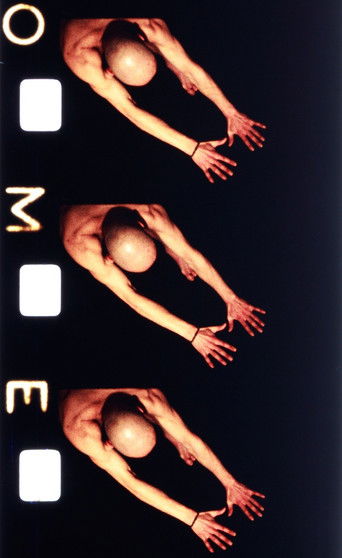 Corps aboli · 1978
Corps aboli
★ 4.71978
Movie
The purpose of the film is to go beyond the notion of the body as a system of functions, symptoms and reflexes that try to delimit the whole body. The body, represented here with all its norms, confronted with itself in a space devoid of causal references, moves towards the abolition of its image and the springing of its inner source: it is the luminous nucleus of the human body.
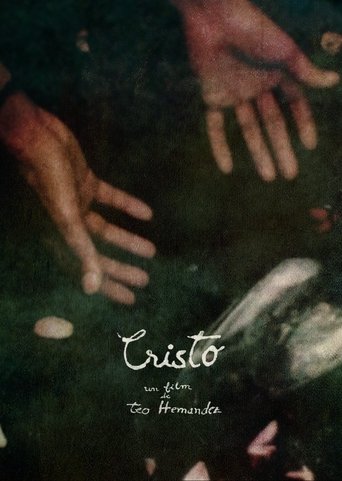 Cristo · 1977
Cristo
★ 3.21977
MovieDrama
All of history, that of Christ or any other, permeates the world, leaves its mark, modifying and informing history, and all that the human reproduces and creates. The best way for historical interpretation or literary adaptation is to move as far as possible from literal interpretation. That is, it is a contemporary and personal interpretation. The story of Christ is an archetypal story. It has modified and informed a morality and a vision of the human being in the West, it must be taken for what it is and what it has become: matter.
 Angle · 1978
Angle
★ 1.01978
Movie
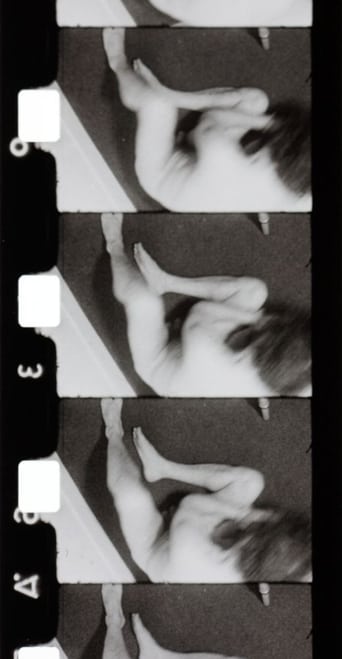
"ANGLE, with its brief black and white shots, almost always plunging and oblique, of naked bodies or parts of bodies, is a film of rupture. Punctuations of black primers break up the filmic continuity, isolating snapshots or brief furtive movements: the body rolling over itself, colliding with the other or falling (these terrible falls, as sharp as a fainting spell, like that of the hero of The Andalusian Dog, whose hand, as he falls, brushes for a moment against the naked back of a beautiful, insensitive woman, and which is, it seems to me, the most striking representation of the link between passion in love and death that can be given). Often these movements are repeated and the actors seem to be the descendants of Muybridge's bonshommes lost in a white room. At the end - this is the longest shot in the film - in a corner of the room, one of the two actors remains crouched, hiding his eyes in his hands. Then the corner reappears, empty."
 Chevaux (Introduction) · 1987
Chevaux (Introduction)
1987
Movie
 Maya · 1979
Maya
1979
MovieDocumentary
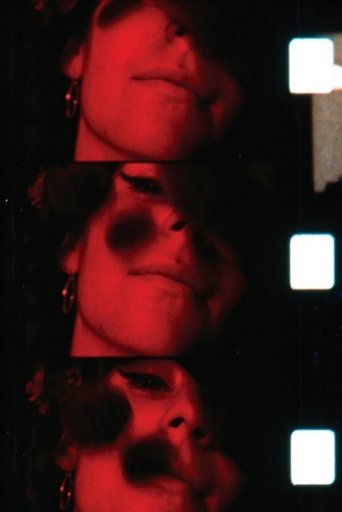
Hymn to nature, song to the cosmos, Mâyâ builds a world where the camera generates a new type of representation in which the depth of field is reduced to the essential. Everything happens, in a way, on the same surface.
 Kader, Gaël · 1989
Kader, Gaël
1989
Movie
Experimental short by Teo Hernández.
 Proménade · 1988
Proménade
1988
Movie
 Souvenirs/Florence · 1981
Souvenirs/Florence
1981
Movie
Téo Hernandez's series of Memories... transcribes perfectly the filmmaker's vertiginous ability to capture a city from a few well-chosen places; the juxtaposition of architecture and people creates a mosaic of sensations, exalted by the syncopation of the zooms and cascading shots, clues to the "manner", the "filmmaker's paw".
 Souvenirs/Paris · 1980
Souvenirs/Paris
1980
Movie
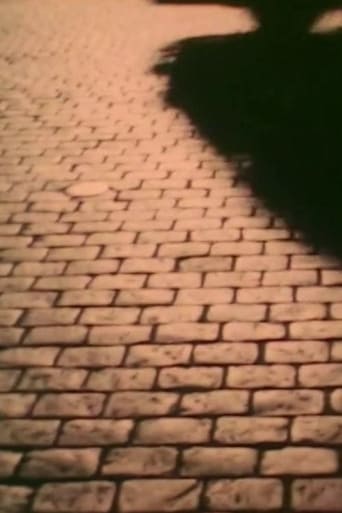
Fugitive images of old Paris neighborhoods.
 Le printemps · 1987
Le printemps
1987
Movie
 Le Zoo · 1992
Le Zoo
1992
Movie
Short film by Teo Hernández.
 Pause · 1970
Pause
1970
Movie
An early Téo Hernandez film exploring the space of a garden. Shot in July 1970 in the Carlsberg Glyptotek garden in Copenhagen, Pause is a 8 mm black‑and‑white silent short in which Téo Hernández roams the museum garden, alternating tight close‑ups of bodies (hands, feet, faces) and textures with sculptures and vegetation; the camera’s halting, scanning movement turns the stroll into a study of matter, framing and rhythm. Featuring Michel Nedjar, Léon Pizano and Sheena Mark, the film dispenses with narration and treats the garden’s statuary and foliage as anchors for a tactile observation of bodies in space.
 To Montpellier · 1988
To Montpellier
1988
Movie
Images of the filmmaker's visit to Montpellier.
More Like This
Couldn't load this row right now.