O Construtor de Anjos
1978 · 40 min · ★ 8.7 · Drama, Mystery
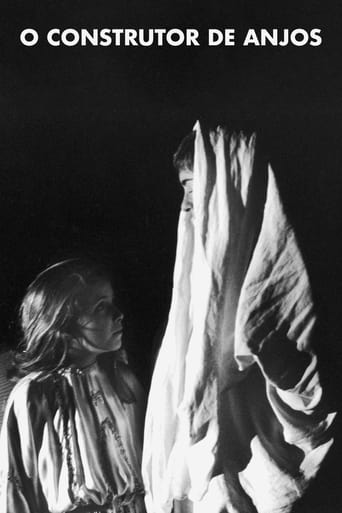
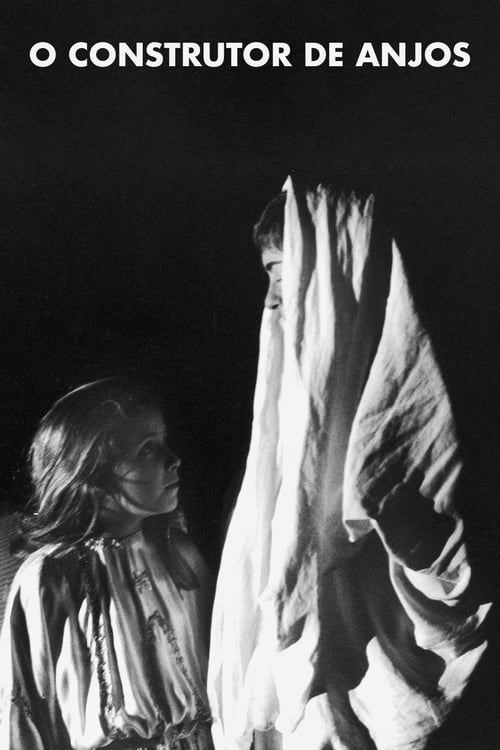
Gothic film in a monastery, where sensual monks murder the children they receive, with images of fantastic, painted from the author own painting and also from the Hammer films and the Saxon plastic tradition of romanticism.
Directed by Luís Noronha da Costa · Written by Nuno Júdice
Your Rating
Cast

More from Luís Noronha da CostaSee all →
D. Jaime or the Portuguese Night · 1974D. Jaime or the Portuguese Night
★ 7.01974
MovieDramaFantasy
This is one of Noronha da Costa's films in which the "fictional" component is most visible. D. Jaime or the Portuguese Night, like the rest of Noronha da Costa's films, is part of the gothic films (Terence Fisher's work was one of his great influences), and in it he shows the different variations around the "specular bodies", which evolve into luminous magic and into sensual and sensory incandescence. At the same time, we witness a series of ironic and erotic, or historical, views of wicked virgins and laughable sadists, all resurrected from German and British romanticism, while the scenery is no longer Portuguese.
Coisas · 1973Coisas
★ 6.01973
Movie
A series of brief, evocative scenes capturing the life of a painter—his moments of inspiration, frustration, solitude, and fleeting triumphs. From the quiet ritual of preparing his brushes at dawn to the feverish strokes of creation at midnight.
Padres · 1975Padres
★ 6.01975
Movie
Padres begins with a fabulous shot. Instead of two parents, we see two cats, one black and one white. Without exaggeration, one could say that these cats are the first "parents" of the film, happily fighting for food, one more aggressive, the other more passive. It turns out to be a brilliant association in "sacralizing" the animals and eroticizing them.
Karl Martin · 1974Karl Martin
1974
Movie
An “artist film” that crosses Karl Martin, Martin Heidegger and the Communist Party’s Manifesto.
As Três Graças · 1972As Três Graças
1972
Movie
The statues—solid, unmoving—become vessels of time, capturing the quiet tension between permanence and decay.
Manuela · 1972Manuela
1972
Movie
The large translucent screen that dominates the film clearly shows Manuela de Freitas' body holding a candle, or rather a shadow (reflection) of that body and the dominant figure in the film, a variation of reflection, blurring, and shadow. This is a shadow theater for a cinema of reflections, from which other bodies emerge rhythmically, which in turn are reflections of souls. In this black and white, silent film, the bodies are the only materiality, and it is no coincidence that the film—a film about the body and soul of Manuela de Freitas—is titled Manuela.
Casa sobre Casa · 1972Casa sobre Casa
1972
Movie
Layers of architecture fold into one another, shifting perspectives where walls breathe and structures seem to disintegrate into light.
Murnau · 1972Murnau
1972
Movie
Evocation of the filmmaker, defined by João Bérnard da Costa as "a film about Murnau's ghost on the canvas, prolonging to paroxysm the game of doubles and the game of spectres".
A Menina Maria · 1972A Menina Maria
1972
Movie
The boundaries between memory, dream, and reality blur, leaving only the sensation of something once known, now slipping away.
Sem Título II · 1973Sem Título II
1973
Movie
The characters touch and separate, dance and stand still, fall asleep and wake up, animated by a game of reflections that lasts longer than ever. Among them are several paintings by Luís Noronha hanging on the walls, especially the famous representation of poor Lusíada floating on the raft with the green and white flag.
Sem Título I · 1972Sem Título I
1972
Movie
Elusive portrait of a girl moving through a space that is both hers and not hers, where every gesture seems to be in search of something undefined.
More Like This
Gardens of the Night · 2008Gardens of the Night
★ 6.22008
MovieCrimeDrama
After being abducted as children, and suffering years of abuse, a teenage boy and girl find themselves living on the street.
The Color of Paradise · 1999The Color of Paradise
★ 7.61999
MovieFamilyDrama
Mohammad joyfully returns to his tiny village on summer vacation from the Institute for the Blind, unaware of his widowed father's intentions to disown him in order to win the hand—and dowry—of a local woman. With the wedding swiftly approaching, Mohammad's future hangs precariously in the balance as his father struggles against his destiny, unable to see the wonder of life and love that's so clear to his son.
Rita Azevedo Gomes
Antonio Caldeira Pires