Mirage

Mirage

1981 · 9 min · ★ 9.0

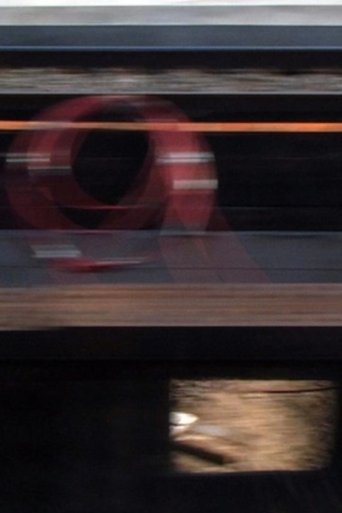
"Abstraction in Gehr behaves like an X-ray, revealing unexpected patterns of order under the skin of things. A film like Mirage, one of those most sensuous of Gehr’s abstract films may resemble superficially a strip painting by Kenneth Noland. But it is essential to realize that the bands of color Gehr captures come from the world, shot through a simple clear tube that strips away form and lets only chromatic patterns and motion come through. Even in his most abstract films, Gehr is relating to a world outside his consciousness and trying to stake out a relation to it, testing its order and chaos, its beauty and its threats." – Tom Gunning

Directed by Ernie Gehr

Your Rating

Make it a double feature

51m together

Mirage

Water Spell

Both from Ernie Gehr.

More from Ernie GehrSee all →

Crystal PalaceCrystal Palace · 2011
Crystal Palace
10.02011
Movie
An ode to digital interlace, which is to video what intervals between frames are to film…
HistoryHistory · 1970
History
7.01970
Movie
"Film in its primordial state in which patterns of light and darkness are still undivided. Like the natural order of the universe, an unbroken flow in which movement and distribution of tension is infinitely subtle, and a finite orientation seems impossible." –Ernie Gehr
Water SpellWater Spell · 2007
Water Spell
6.52007
Movie
"Sandy Ding's WATER SPELL is a bold, abstract journey that takes us into the psychic interior of our very cellular structure... and back. For me, this film is about reincarnation and transformation, on both the spiritual and sub-atomic levels. This is not an easy film, but it is a powerful one."

--Nina Menkes
20 Little Films20 Little Films · 2012
20 Little Films
6.02012
MovieDocumentary
Since 1995, the Viennale has invited renowned directors to create short, one-minute films as personal contributions to the festival. Ranging from home movies to political essays, musical sketches to abstract studies, these “little films” form a unique anthology of cinematic moments. 20 Little Films collects a selection of these works, premiering together for the Viennale’s 50th anniversary at the Locarno Film Festival.
EurekaEureka · 1974
Eureka
5.71974
MovieDocumentary
"This is a film that not only documents a place in time, but a modern spatial vision, a look and technology that makes this street the sort of place it is. And here in this preserved piece of history, one also sees the chemical dance of film grain that makes up the material of Gehr’s own History. We do not simply see Market Street circa 1902, but a film of Market Street, and it is as fascinating as the site itself. Film may in some sense exist indifferent to emotions, objects, beings, or ideas. But early in his work Gehr realized that film, even conceived as a thing in itself, can never exist outside of history. The very dance of grain on the screen acquires a history of its production, its screenings, its viewings. History is the place no place can avoid.” - Tom Gunning
WaitWait · 1968
Wait
5.21968
Movie
"Completed shortly after Morning, Wait is a vivid depiction of the cinematic process of recording images on film. From frame to frame……. this work offers a sense of film emulsion coming to life, and responding to the forces of light. In addition shifting camera positions, panning, tilting, using the zoom, framing and focusing are all part of the work. A sculpturing of a space from frame to frame on a surface where there is no space. The title, Wait .... is asking the viewer to forgo our conditioned focus on the photographic image as a representation of a life situation, and instead, focus on the visual kinetic here and now. Physical therapy for the eyes, and delight for the senses." – Ernie Gehr
Serene VelocitySerene Velocity · 1970
Serene Velocity
4.51970
Movie
"Serene Velocity (1970) created a stunning percussive head-on motion by systemically shifting the focal length of a stationary zoom lens as it stared down the center of an empty institutional hallway – thus playing off the contradiction generated by the frames’ heightened flatness and the compositions’ severely overdetermined perspective. Without ever moving the camera, Gehr turned the fluorescent geometry of this literal Shock Corridor (in the then – new State University of N.Y at Binghamton) into a sort of piston-powered mandala. If Giotto had made action films it would be this." – J. Hoberman
UntitledUntitled · 1977
Untitled
1977
Movie
"Untitled begins with a flat, out-of-focus, reddish-pink screen on which blurry white patterns quickly appear and disappear. After awhile a space seems to emerge behind the screen. The swiftly changing patterns generate an experience of soft floating motion, through a field of snowflakes that whirl about in the wind. There is simultaneous serenity and agitation in the portrayed motions. The background appears soft, almost quivering at first, as if alive, and the reddish color suggests warmth and contrast with the snow. As the film progresses the snowflakes get smaller and better focused, yielding a kind of distance perspective and the background acquires more and more substantiality. At some point and often quite suddenly, the trans-like floating experience is broken by the discovery of what lies ahead: a red brick wall! The entire meaning of the earlier experience undergoes a sudden shift as this prototype of the impenetrable obstacle becomes apparent."– Robert Becklen
UndertowUndertow · 2021
Undertow
2021
Movie
“The eyes may be attracted to look left and right – and please let them – but the center is also intriguing and not separable from the rest. Among other things, a side view is transformed into a frontal view, but of course, that is not all.” - Ernie Gehr
Greene StreetGreene Street · 2004
Greene Street
2004
Movie
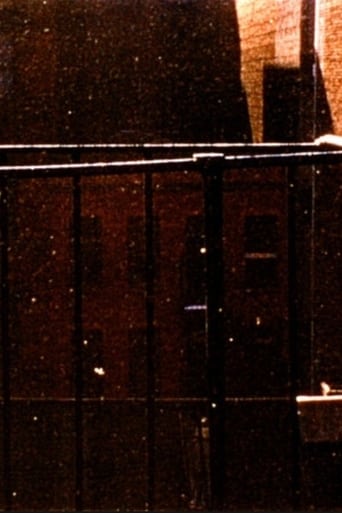
"a five-minute film of the view west across the Soho street to a brick building. Gehr sat there from one day from 10:00 a.m. to 4:00 or 5:00 p.m. and shot it with his Bolex camera, one frame at a time. It conveys the settled relief of being home, as against the pace of the monochromatic working day seen in the three prior films. It is closer to his earlier films in its abstraction of forms and play with time-lapse and film speed. In the beginning, the forms are screamingly reddish-orange and incomprehensible, but as the afternoon progresses shadows slip across the surfaces and windows, fire escapes, and bricks become visible: a world is revealed with the clarity of Vermeer’s famed Little Street (1657-8)." - Jason Rosenfeld
Construction SightConstruction Sight · 2018
Construction Sight
2018
Movie
Ernie working his magic.
Bon VoyageBon Voyage · 2015
Bon Voyage
2015
Movie
Avant-garde work by Ernie Gehr.
Floating ParticlesFloating Particles · 2021
Floating Particles
2021
Movie
“It’s a mysterious field, this screen rectangle populated by haunting phantasmagoric phenomena, be it representational or just patterns of color, light and darkness. Realism has no place here, but lifelike re-presentations of consciousness and the imagination do. Even in the most fleeting of spaces…. hmm, spaces on a 2-dimensional plane? Never mind! Look at the above still image. Intrigued? Then perhaps the work from where it came might interest you.” - Ernie Gehr
AproposessexstreetmarketAproposessexstreetmarket · 2018
Aproposessexstreetmarket
2018
MovieDocumentary
"The second piece on this program, Aproposessexstreetmarket, is what I consider to be the heart of the trilogy. It offers glimpses to the kind of activities I often encountered inside the old Essex Street Market, and I dedicate this screening to all the people who appear in the work—shoppers as well as vendors" - EG
Waterfront FolliesWaterfront Follies · 2009
Waterfront Follies
2009
Movie
American avant-garde master Ernie Gehr’s stunning Waterfront Follies (USA) is a work of extended sublime that presents a view of the Brooklyn harbour as it is continuously interrupted by the flow of human interaction. The film’s structure and soundtrack work as a reminder of the constant intersections between life’s impulsiveness and beauty. - Peter Knegt
TransparencyTransparency · 1969
Transparency
1969
Movie
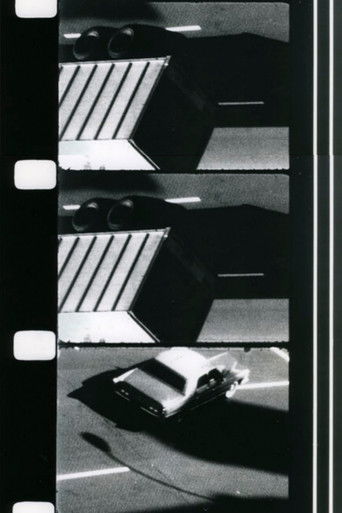
"The footage for Transparency was recorded at variable camera speeds (from approx. 5 fps to around 40 fps). In this process, when later projected at a constant speed of 24 fps, the image on screen changes in time from a representation of cars passing in front of the camera to an image in flux and a collision of transparent colors and dynamic motion. One might also think of it as a rendering and transformation of one industrial phenomena (the automobile), by another industrial phenomena (the motion picture camera). What arises – as an experience – when 'visual phenomena' starts, thrives, and ends within the 4 borders of the rectangle and we do not project extensions to them? How startling when occasionally, and just for a moment, a bird enters the frame, and creates 'space' against a light blue 'sky'." – Ernie Gehr

More Like This

Couldn't load this row right now.
Rate this film

Your ratings make Midnight smarter