Open Book

Open Book

1974 · 10 min

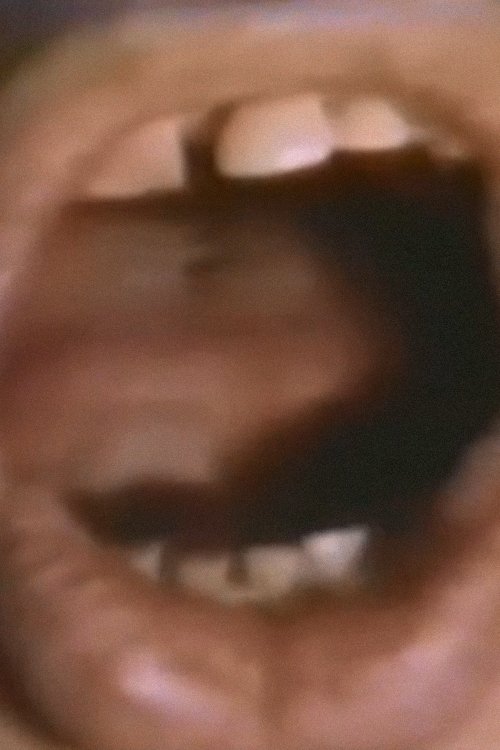
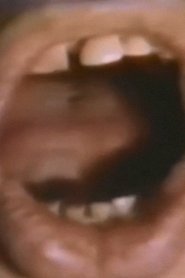
Acconci's open mouth is framed by the camera in an extreme close-up, bringing the viewer uncomfortably close. A desperate sense of strained urgency comes across as Acconci gasps, "I'll accept you, I won't shut down, I won't shut you out.... I'm open to you, I'm open to everything.... This is not a trap, we can go inside, yes, come inside...." Acconci continues to plead in this way for the length of the tape, his mouth held unnaturally wide open. The pathological psychology of such enforced openness betrays a desperate struggle to accept and be accepted by others. The sustained image of Acconci's open mouth also evidences a sinister, vaguely threatening streak that is more or less evident in much of Acconci's work.

Directed by Vito Acconci

Your Rating

Make it a double feature

1h 33m together

Open Book
The Golden Boat

Both from Vito Acconci.

More from Vito AcconciSee all →
Journeys from Berlin/1971Journeys from Berlin/1971 · 1980
Journeys from Berlin/1971
8.81980
MovieDrama
An epic meditation on psychoanalysis, the Baader-Meinhof, feminism, and pre-revolutionary Russia.
The Golden BoatThe Golden Boat · 1991
The Golden Boat
6.51991
MovieDramaComedy
Inspired in form by American police TV shows and soap operas, The Golden Boat is a madcap, surreal dash through the streets of New York city, telling the mysterious and often hilarious story of an aged street-person named Austin, a comically compulsive assassin, as he joins up with a young rock critic and philosophy student named Israel Williams. In the course of their adventures, Austin pursues his object of desire - a Mexican soap opera star - and along the way engages a host of TV characters and bit players, whose repartee range from gangsterish insults to the question of God's existence.
Seven Easy PiecesSeven Easy Pieces · 2007
Seven Easy Pieces
2.02007
MovieDocumentary
For Seven Easy Pieces Marina Abramovic reenacted five seminal performance works by her peers, dating from the 1960's and 70's, and two of her own, interpreting them as one would a musical score. The project confronted the fact that little documentation exists from this critical early period and one often has to rely upon testimony from witnesses or photographs that show only portions of any given performance. The seven works were performed for seven hours each, over the course of seven consecutive days, November 9 –15, 2005 at the Guggenheim Museum, in New York City. Seven Easy Pieces examines the possibilities of representing and preserving an art form that is, by nature, ephemeral.
The Red TapesThe Red Tapes · 1977
The Red Tapes
1977
Movie
A three-part video epic in which avant-garde artist Vito Acconci explores the relationship between the self and national mythology. Through multiple vignettes, Acconci brings together a collage of music, photographs, diorama, experimental theater and his own profile, to tell a semi-autobiographical narrative that, in turn, becomes a critique of the alienated quality of American mythology.
Association AreaAssociation Area · 1971
Association Area
1971
MovieDocumentary
This early performance tape is an example of what Acconci has termed his "quasi-ESP exercises," in which he explores mental concentration and intuition as a means of non-visual and non-verbal perception, interaction and communication. Blindfolded and wearing earplugs, Acconci and another man attempt to intuit and imitate each other's movements and bearing, though they can neither hear nor see.
Break-ThroughBreak-Through · 1970
Break-Through
1970
Movie
"Super-8 camera held out before him as shield and surrogate, Acconci pushes through a landscape of dense reeds and overgrowth. Break-Through records this search for a pause or clearing in what, for the viewer, amounts to an abstracted and scarcely differentiated visual field." - Electronic Arts Intermix
Face-OffFace-Off · 1973
Face-Off
1973
Movie
Face-Off is an ironic collusion of private and public, of exposure and masking, a tense ritual wherein Acconci divulges and then censors his self-revelations. Acconci turns on a reel-to-reel audiotape recorder and bends down to the speaker to listen to it, his face barely visible in the frame. The audio is a recording of his own voice addressing himself and the viewer, recounting intimate details about his life. However, whenever the material becomes too personal, he tries to drown out his voice and prevent the viewer from hearing, yelling: "No, no, no, don't tell this, don't reveal this...." Reacting to his recorded voice, he becomes increasingly agitated as the tape proceeds.
Face of the EarthFace of the Earth · 1974
Face of the Earth
1974
Movie
In Face of the Earth, Acconci's face becomes a metaphorical theater for a narrative drama of the mythic American landscape. Eyes closed, his face filling the screen in extreme close-up, the camera looking up from his chin, he inhabits a dreamlike, intensely theatrical space. Alternately humming and whispering, Acconci begins an oddly poetic, hypnotic monologue, a stream-of-consciousness fantasy of a gunfighter in the American West. "As if I were riding in from over the mountains... Where did I come from?" His fingers run over the landscape of his face in the rhythm of a galloping horse, or caress it as the narrative tension builds. With language as a catalyst, he conducts a riveting examination of his own identity through American cultural mythologies.
CorrectionsCorrections · 1970
Corrections
1970
Movie
"Unavailable until recently, Corrections is Acconci's first single-channel video. Back to the camera, with only his head and bare shoulders visible, Acconci lights a match and brings it around to the nape of his neck. The lights dim as the flame nears his body hair, which briefly flares in the darkness, at which point Acconci shakes out the match. This action is repeated for the duration of the piece. Corrections introduces themes that typify Acconci's body-based performance work of the 1970's." - Electronic Arts Intermix
Second HandSecond Hand · 1971
Second Hand
1971
Movie
Documentation of an evening of three simultaneous performances (Terry Fox, Dennis Oppenheim, Vito Acconci), in January 1971. In each alcove a light bulb hangs from the ceiling above a canvas that covers the ground. In Acconci's alcove, a clock is hung on the back wall; staring at the second hand, the artist repeats its movement around the light bulb.1971, 2:47 min, color, silent, Super 8mm film on video
You're Going to Die!You're Going to Die! · 2006
You're Going to Die!
2006
MovieDrama
"You’re Going to Die!" is a children’s story exploring one simple idea ad nauseum bonum. This video treatment by Dennis Palazzolo adapts prose by Timothy Furstnau using original footage and clips lifted from famous movies, and features the close-mic’d muttering voiceover of artist Vito Acconci.
OpeningsOpenings · 1970
Openings
1970
Movie
Acconci's body-based performances are often willfully provocative in their testing of physical limits and controlled actions. Here, as the camera frames Acconci's stomach in close up, he painstakingly pulls out each hair from the skin around his navel.
ApplicationsApplications · 1970
Applications
1970
Movie
A woman kisses Acconci's body, covering him in red lipstick traces. Acconci then rubs his body against another man (Dennis Oppenheim), transferring the stains onto him.
Run OffRun Off · 1970
Run Off
1970
Movie
A ten minute super-8mm work from 1970 by Vito Acconci.
CentersCenters · 1971
Centers
1971
MovieDocumentary
Poet and artist Vito Acconci points his finger towards the camera and his own reflection in an offscreen video monitor.
Two TrackTwo Track · 1971
Two Track
1971
Movie
In Two Track, Acconci experiments with direct and peripheral perception of information in the context of communication and interaction. He sits with a man and a woman in front of a microphone. The man and woman each read a different text (a Mickey Spillane novel and a Raymond Chandler novel) simultaneously; Acconci repeats everything the man says. Occasionally an off-screen voice interrupts to question Acconci on what the woman has read, and he tries to answer.

More Like This

Couldn't load this row right now.
Rate this film

Your ratings make Midnight smarter