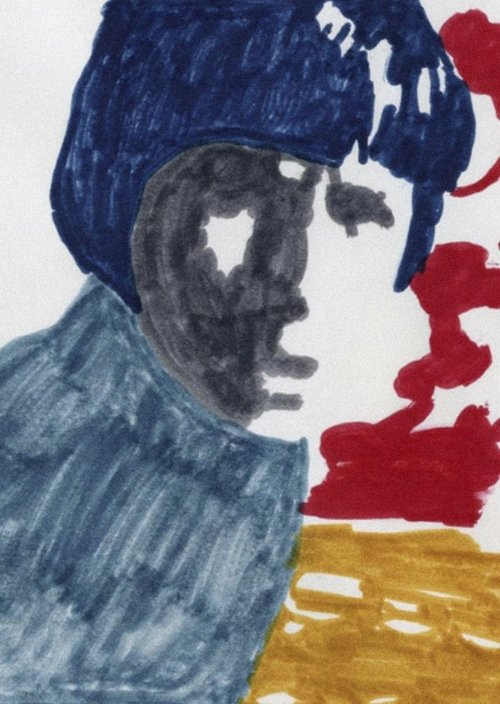
Myself When Fourteen

Myself When Fourteen

1989 · 19 min

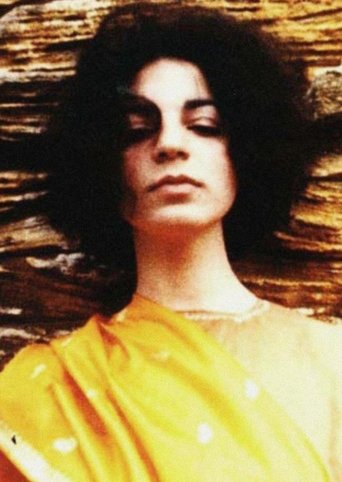
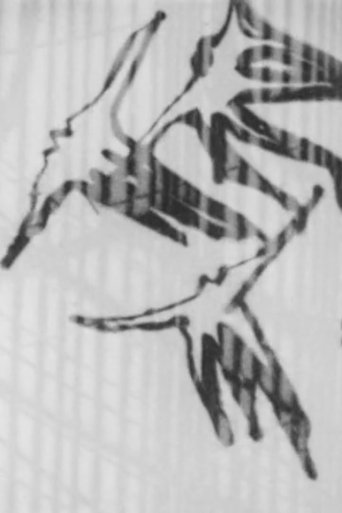
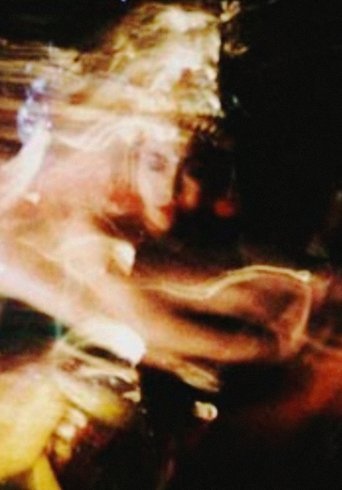
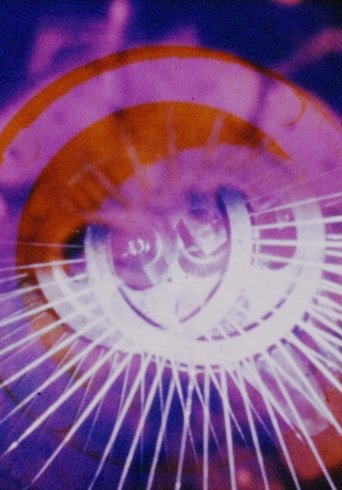
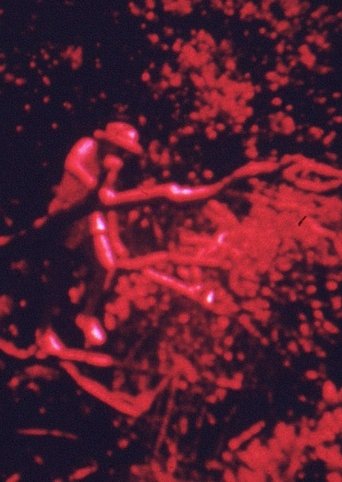
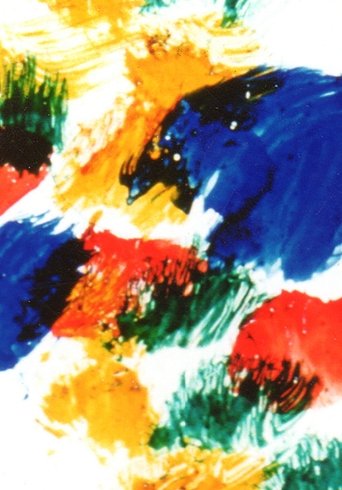
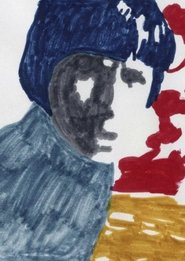
Brightly coloured animated drawings rotoscoped from high contrast black and white negative film of Ivor Cantrill aged 14, are integrated with the original negative and positive images on an optical printer to create patterns of black, white and colour. The film-maker reminisces about being 14 and describes the rotoscoping process. Ivor Cantrill is autistic, and his attention to detail and his preoccupation with repetition are positive aspects of his condition.

Directed by Corinne Cantrill

Your Rating

Make it a double feature

1h 39m together

Myself When Fourteen
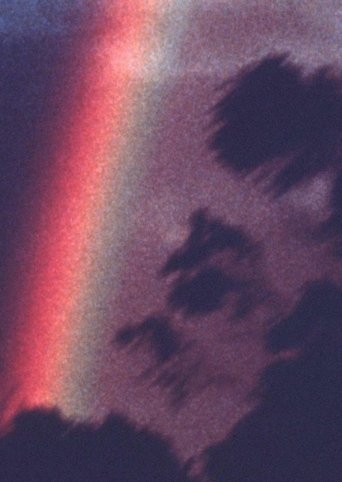
At Uluru

Both from Corinne Cantrill.

More from Corinne CantrillSee all →
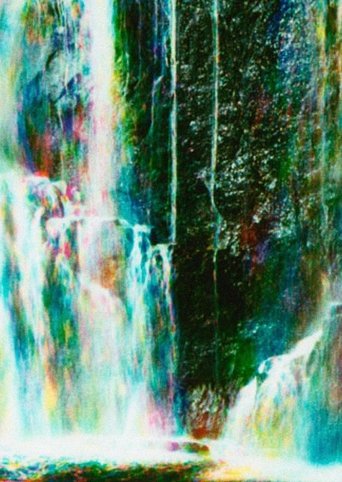
WaterfallWaterfall · 1984
Waterfall
8.01984
Movie
It's a three-colour separation study of MacKenzie Falls in the Grampians, Victoria.
At UluruAt Uluru · 1977
At Uluru
7.01977
Movie
Ayers Rock is examined in the light of its ancient human and animal associations. It is seen under various light effects which create different colour and texture impressions. The timelessness of the monolith is suggested by negative colour, the result of using fine-grain Eastmancolour print stock in the camera, a slow speed material which required the intense Central Australian light for adequate exposure. A half-speed recording of the local bird call and insects contributes to the sense of cross eras. Human perception of time, colour and sound is questioned. As Einstein said: 'The distinction between past, present and future is only an illusion, even if a stubborn one.'
EikonEikon · 1969
Eikon
6.01969
Movie
Timeless elements in a roll of film: stillness, movement, woman, girl, road, wind, sun, leaves. A triptych of a girl who reminds us of the face and figures in old icons.
The City of Chromatic DissolutionThe City of Chromatic Dissolution · 1999
The City of Chromatic Dissolution
6.01999
Movie
Arthur and Corinne Cantrill are two of Australia's most prominent experimental filmmakers. The Cantrills are well known for their 'colour separation' films. To create these works they shoot a scene three separate times on black and white film stock, using a different colour filter each time. In the lab, they combine these three films onto a single Eastmancolour print. This process creates dramatic transitions in colour that the Cantrills liken to the vibrancy of Technicolor. Though the footage here was shot in the mid-’80s, it was only last year that they edited it into this fifteen-minute movie. Structurally it’s simple enough: just a series of views of various parts of inner Melbourne, from panoramic wide shots to close-ups of the sides of buildings. The soundtrack blends and warps familiar urban noises – cars, buskers, the ringing bells of trams – into a kind of musique concréte.
Adventure Playground – LondonAdventure Playground – London · 1966
Adventure Playground – London
6.01966
Movie
A film about recreation and learning, made during the Cantrills’ four-year residence in London, similarly tinctured by Herbert Read’s notions about children’s education as self-directed, creative, and free. The adventure playground provides a space in which children can shape and reimagine the environment according to their own sense of play.
BouddiBouddi · 1970
Bouddi
5.01970
MovieDocumentary
A camera calligraphy of the coastal bush -- celebrating growth, summer light, rock and plant textures.
The Room of Chromatic MysteryThe Room of Chromatic Mystery · 2006
The Room of Chromatic Mystery
5.02006
MovieFantasyMystery
'The Room of Chromatic Mystery' is (...) another three-colour separation film, shot in the living room of the Cantrills’ old house in Brunswick. An ordinary domestic scene, with flowers and carved artifacts on a table by the window; but the borderlines of these objects quiver, and everything is bathed in a spectral or perhaps extraterrestrial glow. The mysterious soundtrack blends voices from earlier films – including the whispering of the singers in 'Two Women' – with discussions in a foreign language on a shortwave radio, drowned in static like the hiss of time escaping. An image of a place. An echo of a voice. (Jake Wilson)
DreamDream · 1966
Dream
5.01966
MovieAnimation
A short animation of Charles Lloyd’s dry points. Sound composition by Arthur Cantrill.
Moving StaticsMoving Statics · 1969
Moving Statics
1969
Movie
Will Spoor is a Dutch performer, working in the abstract side of movement and mime. He has considerable knowledge of the potential of film and his intention was to extend his work into realms that were impossible for live theatre. We used a combination of animation and in-camera superimpositions to create structures of body movement. Our work on sound composition came to a head in this film with organically and electronically complex sounds. It was the most valuable collaboration we had done with another artist since Larry Sitsky; an intense concentration of our energies and skills and of his energies and skills. (Arthur Cantrill & Corinne Cantrill)
Earth MessageEarth Message · 1970
Earth Message
1970
Movie
The beauty of the Australian bush is depicted in a carefully composed camera choreography of different aspects of flora and fauna. Close-up and panorama shots and Aboriginal music meld into a meditative view of the energy and harmony that shape the place.
Two WomenTwo Women · 1976
Two Women
1976
Movie
TWO WOMEN records our passage through the tribal lands of the Central Australian region – a personal charting of this mythical landscape. The film is shaped by an unedited recording made of a Pitjantjatjara women’s song cycle: "Two Women", which describes the travels of ancestral women through this region. The film is not a literal interpretation of the song story, and there is no translation of the song. We are outsiders to this culture, and must therefore learn what we can from the ‚surface’ of the song cycle – from the voices singing, talking, whispering, coughing, laughing, reprimanding children.
Island FuseIsland Fuse · 1971
Island Fuse
1971
Movie
"Island Fuse consists entirely of the monochromatic reprocessing of black and white footage that we filmed in the 1960s on the Isle of Stradbroke. Using an analysis projector, Island Fuse is a film that focuses on the interaction of the elements that produced the film: the analysis projector, the camera and its various mechanisms; filters, the projector and its mechanisms; the ribbon and the photograms; the operators."
Skin of Your EyeSkin of Your Eye · 1973
Skin of Your Eye
1973
Movie
Masses, crowds in the streets, traffic, large gatherings of people for political, religious, cultural events; TV newscasts – the tide of humanity being the matrix from which the alternative movement arose. From these masses emerge individuals: friends and family, co-workers, filmmakers, poets. A play between the quotidian and the particular.
Banksia SerrataBanksia Serrata · 1963
Banksia Serrata
1963
Movie
Part of a series of four studies the Cantrills made of the native flora of the Stradford Island, this one focusing on the Banksia Serrata.
Harry HootonHarry Hooton · 1970
Harry Hooton
1970
Movie
The film Harry Hooton is conceived as a huge energy field combining the energy of light and colour, movement, editing and sound — a dense, vibrating, pulsating work, unrelenting in its thrust; a celebration of Hooton’s definition of art as the communication of emotion to matter.
CorporealCorporeal · 1983
Corporeal
1983
Movie
An experimental work about the Australian forests by Arthur and Corinne Cantrill.

More Like This

Couldn't load this row right now.
Rate this film

Your ratings make Midnight smarter